Pascut Devis, Sukowati Caecilia Hapsari Ceriapuri, Antoniali Giulia, Mangiapane Giovanna, Burra Silvia, Mascaretti Luca Giovanni, Buonocore Matteo Rossano, Crocè Lory Saveria, Tiribelli Claudio, Tell Gianluca
Liver Research Center, Fondazione Italiana Fegato, ONLUS, AREA Science Park, Basovizza, Trieste, Italy.
Laboratory of Molecular Biology and DNA Repair, Department of Medicine (DAME), University of Udine, Udine, Italy.
Oncotarget. 2019 Jan 8;10(3):383-394. doi: 10.18632/oncotarget.26555.
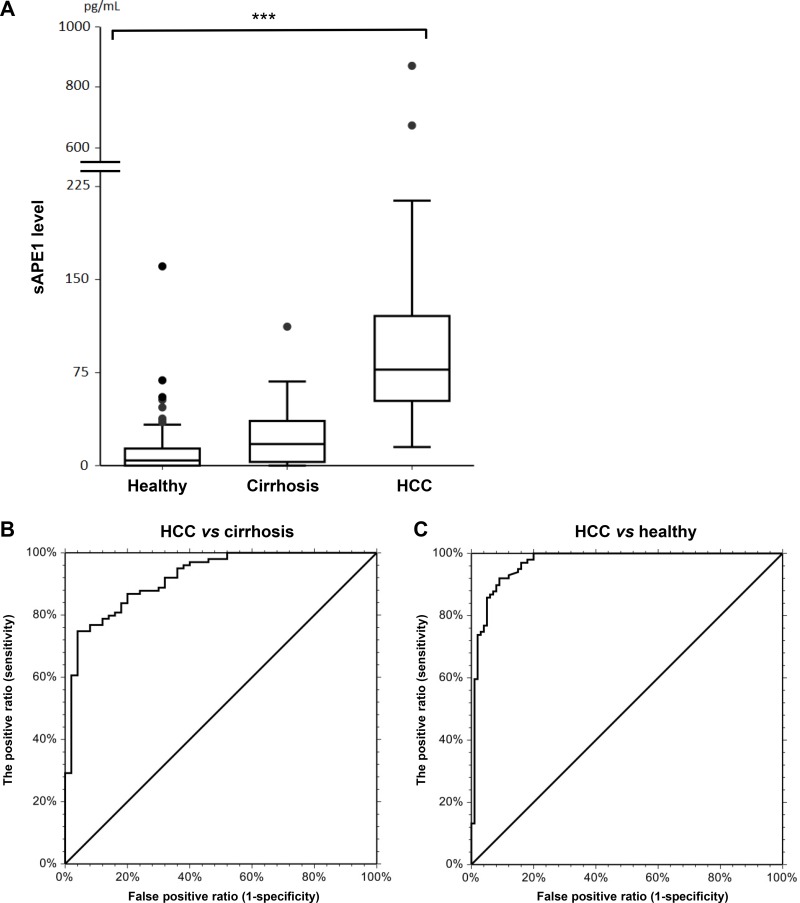
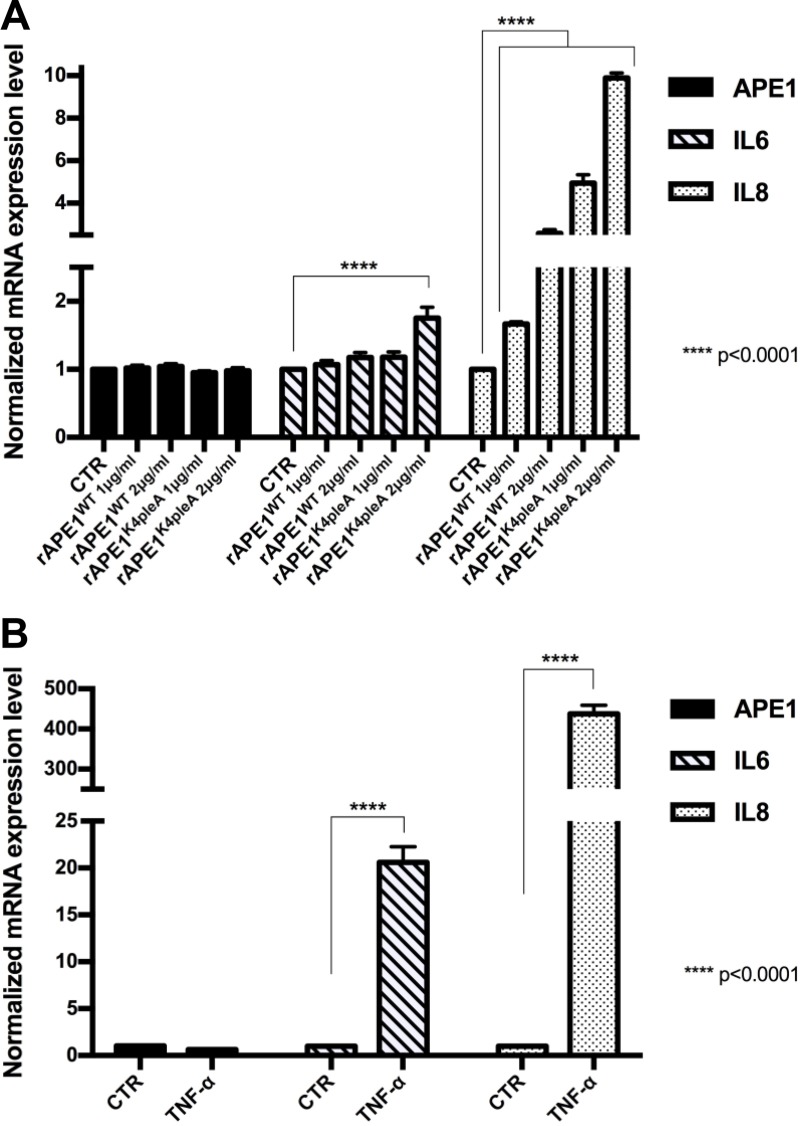
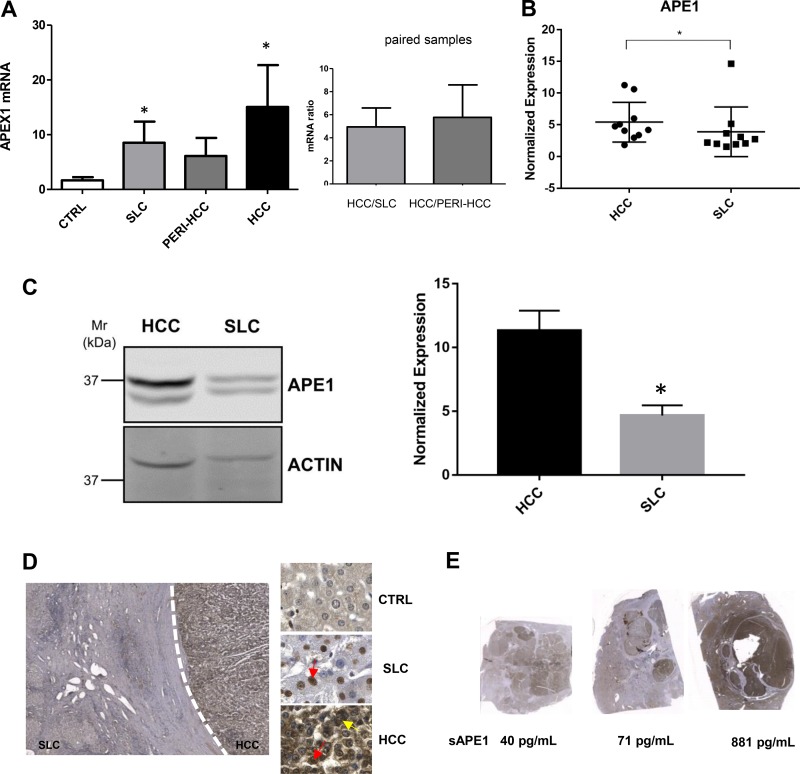
Late diagnosis for Hepatocellular Carcinoma (HCC) remains one of the leading causes for the high mortality rate. The apurinic/apyrimidinic endonuclease 1 (APE1), an essential member of the base excision DNA repair (BER) pathway, contributes to cell response to oxidative stress and has other non-repair activities. In this study, we evaluate the role of serum APE1 (sAPE1) as a new diagnostic biomarker and we investigate the biological role for extracellular APE1 in HCC. sAPE1 level was quantified in 99 HCC patients, 50 non-HCC cirrhotic and 100 healthy controls. The expression level was significantly high in HCC (75.8 [67.3-87.9] pg/mL) compared to cirrhosis (29.8 [18.3-36.5] pg/mL] and controls (10.8 [7.5-13.2] pg/mL) ( < 0.001). The sAPE1 level corresponded with its protein expression in HCC tissue. sAPE1 had high diagnostic accuracy to differentiate HCC from cirrhotic (AUC = 0.87, sensitivity 88%, specificity 71%, cut-off of 36.3 pg/mL) and healthy subjects (AUC 0.98, sensibility 98% and specificity 83%, cut-off of 19.0 pg/mL). Recombinant APE1, exogenously added to JHH6 cells, significantly promotes IL-6 and IL-8 expression, suggesting a role of sAPE1 as a paracrine pro-inflammatory molecule, which may modulate the inflammatory status in cancer microenvironment. We described herein, for the first time to our knowledge, that sAPE1 might be considered as a promising diagnostic biomarker for HCC.
肝细胞癌(HCC)的晚期诊断仍然是导致高死亡率的主要原因之一。脱嘌呤/脱嘧啶内切酶1(APE1)是碱基切除DNA修复(BER)途径的重要成员,有助于细胞对氧化应激作出反应,并具有其他非修复活性。在本研究中,我们评估了血清APE1(sAPE1)作为一种新的诊断生物标志物的作用,并研究了细胞外APE1在HCC中的生物学作用。对99例HCC患者、50例非HCC肝硬化患者和100例健康对照者的sAPE1水平进行了定量分析。与肝硬化患者(29.8 [18.3 - 36.5] pg/mL)和健康对照者(10.8 [7.5 - 13.2] pg/mL)相比,HCC患者的sAPE1表达水平显著升高(75.8 [67.3 - 87.9] pg/mL)(< 0.001)。sAPE1水平与其在HCC组织中的蛋白表达一致。sAPE1对区分HCC与肝硬化患者(AUC = 0.87,敏感性88%,特异性71%,临界值为36.3 pg/mL)和健康受试者(AUC 0.98,敏感性98%,特异性83%,临界值为19.0 pg/mL)具有较高的诊断准确性。将重组APE1外源性添加到JHH6细胞中,可显著促进IL - 6和IL - 8的表达,表明sAPE1作为一种旁分泌促炎分子,可能调节癌症微环境中的炎症状态。据我们所知,本文首次描述sAPE1可能被视为一种有前景的HCC诊断生物标志物。