Department of Stomatology, Shanghai Tenth People's Hospital, Tongji University School of Medicine, Shanghai 200072, P.R. China.
Department of Oral and Maxillofacial Head and Neck Oncology, Ninth People's Hospital, Shanghai JiaoTong University School of Medicine, Shanghai 200011, P.R. China.
Int J Oncol. 2019 Apr;54(4):1183-1194. doi: 10.3892/ijo.2019.4707. Epub 2019 Feb 1.
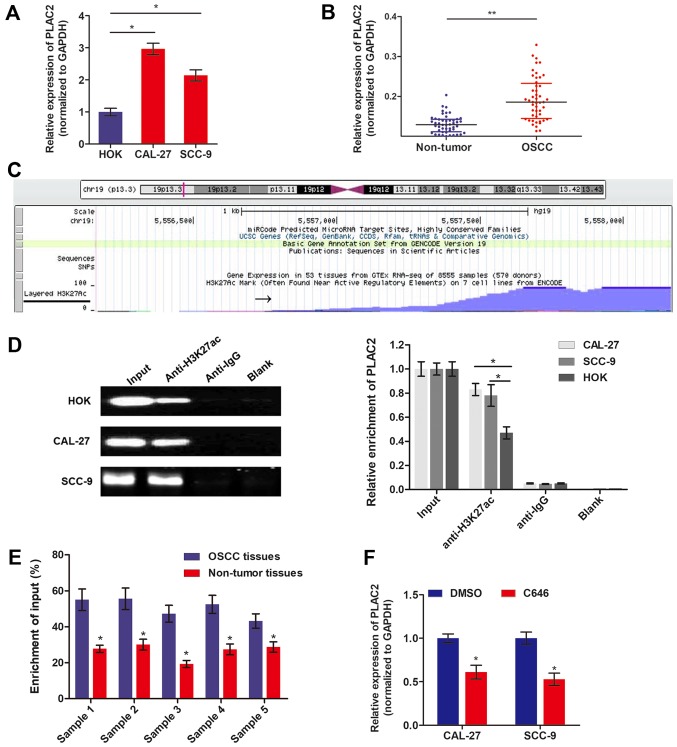
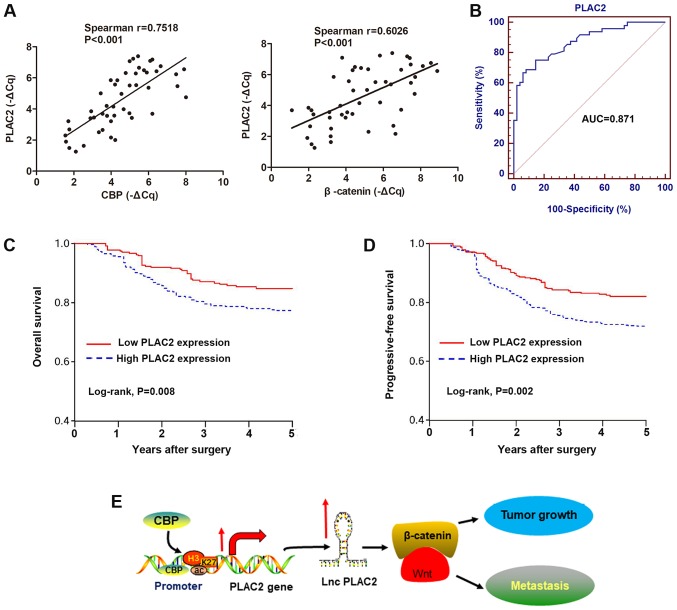
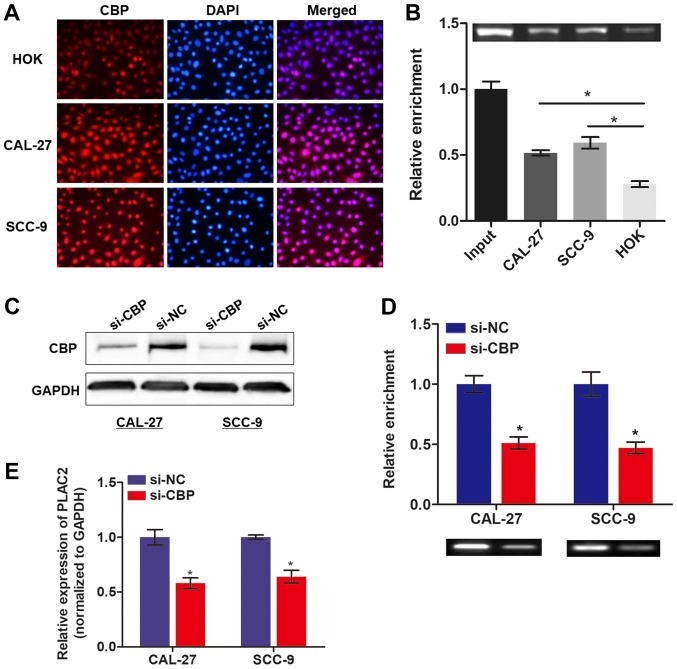
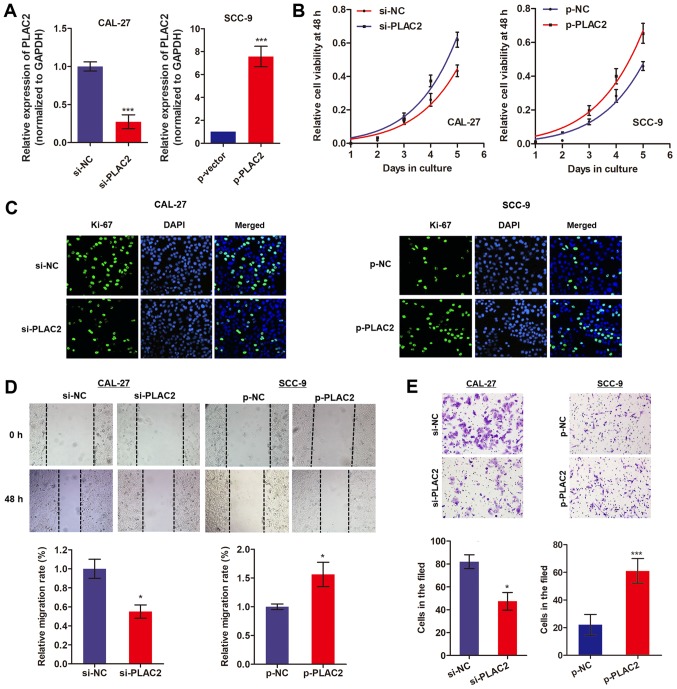
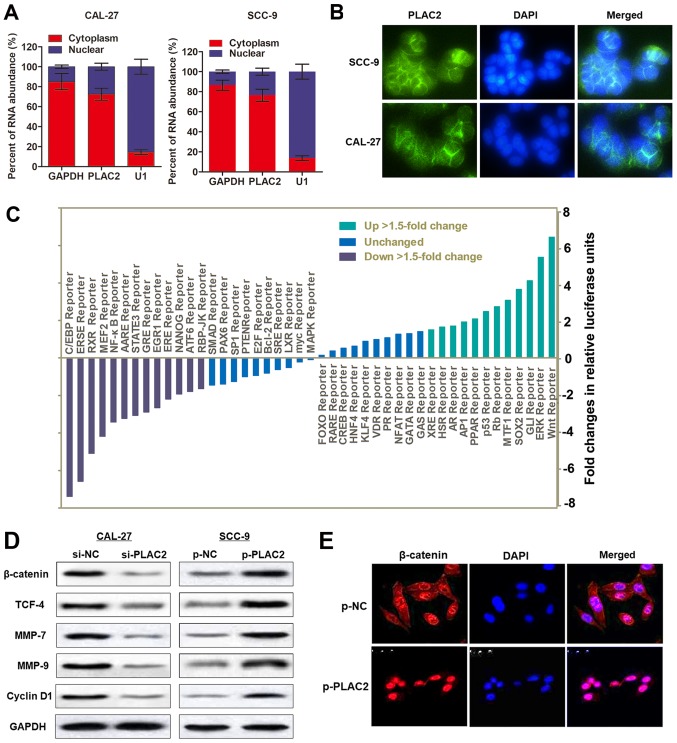
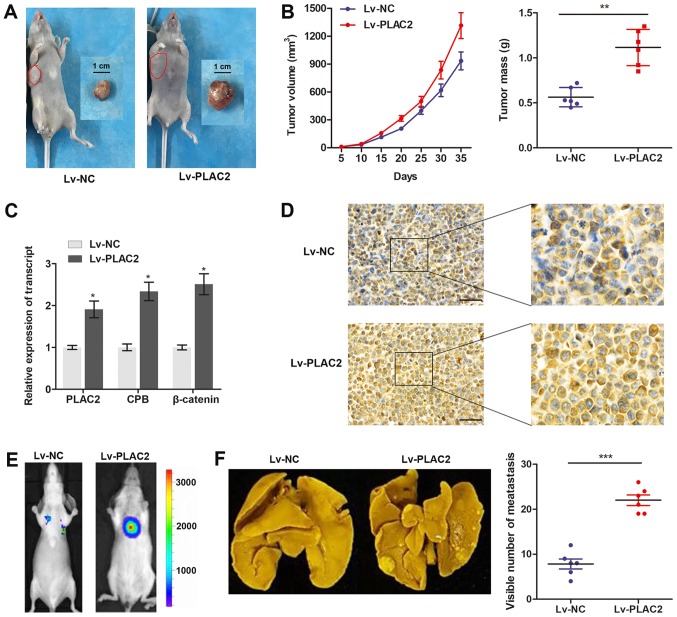
As a new group of important effector molecules involved in multiple cancer types, including breast cancer, lung cancer and oral squamous cell carcinoma, long noncoding RNAs (lncRNAs) have attracted considerable attention recently. However, the underlying cause that induces the dysregulated lncRNAs in cancer remains poorly understood. In the present study, the regulatory model of the lncRNA placenta‑specific protein 2 (PLAC2) upregulation in oral squamous cell carcinoma (OSCC) was investigated and its biological functions in OSCC malignant progression was identified. A reverse transcription‑quantitative polymerase chain reaction assay identified that PLAC2 is upregulated in OSCC cell lines and primary tissue samples. Furthermore, bioinformatic analysis followed by chromatin immunoprecipitation verified an enriched histone H3 on lysine 27 (H3K27) acetylation (H3K27ac) at the promoter region of the PLAC2 gene. Knockdown of cAMP‑response element binding protein‑binding protein (CBP) significantly reduced the enrichment level of H3K27ac, and thereby induced a decreased expression of PLAC2. Functionally, overexpression of PLAC2 promotes OSCC cell proliferation, migration and invasion, whereas knockdown of PLAC2 exerted an opposite effect. Furthermore, the Wnt/β‑catenin signaling pathway was activated by PLAC2 and mediated the PLAC2‑induced malignant progress of OSCC. In conclusion, the present results indicated that lncRNA PLAC2 is transcriptionally activated by H3K27ac modification at the promoter region in OSCC, and promotes cell growth and metastasis via activating Wnt/β‑catenin signaling pathway. Therefore, PLAC2 may serve as a promising biomarker for OSCC prognosis and therapy.
作为一组新的涉及多种癌症类型(包括乳腺癌、肺癌和口腔鳞状细胞癌)的重要效应分子,长链非编码 RNA(lncRNA)最近引起了相当大的关注。然而,导致癌症中 lncRNA 失调的根本原因仍知之甚少。在本研究中,研究了口腔鳞状细胞癌(OSCC)中 lncRNA 胎盘特异性蛋白 2(PLAC2)上调的调节模型,并鉴定了其在 OSCC 恶性进展中的生物学功能。逆转录-定量聚合酶链反应(qRT-PCR)检测发现 PLAC2 在 OSCC 细胞系和原代组织样本中上调。此外,生物信息学分析结合染色质免疫沉淀验证了 PLAC2 基因启动子区域富含组蛋白 H3 赖氨酸 27 乙酰化(H3K27ac)。cAMP 反应元件结合蛋白结合蛋白(CBP)的敲低显著降低了 H3K27ac 的富集水平,从而导致 PLAC2 的表达降低。功能上,过表达 PLAC2 促进 OSCC 细胞增殖、迁移和侵袭,而 PLAC2 的敲低则产生相反的效果。此外,PLAC2 激活了 Wnt/β-连环蛋白信号通路,并介导了 PLAC2 诱导的 OSCC 恶性进展。综上所述,本研究结果表明,lncRNA PLAC2 在 OSCC 中通过启动子区域的 H3K27ac 修饰被转录激活,并通过激活 Wnt/β-连环蛋白信号通路促进细胞生长和转移。因此,PLAC2 可能成为 OSCC 预后和治疗的有前途的生物标志物。