Rabel Matthias, Laxy Michael, Thorand Barbara, Peters Annette, Schwettmann Lars, Mess Filip
Department of Sport and Health Sciences, Technical University of Munich, Munich, Germany.
Helmholtz Zentrum München-German Research Center for Environmental Health (GmbH), Institute of Health Economics and Health Care Management, Neuherberg, Germany.
Front Public Health. 2019 Jan 22;6:387. doi: 10.3389/fpubh.2018.00387. eCollection 2018.
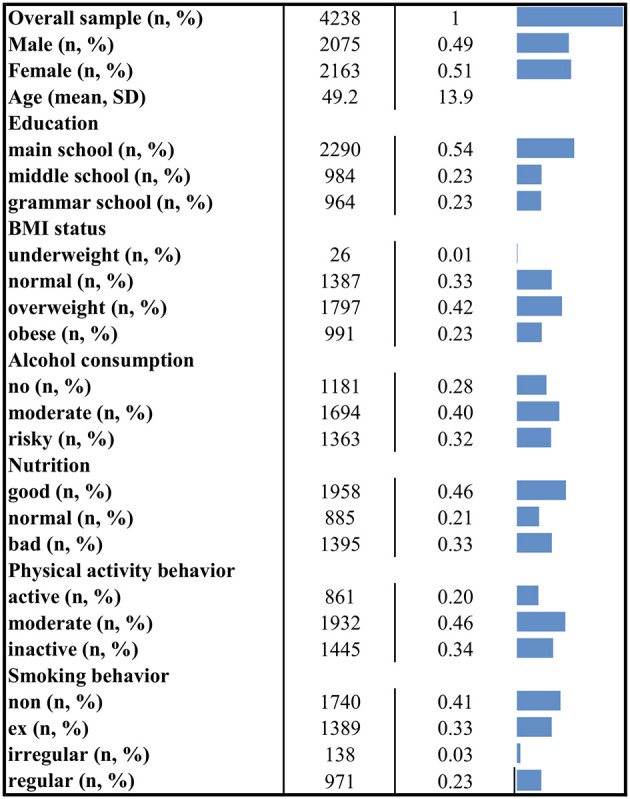
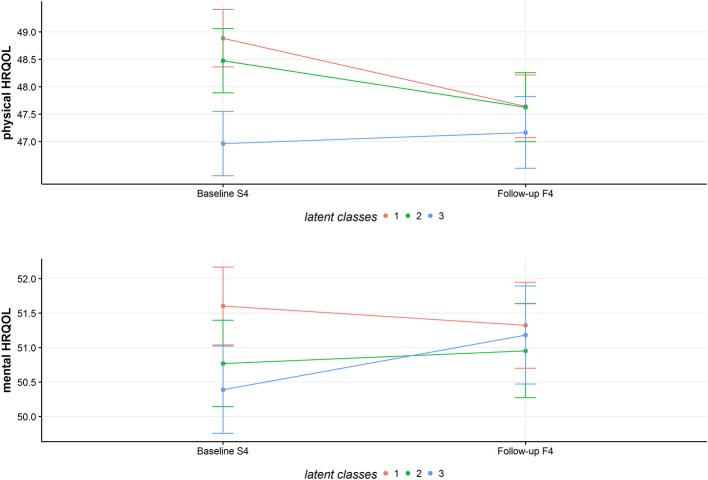
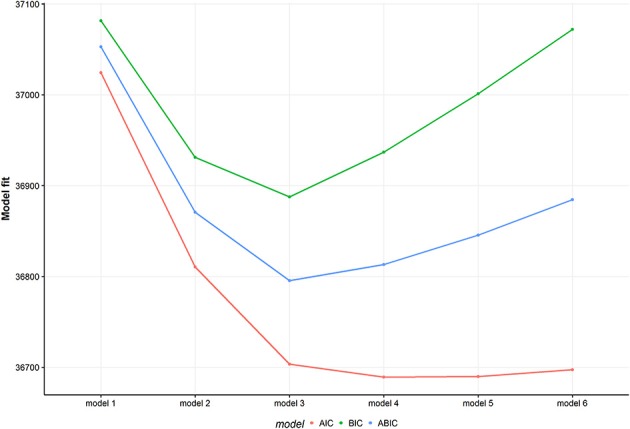
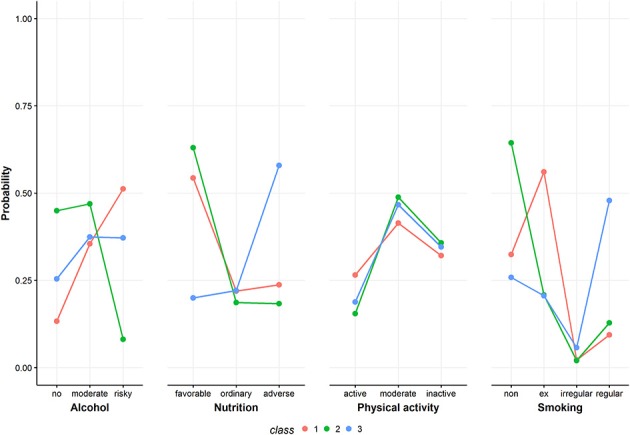
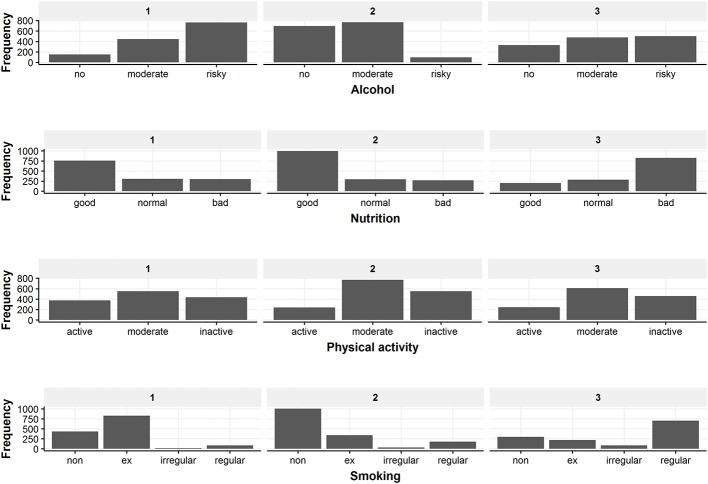
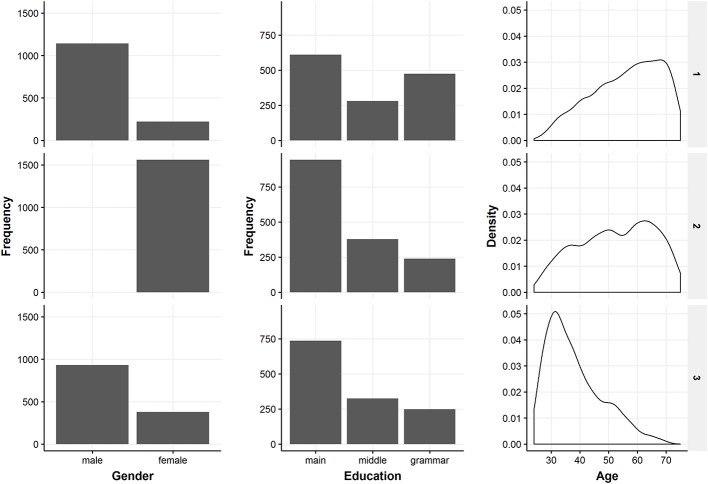
Health behaviors are of great importance for public health. Previous research shows that health behaviors are clustered and do not occur by chance. The main objective of this study was to investigate and describe the clustering of alcohol consumption, nutrition, physical activity and smoking while also considering the influence of sex, age and education. Using data from the population-based KORA S4/F4 cohort study, latent class regression analysis was undertaken to identify different clusters of health behavior patterns. The clusters were described according to demographics. Furthermore, the clusters were described regarding health-related quality of life at baseline and at a 7 year follow-up. Based on a sample of 4,238 participants, three distinct classes were identified. One overall healthy class and two heterogeneous classes. Classes varied especially according to sex, indicating a healthier behavior pattern for females. No clear association between healthier classes and age, education or physical and mental health-related quality of life was found. This study strengthens the literature on the clustering of health behaviors and additionally describes the identified clusters in association with health-related quality of life. More research on associations between clustering of health behaviors and important clinical outcomes is needed.
健康行为对公众健康至关重要。先前的研究表明,健康行为是聚集性的,并非偶然发生。本研究的主要目的是调查和描述饮酒、营养、体育活动和吸烟的聚集情况,同时考虑性别、年龄和教育程度的影响。利用基于人群的KORA S4/F4队列研究的数据,进行了潜在类别回归分析,以识别不同的健康行为模式集群。根据人口统计学特征对这些集群进行了描述。此外,还根据基线和7年随访时与健康相关的生活质量对这些集群进行了描述。基于4238名参与者的样本,确定了三个不同的类别。一个总体健康类别和两个异质性类别。类别尤其因性别而异,表明女性的行为模式更健康。未发现更健康的类别与年龄、教育程度或身心健康相关生活质量之间存在明显关联。本研究加强了关于健康行为聚集性的文献,并额外描述了与健康相关生活质量相关的已识别集群。需要更多关于健康行为聚集性与重要临床结局之间关联的研究。