Asires Azmeraw, Wubie Moges, Reta Alemayehu
Jimma University, Department of Animal Science, Jimma, Ethiopia.
Debre Markos University, College of Health Sciences, Department of Public Health, Debre Markos, Ethiopia.
Adv Med. 2019 Jan 6;2019:2101089. doi: 10.1155/2019/2101089. eCollection 2019.
One of the top ten major public health problems in developing countries including Ethiopia is the intestinal parasitic infection. Most of the time, intestinal parasitic infections do not show clinical signs and symptoms and also have a number of potential carriers, such as food handlers, which makes it too difficult to eradicate and control.
The aim of this study is to assess the prevalence and associated factors of intestinal parasitic infection among food handlers at prison, East and West Gojjam, Ethiopia, 2017.
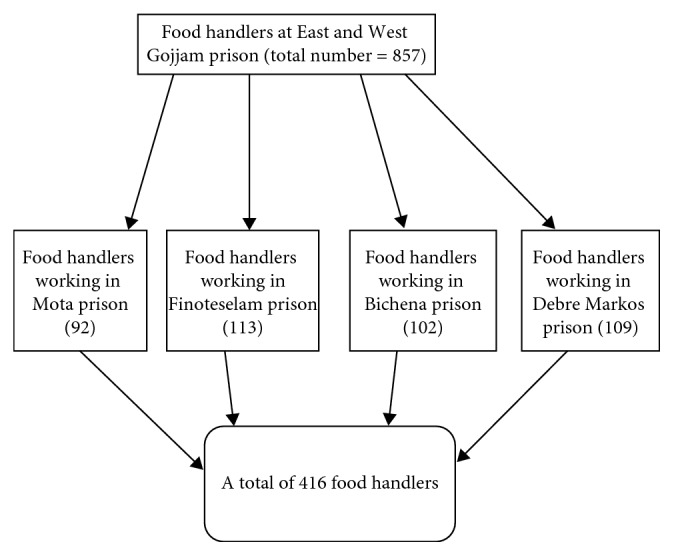
An institution-based cross-sectional study design was conducted at East and West Gojjam prison. A total of 416 study participants, with a response rate of 82.7%, were included in the study for both stool exam and questioner. Data were collected using a structured questionnaire, and the sample was collected and examined based on the standard parasitological procedure. Epi data Version 3.1 was used to enter data, and SPSS version 20 was used to analyze the data.
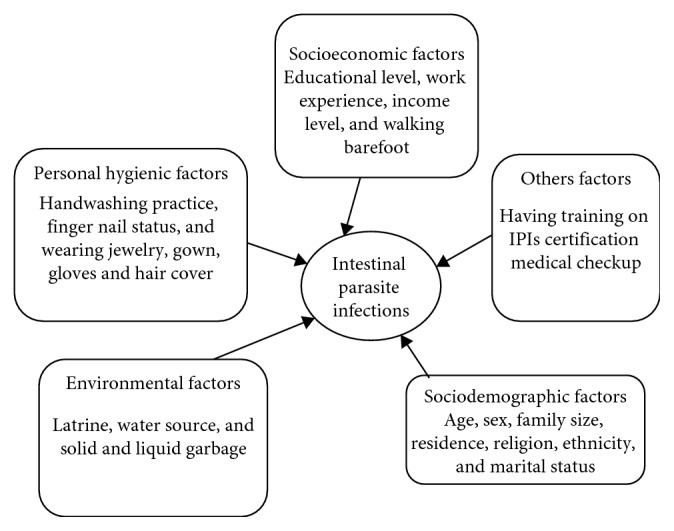
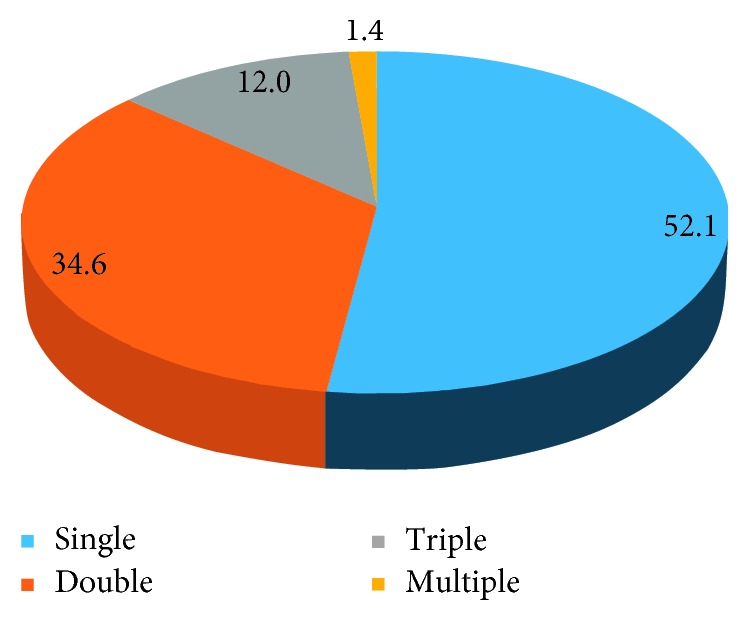
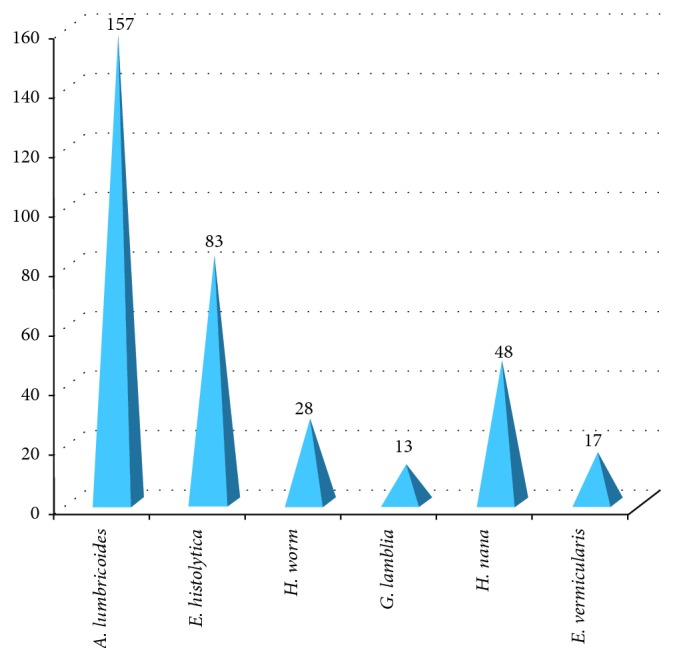
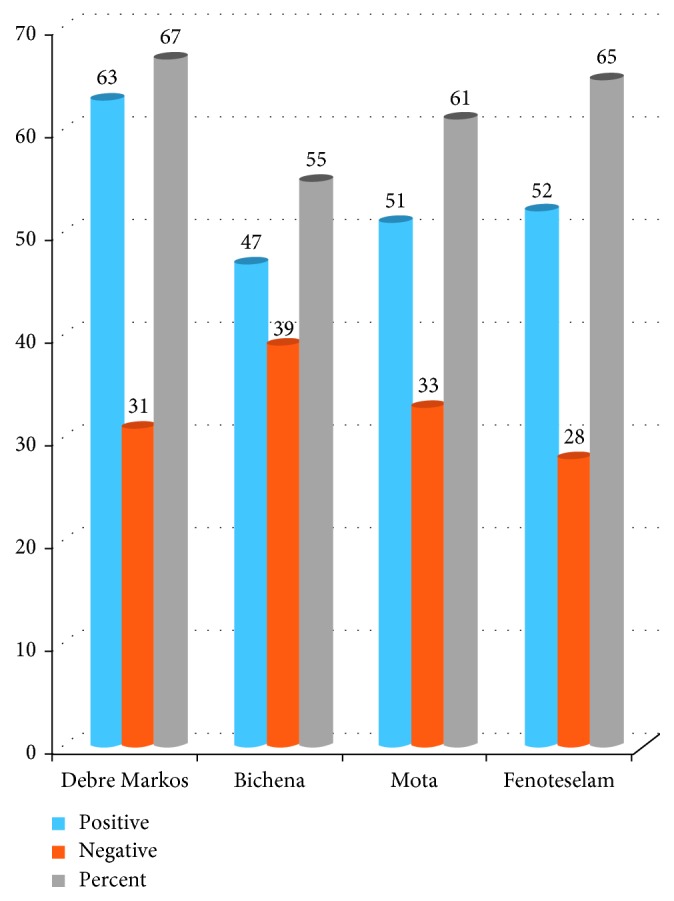
The overall prevalence of intestinal parasitic infections in the present study was 61.9%. The most prevalent parasite was (157 (45.6%)). Protozoan infection was higher than helminth infection. Multiple intestinal infections were identified; among study participants, 34.6% had double infection. The most significant associated factors of intestinal parasitic infections were fingernail status, residence, information about food contamination related to intestinal parasitic infection, income, and handwashing before having contact with food and after toilet with water only.
A high proportion of intestinal parasitic infection was detected among food handlers working at East and West Gojjam prison. Training must be given to the food handlers on personal hygienic conditions (finger trimming, handwashing after toilet and before having contact with food with water and soap, etc.).
包括埃塞俄比亚在内的发展中国家十大主要公共卫生问题之一是肠道寄生虫感染。大多数情况下,肠道寄生虫感染不会表现出临床体征和症状,并且有许多潜在携带者,如食品处理人员,这使得根除和控制肠道寄生虫感染变得极为困难。
本研究旨在评估2017年埃塞俄比亚戈贾姆东部和西部监狱食品处理人员肠道寄生虫感染的患病率及相关因素。
在戈贾姆东部和西部监狱开展了一项基于机构的横断面研究。共有416名研究参与者纳入研究,粪便检查和问卷调查的应答率为82.7%。使用结构化问卷收集数据,并根据标准寄生虫学程序采集和检查样本。使用Epi数据3.1版录入数据,SPSS 20版分析数据。
本研究中肠道寄生虫感染的总体患病率为61.9%。最常见的寄生虫是(157例(45.6%))。原生动物感染高于蠕虫感染。发现了多种肠道感染;在研究参与者中,34.6%有双重感染。肠道寄生虫感染最显著的相关因素是指甲状况、居住情况、与肠道寄生虫感染相关的食品污染信息、收入以及仅用水在接触食物前和便后洗手。
在戈贾姆东部和西部监狱工作的食品处理人员中检测到高比例的肠道寄生虫感染。必须对食品处理人员进行个人卫生条件方面的培训(修剪指甲、便后和接触食物前用肥皂和水洗手等)。