Department of Bio & Fermentation Convergence Technology, BK21 PLUS Project, Kookmin University, Seoul 02707, Republic of Korea.
Department of Molecular, Cellular, and Developmental Biology and the Neuroscience Research Institute, University of California, Santa Barbara, Santa Barbara, CA 93106, USA.
Cell Rep. 2019 Feb 5;26(6):1432-1442.e4. doi: 10.1016/j.celrep.2019.01.042.
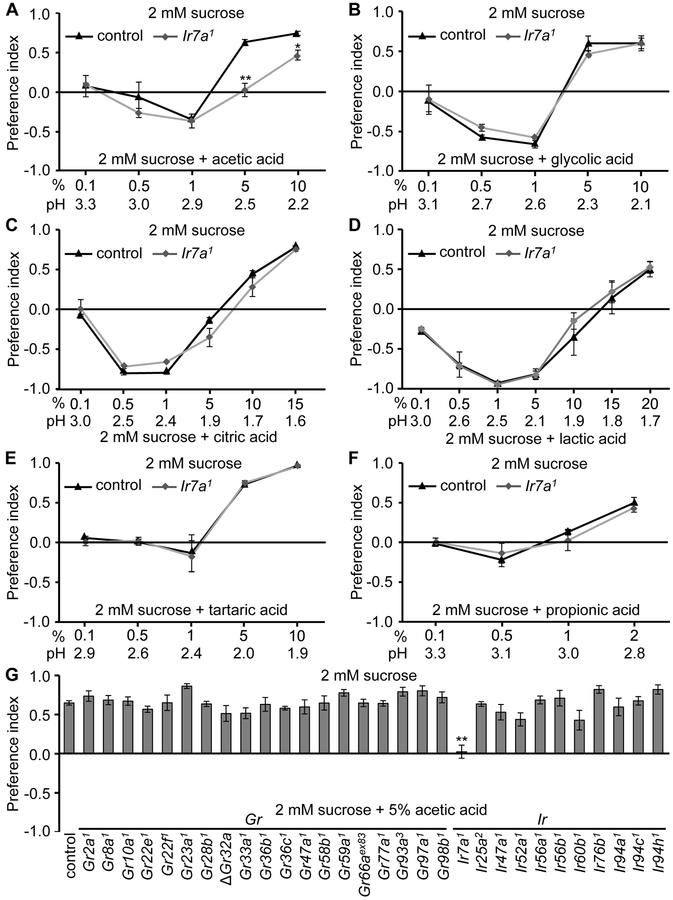
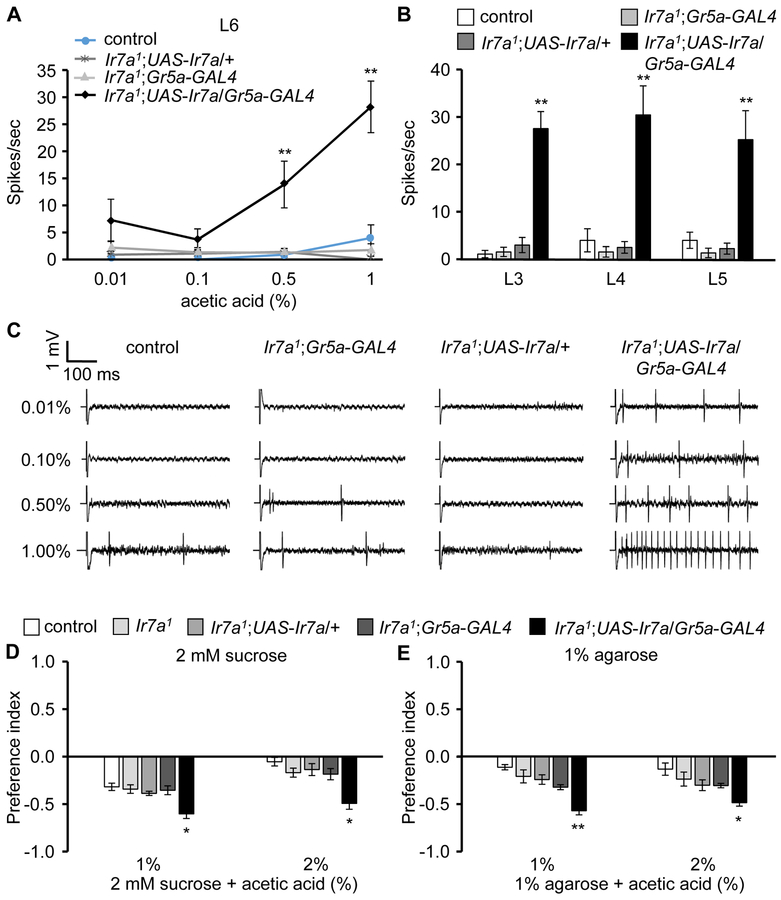
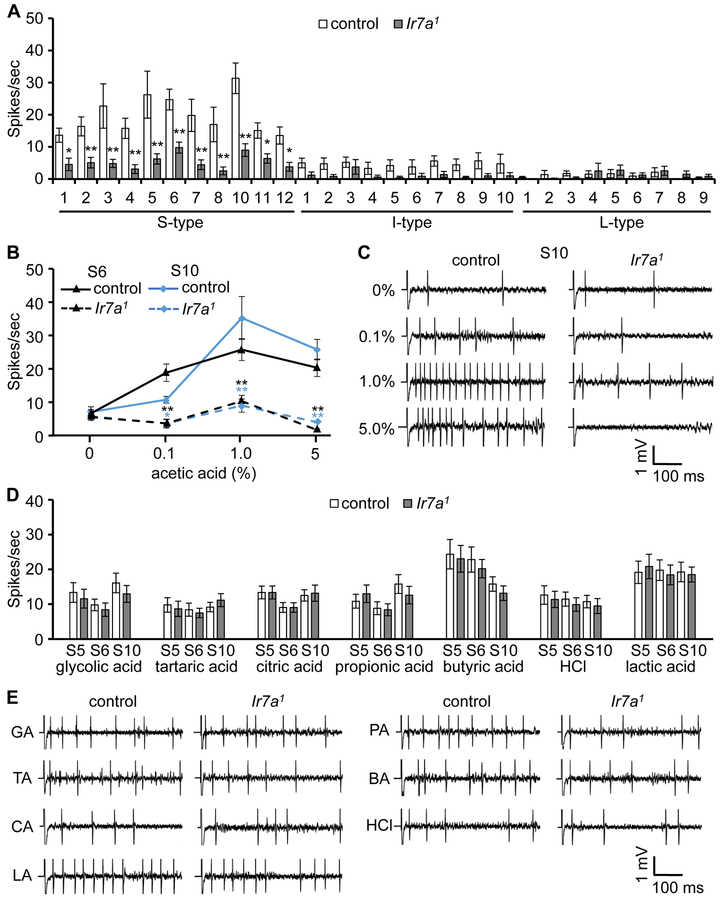
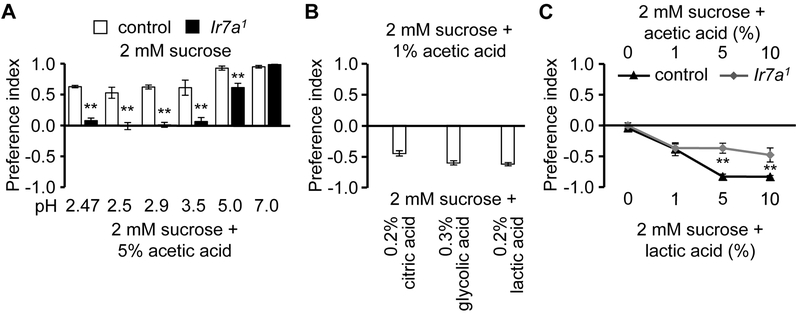
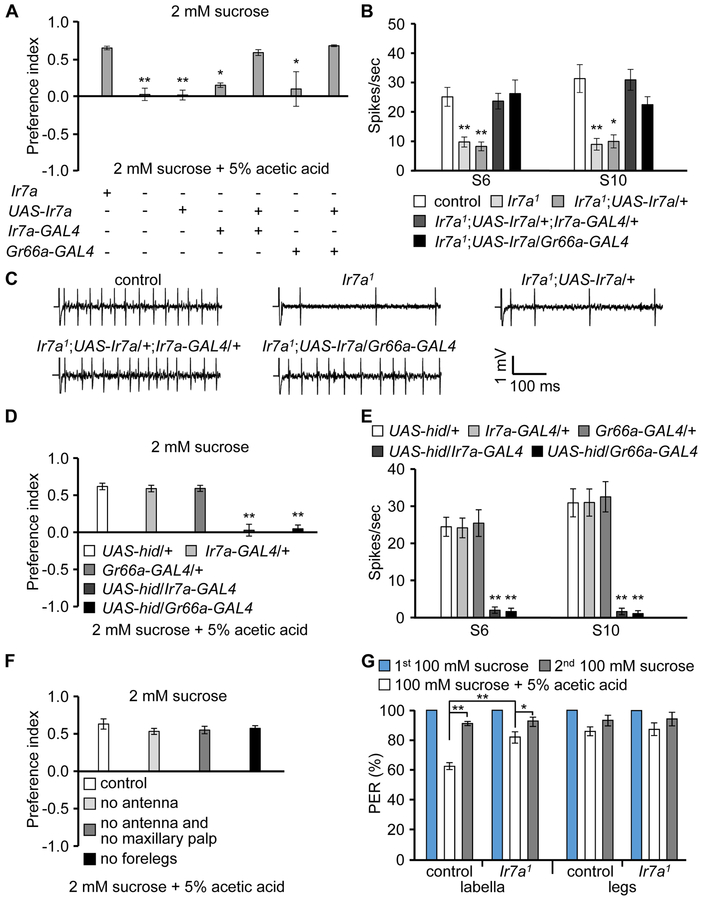
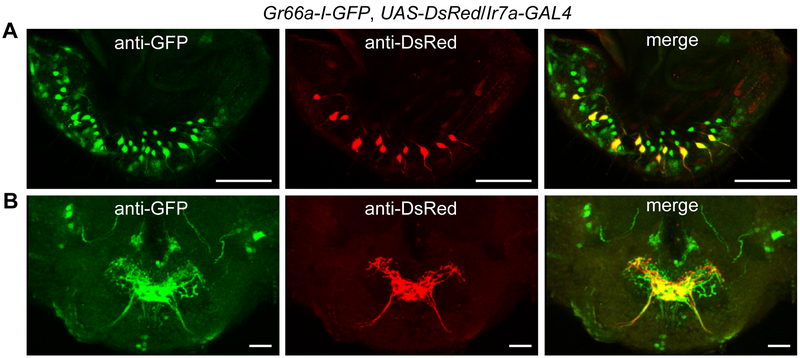
The decision to consume or reject a food based on the degree of acidity is critical for animal survival. However, the gustatory receptors that detect sour compounds and influence feeding behavior have been elusive. Here, using the fly, Drosophila melanogaster, we reveal that a member of the ionotropic receptor family, IR7a, is essential for rejecting foods laced with high levels of acetic acid. IR7a is dispensable for repulsion of other acidic compounds, indicating that the gustatory sensation of acids occurs through a repertoire rather than a single receptor. The fly's main taste organ, the labellum, is decorated with bristles that house dendrites of gustatory receptor neurons (GRNs). IR7a is expressed in a subset of bitter GRNs rather than GRNs dedicated to sour taste. Our findings indicate that flies taste acids through a repertoire of receptors, enabling them to discriminate foods on the basis of acid composition rather than just pH.
基于酸度来决定是否摄取或拒绝某种食物对动物的生存至关重要。然而,能够检测到酸味化合物并影响进食行为的味觉受体却一直难以捉摸。在这里,我们利用果蝇果蝇属揭示了离子型受体家族的一个成员 IR7a 对于拒绝食用高浓度乙酸的食物是必不可少的。IR7a 对于排斥其他酸性化合物是可有可无的,这表明酸的味觉感受是通过一系列而不是单个受体发生的。苍蝇的主要味觉器官——唇瓣上装饰着刷毛,刷毛内藏有味觉受体神经元 (GRNs) 的树突。IR7a 在一组苦味 GRNs 中表达,而不是专门用于酸味的 GRNs。我们的发现表明,苍蝇通过一系列受体来感知酸,使它们能够根据酸的组成而不是仅仅根据 pH 值来区分食物。