1Institute of Marine Research,PO Box 1870 Nordnes,NO-5817 Bergen,Norway.
2School of Nutrition,Université Laval,Quebec City,QC G1V 0A6,Canada.
Nutr Res Rev. 2019 Jun;32(1):146-167. doi: 10.1017/S0954422418000240. Epub 2019 Feb 7.
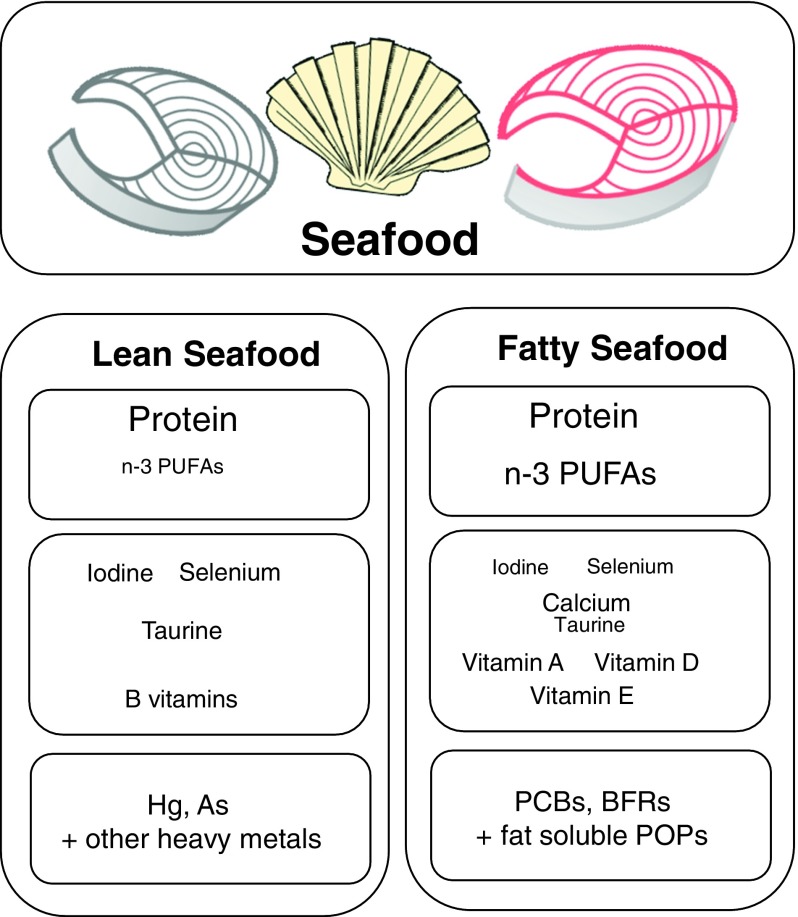
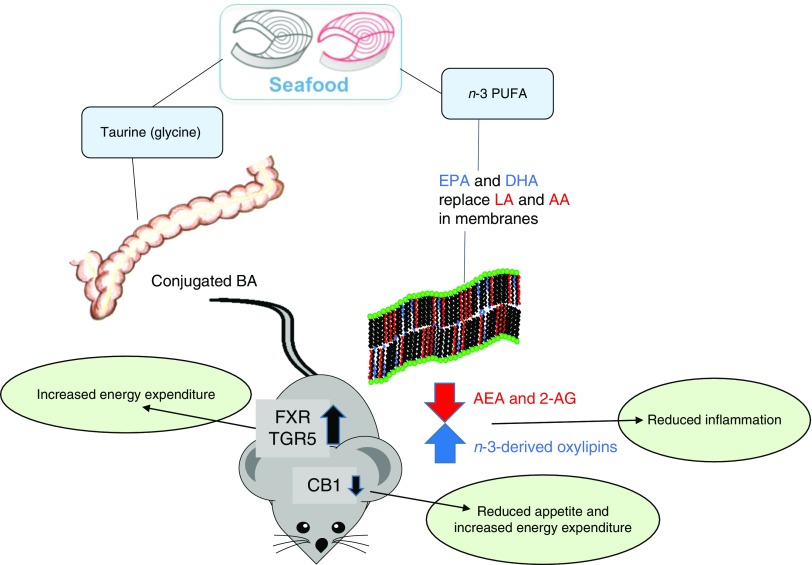
We provide an overview of studies on seafood intake in relation to obesity, insulin resistance and type 2 diabetes. Overweight and obesity development is for most individuals the result of years of positive energy balance. Evidence from intervention trials and animal studies suggests that frequent intake of lean seafood, as compared with intake of terrestrial meats, reduces energy intake by 4-9 %, sufficient to prevent a positive energy balance and obesity. At equal energy intake, lean seafood reduces fasting and postprandial risk markers of insulin resistance, and improves insulin sensitivity in insulin-resistant adults. Energy restriction combined with intake of lean and fatty seafood seems to increase weight loss. Marine n-3 PUFA are probably of importance through n-3 PUFA-derived lipid mediators such as endocannabinoids and oxylipins, but other constituents of seafood such as the fish protein per se, trace elements or vitamins also seem to play a largely neglected role. A high intake of fatty seafood increases circulating levels of the insulin-sensitising hormone adiponectin. As compared with a high meat intake, high intake of seafood has been reported to reduce plasma levels of the hepatic acute-phase protein C-reactive protein level in some, but not all studies. More studies are needed to confirm the dietary effects on energy intake, obesity and insulin resistance. Future studies should be designed to elucidate the potential contribution of trace elements, vitamins and undesirables present in seafood, and we argue that stratification into responders and non-responders in randomised controlled trials may improve the understanding of health effects from intake of seafood.
我们提供了关于海鲜摄入与肥胖、胰岛素抵抗和 2 型糖尿病关系的研究综述。超重和肥胖的发展是大多数人多年来能量正平衡的结果。来自干预试验和动物研究的证据表明,与摄入陆地肉类相比,频繁摄入低脂海鲜可减少 4-9%的能量摄入,足以防止能量正平衡和肥胖。在相等的能量摄入下,低脂海鲜可降低胰岛素抵抗的空腹和餐后风险标志物,并改善胰岛素抵抗成年人的胰岛素敏感性。与摄入低脂和高脂海鲜相结合的能量限制似乎会增加体重减轻。海洋 n-3PUFA 可能通过 n-3PUFA 衍生的脂质介质(如内源性大麻素和氧化脂质)发挥重要作用,但海鲜的其他成分,如鱼蛋白本身、微量元素或维生素,也可能发挥着很大程度上被忽视的作用。高脂肪海鲜摄入会增加胰岛素增敏激素脂联素的循环水平。与高肉类摄入相比,一些研究报告称,高海鲜摄入可降低某些但不是所有研究中血浆肝急性期蛋白 C 反应蛋白水平。需要更多的研究来证实饮食对能量摄入、肥胖和胰岛素抵抗的影响。未来的研究应设计阐明微量元素、维生素和海鲜中存在的不良因素的潜在贡献,我们认为在随机对照试验中分层为应答者和非应答者可能会提高对海鲜摄入对健康影响的理解。