Department of Biological Sciences, Western Michigan University, Kalamazoo, MI 49008, USA.
Department of Electrical, Computer, and Energy Engineering, University of Colorado Boulder, Boulder, CO 80309, USA.
Sci Adv. 2019 Jan 30;5(1):eaau7201. doi: 10.1126/sciadv.aau7201. eCollection 2019 Jan.
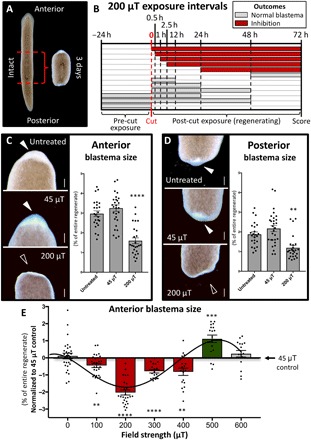
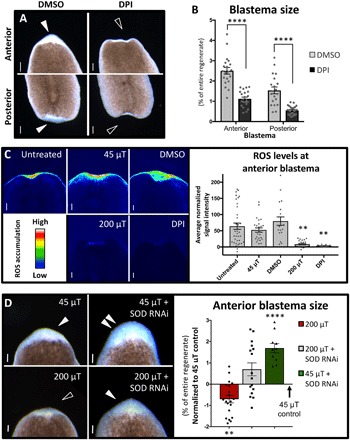
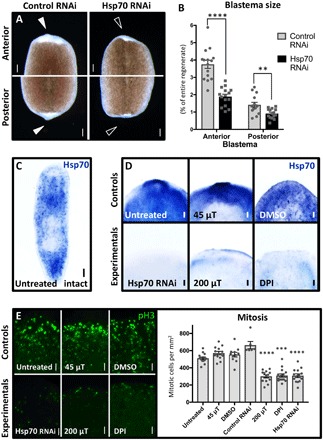
Biological systems are constantly exposed to electromagnetic fields (EMFs) in the form of natural geomagnetic fields and EMFs emitted from technology. While strong magnetic fields are known to change chemical reaction rates and free radical concentrations, the debate remains about whether static weak magnetic fields (WMFs; <1 mT) also produce biological effects. Using the planarian regeneration model, we show that WMFs altered stem cell proliferation and subsequent differentiation via changes in reactive oxygen species (ROS) accumulation and downstream heat shock protein 70 (Hsp70) expression. These data reveal that on the basis of field strength, WMF exposure can increase or decrease new tissue formation in vivo, suggesting WMFs as a potential therapeutic tool to manipulate mitotic activity.
生物系统不断受到电磁场所影响,这些电磁场以天然地磁场和技术产生的电磁场的形式存在。虽然强磁场已知会改变化学反应速率和自由基浓度,但关于静态弱磁场(WMF;<1 mT)是否也会产生生物效应仍存在争议。使用水螅再生模型,我们表明 WMF 通过改变活性氧(ROS)积累和下游热休克蛋白 70(Hsp70)表达来改变干细胞增殖和随后的分化。这些数据表明,基于场强,WMF 暴露可以增加或减少体内新组织的形成,这表明 WMF 作为一种潜在的治疗工具来操纵有丝分裂活性。