1Division of Cardiovascular Sciences, School of Medical Sciences, Faculty of Biology, Medicine and Health, The University of Manchester, Manchester Academic Health Sciences Centre, Core Technology Facility (3rd Floor), 46 Grafton Street, Manchester, M13 9NT UK.
2School of Biological Sciences, and Maurice Wilkins Centre for Molecular Biodiscovery, Faculty of Science, University of Auckland, Private Bag 92019, Auckland, 1142 New Zealand.
Commun Biol. 2019 Feb 4;2:43. doi: 10.1038/s42003-018-0254-9. eCollection 2019.
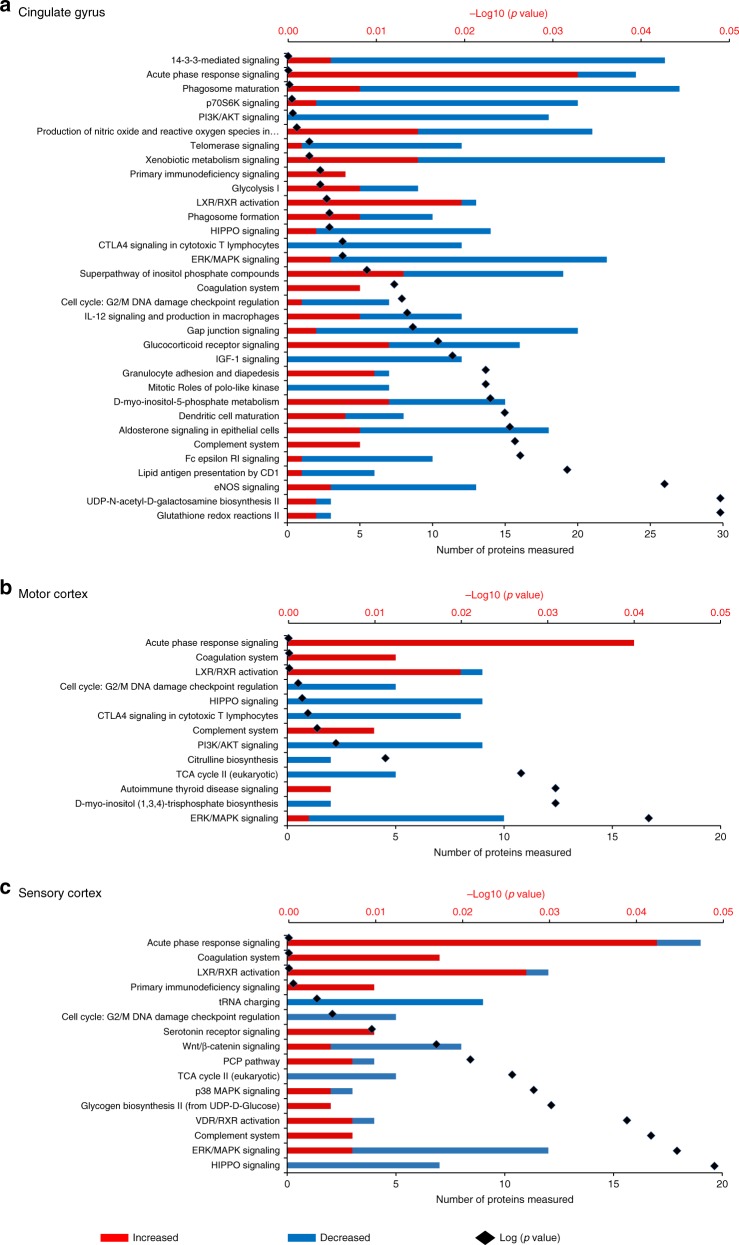
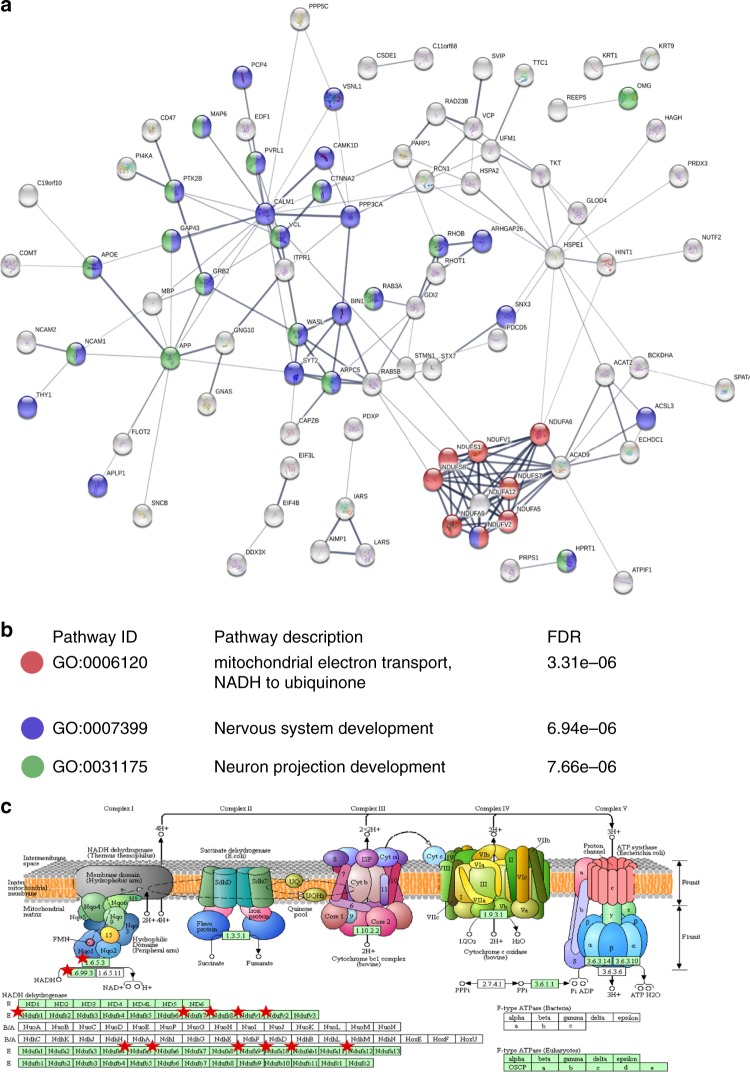
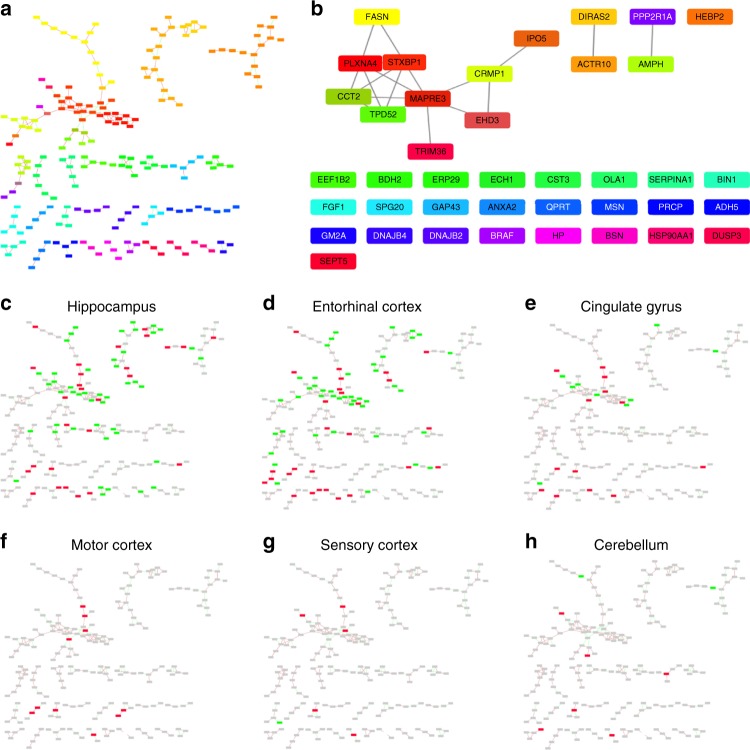
Alzheimer's disease (AD) is a progressive neurodegenerative disorder that currently affects 36 million people worldwide with no effective treatment available. Development of AD follows a distinctive pattern in the brain and is poorly modelled in animals. Therefore, it is vital to widen the spatial scope of the study of AD and prioritise the study of human brains. Here we show that functionally distinct human brain regions display varying and region-specific changes in protein expression. These changes provide insights into the progression of disease, novel AD-related pathways, the presence of a gradient of protein expression change from less to more affected regions and a possibly protective protein expression profile in the cerebellum. This spatial proteomics analysis provides a framework which can underpin current research and open new avenues to enhance molecular understanding of AD pathophysiology, provide new targets for intervention and broaden the conceptual frameworks for future AD research.
阿尔茨海默病(AD)是一种进行性神经退行性疾病,目前全球有 3600 万人受到影响,尚无有效的治疗方法。AD 在大脑中的发展具有独特的模式,在动物中建模效果不佳。因此,扩大 AD 研究的空间范围并优先研究人类大脑至关重要。在这里,我们表明功能不同的人类大脑区域显示出不同的、特定于区域的蛋白质表达变化。这些变化为疾病的进展提供了深入的了解,发现了新的 AD 相关途径,以及从受影响程度较低的区域到较高的区域,蛋白质表达变化的梯度存在,并且小脑可能存在具有保护作用的蛋白质表达特征。这种空间蛋白质组学分析提供了一个框架,可以为当前的研究提供支持,并为增强对 AD 病理生理学的分子理解、为干预提供新的靶点以及拓宽未来 AD 研究的概念框架开辟新的途径。