Emerg Infect Dis. 2019 Apr;25(4):691-700. doi: 10.3201/eid2504.180779. Epub 2019 Apr 17.
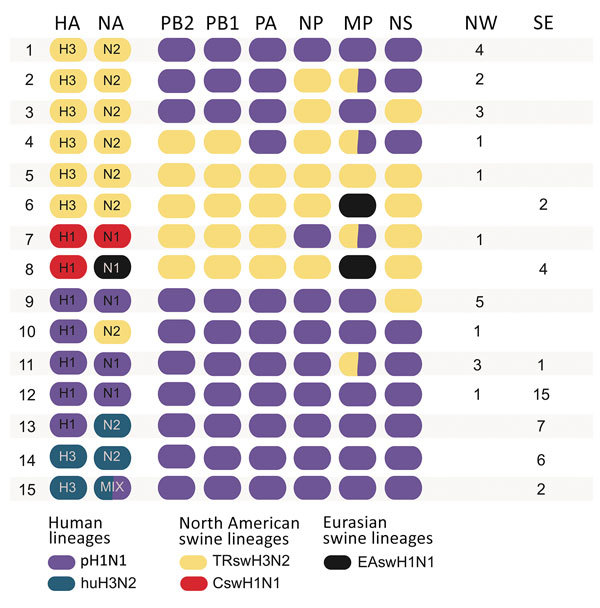
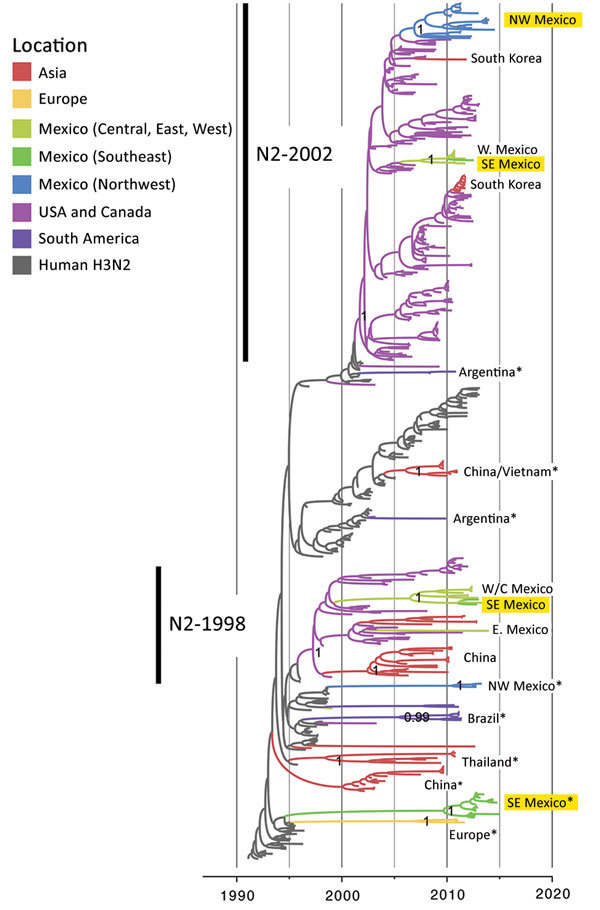
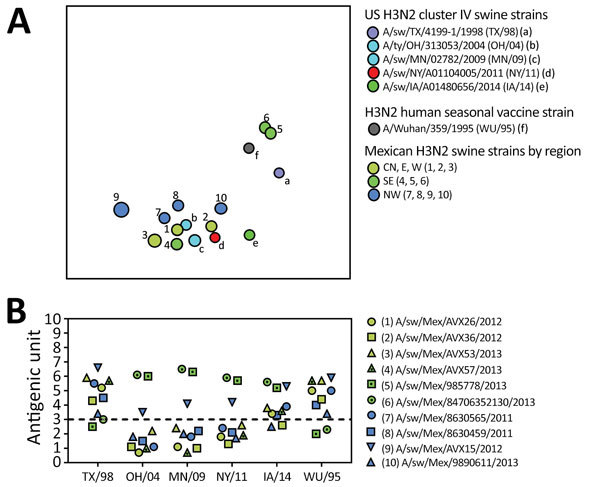
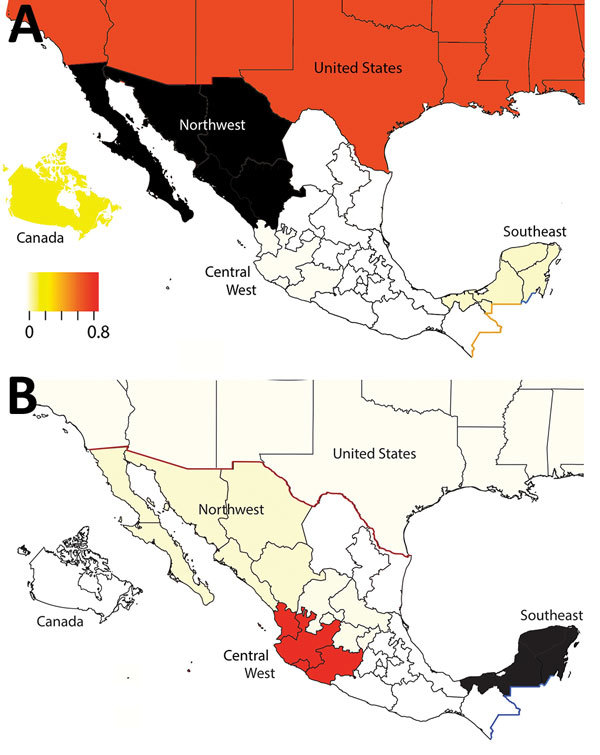
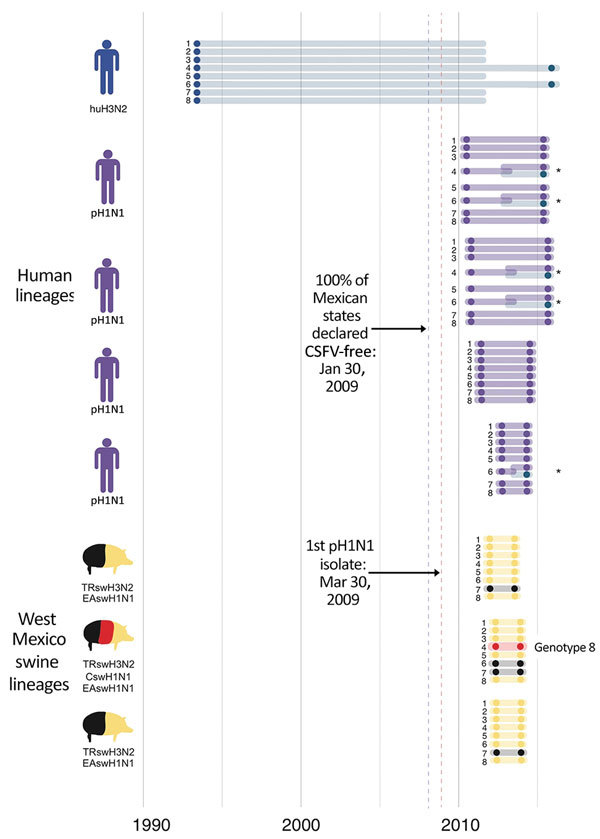
The genetic diversity of influenza A viruses circulating in swine in Mexico complicates control efforts in animals and presents a threat to humans, as shown by influenza A(H1N1)pdm09 virus. To describe evolution of swine influenza A viruses in Mexico and evaluate strains for vaccine development, we sequenced the genomes of 59 viruses and performed antigenic cartography on strains from 5 regions. We found that genetic and antigenic diversity were particularly high in southeast Mexico because of repeated introductions of viruses from humans and swine in other regions in Mexico. We identified novel reassortant H3N2 viruses with genome segments derived from 2 different viruses that were independently introduced from humans into swine: pandemic H1N1 viruses and seasonal H3N2 viruses. The Mexico swine viruses are antigenically distinct from US swine lineages. Protection against these viruses is unlikely to be afforded by US virus vaccines and would require development of new vaccines specifically targeting these diverse strains.
在墨西哥,流行于猪体内的甲型流感病毒具有遗传多样性,这使得对动物的防控工作变得复杂,并且对人类健康构成威胁,如甲型 H1N1pdm09 病毒。为了描述墨西哥猪流感病毒的演变,并评估候选疫苗株,我们对 59 株病毒进行了基因组测序,并对来自 5 个地区的病毒株进行了抗原作图。我们发现,由于墨西哥其他地区的人类和猪流感病毒的反复传入,东南部墨西哥的遗传和抗原多样性特别高。我们鉴定了新型重配 H3N2 病毒,其基因组片段来自于两种不同的病毒,这两种病毒均是独立地从人类传入猪体内:大流行 H1N1 病毒和季节性 H3N2 病毒。墨西哥猪流感病毒与美国猪流感谱系在抗原上存在差异。美国的病毒疫苗不太可能对这些病毒提供保护,这需要特别针对这些多样化的病毒株开发新的疫苗。