Eastern and Southern Africa Centre of International Parasite Control, Kenya Medical Research Institute (KEMRI), Nairobi, Kenya.
Faculty of Infectious and Tropical Diseases, London School of Hygiene and Tropical Medical Medicine, Keppel Street, London, WC1E 7HT, UK.
Parasit Vectors. 2019 Feb 7;12(1):76. doi: 10.1186/s13071-019-3322-1.
Soil-transmitted helminth (STH) and schistosome infections are among the most prevalent neglected tropical diseases (NTDs) in the world. School-aged children are particularly vulnerable to these chronic infections that can impair growth, nutritional status and cognitive ability. Mass drug administration (MDA) delivered either once or twice annually is a safe and effective approach recommended by the World Health Organization (WHO) to reduce worm burden. In 2012, Kenya began a national school-based deworming programme (NSBDP) aimed at reducing infection and associated morbidity. The change in prevalence and intensity of these infections was monitored over five years (2012-2017). Here, we present the changes in STH and schistosome infections between baseline and endline assessments, as well as explore the yearly patterns of infection reductions.
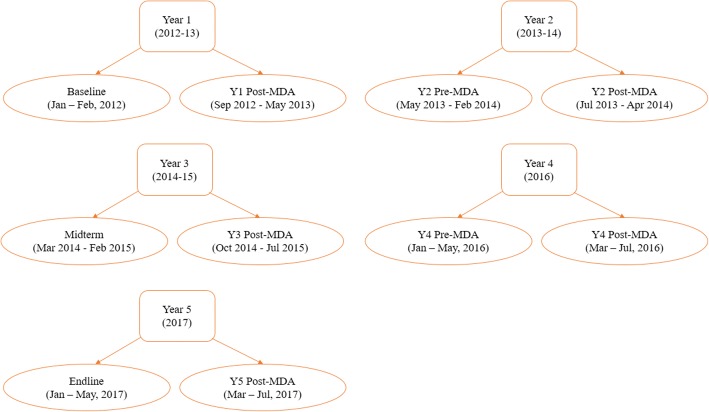
We used series of pre- and post-MDA intervention, repeat cross-sectional surveys in a representative, stratified, two-stage sample of schools in 16 counties of Kenya. The programme consisted of two tiers of monitoring; a national baseline, midterm and endline surveys consisting of 200 schools, and pre- and post-MDA surveys conducted yearly consisting of 60 schools. Stool and urine samples were collected from randomly selected school children and examined for STH and schistosome infections using Kato-Katz and urine filtration techniques respectively.
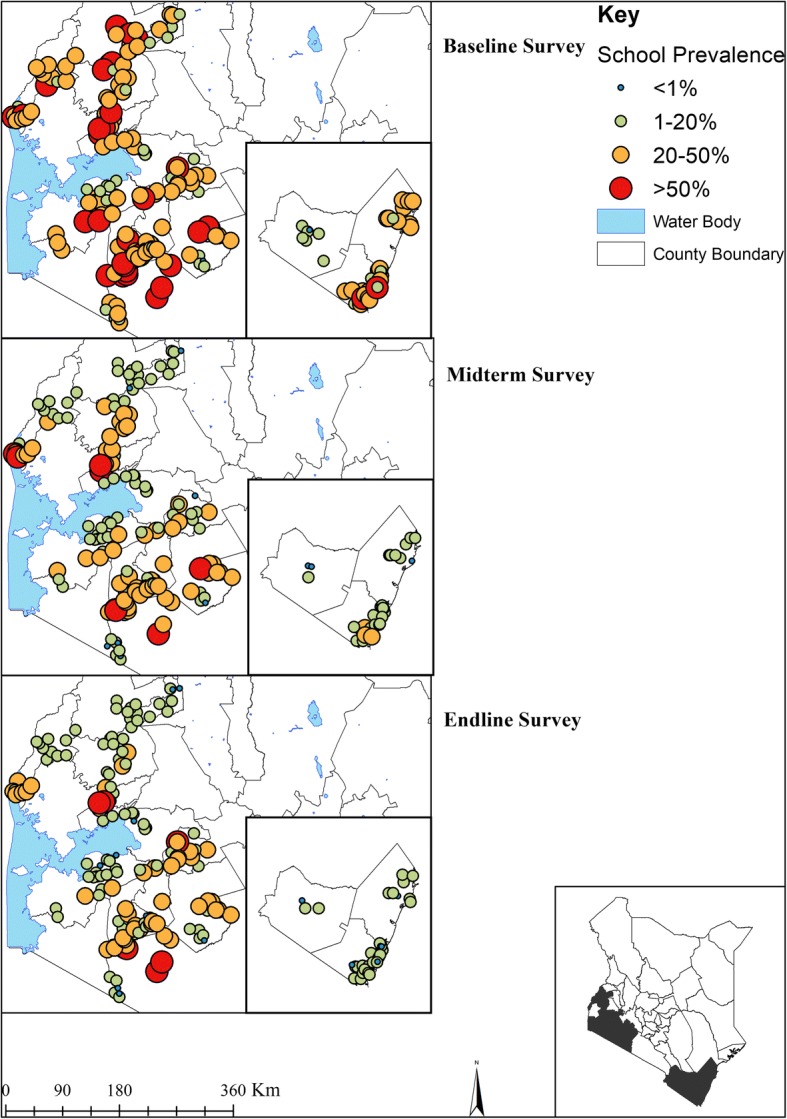
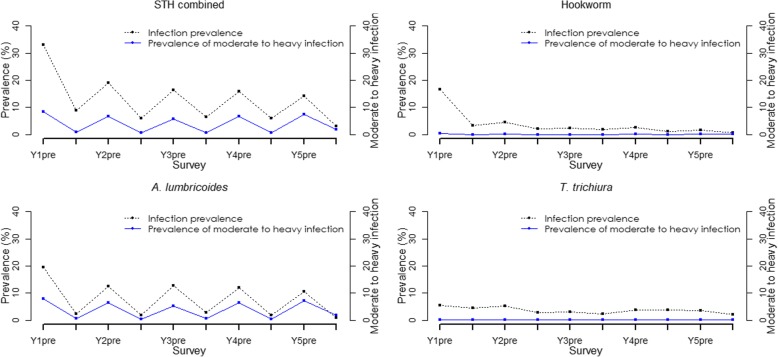
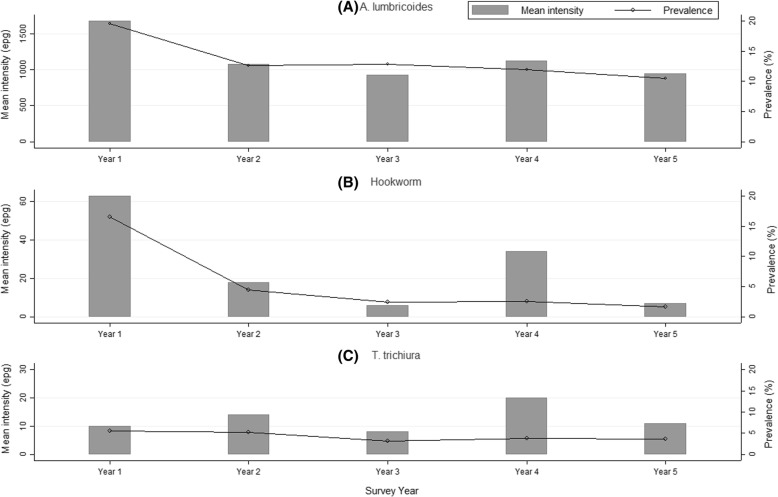
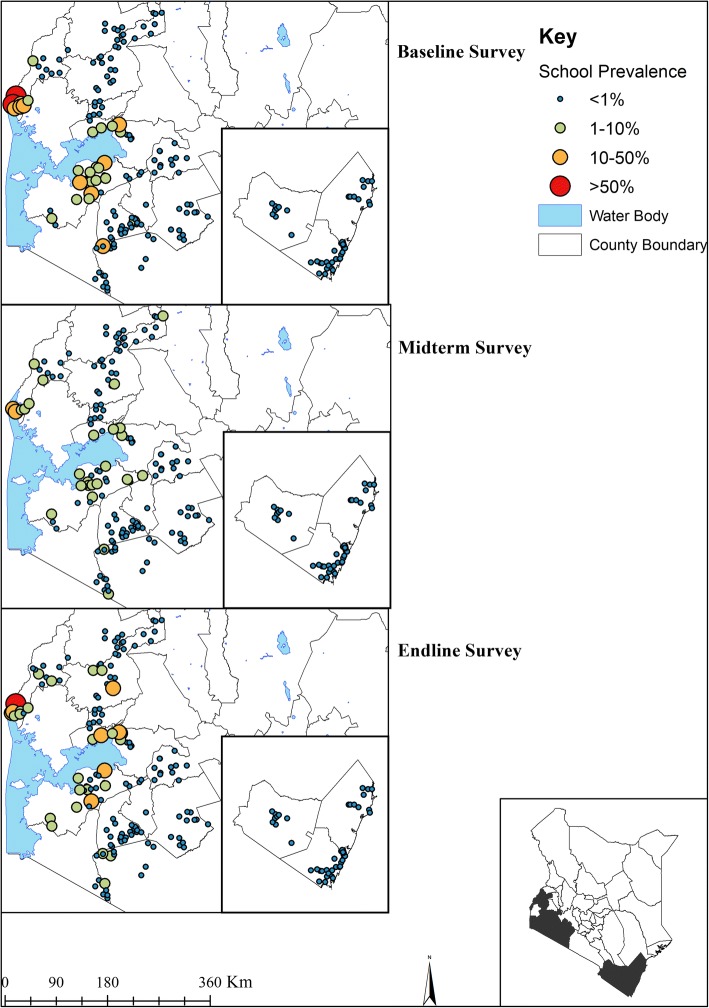
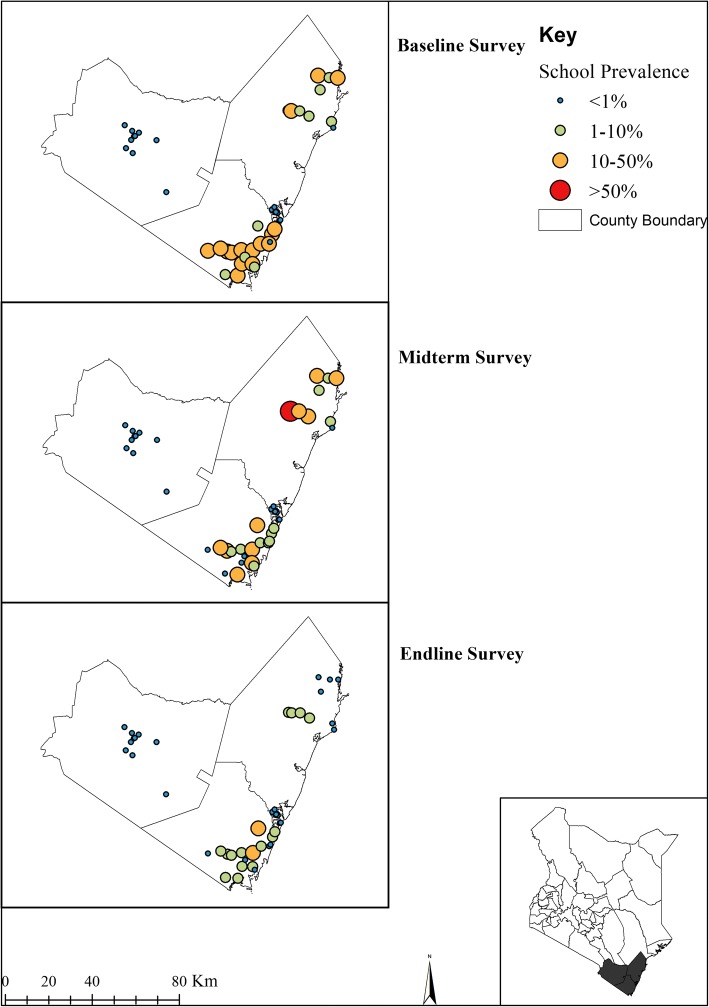
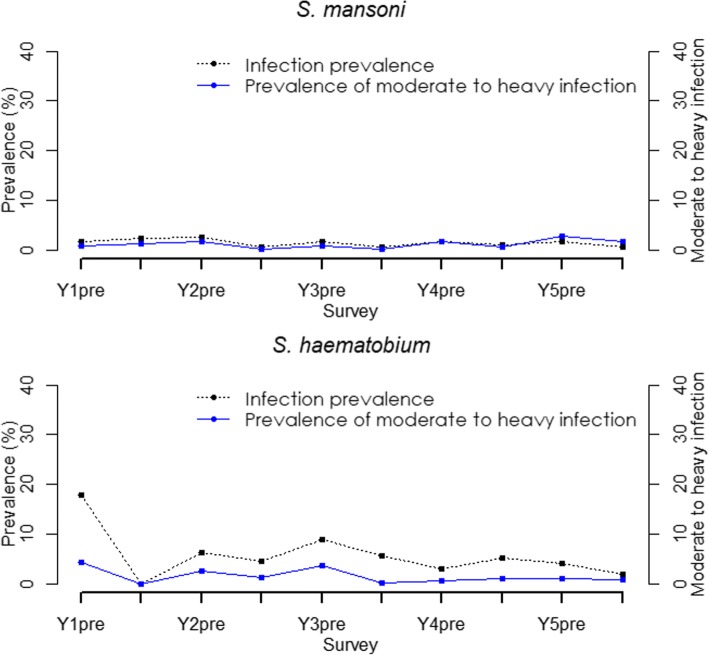
Overall, 32.3%, 16.4% and 13.5% of the children were infected with any STH species during baseline, midterm and endline assessment, respectively, with a relative reduction of 58.2% over the five-year period. The overall prevalence of S. mansoni was 2.1%, 1.5% and 1.7% and of S. haematobium was 14.8%, 6.8% and 2.4%, respectively, for baseline, midterm and endline surveys. We observed inter-region and inter-county heterogeneity variation in the infection levels.
The analysis provided robust assessment of the programme and outlined the current prevalence, mean intensity and re-infection pattern of these infections. Our findings will allow the Government of Kenya to make informed decisions on the strategy to control and eliminate these NTDs. Our results suggest that complimentary interventions may have to be introduced to sustain the chemotherapeutic gains of MDA and accelerate attainment of elimination of these NTDs as a public health problem in Kenya.
土壤传播性蠕虫(STH)和血吸虫感染是世界上最普遍的被忽视热带病(NTD)之一。学龄儿童尤其容易受到这些慢性感染的影响,这些感染会损害他们的生长、营养状况和认知能力。世界卫生组织(WHO)建议每年进行一次或两次大规模药物驱虫(MDA),这是一种安全有效的方法,可以减少蠕虫负担。2012 年,肯尼亚开始了一项全国性的学校驱虫方案(NSBDP),旨在减少感染和相关发病率。五年来(2012-2017 年),一直在监测这些感染的流行率和强度变化。在这里,我们介绍了基线和期末评估之间 STH 和血吸虫感染的变化情况,并探讨了每年感染减少的模式。
我们使用了肯尼亚 16 个县的一系列具有代表性的、分层的、两阶段抽样学校的 MDA 干预前后的重复横断面调查数据。该方案包括两个监测层次;国家基线、中期和期末调查由 200 所学校组成,以及每年进行的 MDA 前后调查,由 60 所学校组成。从随机选择的在校儿童中采集粪便和尿液样本,分别使用加藤厚涂片和尿液过滤技术检查 STH 和血吸虫感染情况。
总体而言,在基线、中期和期末评估中,分别有 32.3%、16.4%和 13.5%的儿童感染了任何 STH 物种,五年期间相对减少了 58.2%。曼氏血吸虫的总体流行率为 2.1%、1.5%和 1.7%,而埃及血吸虫的流行率为 14.8%、6.8%和 2.4%,分别为基线、中期和期末调查。我们观察到感染水平的区域和县级差异。
该分析提供了对该方案的可靠评估,并概述了这些感染的当前流行率、平均强度和再感染模式。我们的发现将使肯尼亚政府能够就控制和消除这些 NTD 的战略做出明智的决策。我们的结果表明,可能需要引入补充干预措施,以维持 MDA 的化疗法获益,并加速消除这些 NTD 作为肯尼亚公共卫生问题。