Faculty of Medicine, University of Tsukuba, 305-8575, Ibaraki, Japan.
Graduate School of Medical and Dental Sciences, Kagoshima University, 890-8544, Kagoshima, Japan.
Sci Rep. 2019 Feb 7;9(1):1638. doi: 10.1038/s41598-018-38460-z.
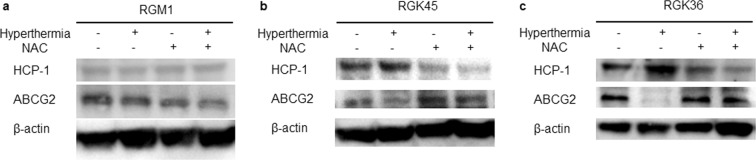
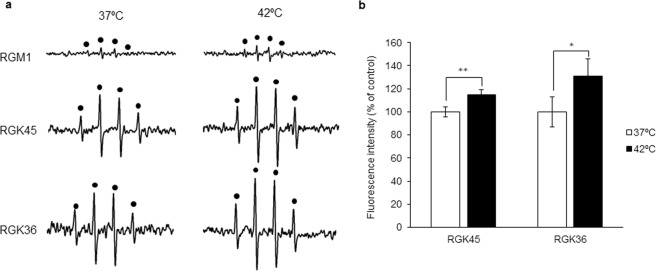
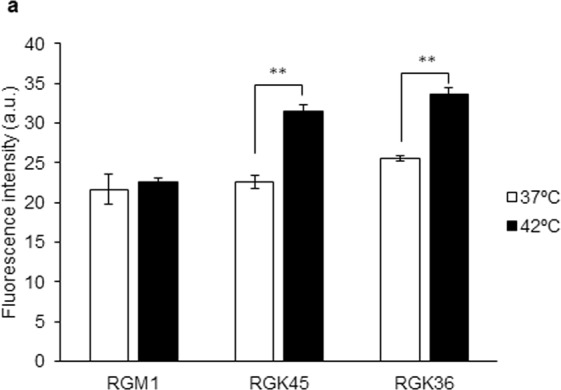
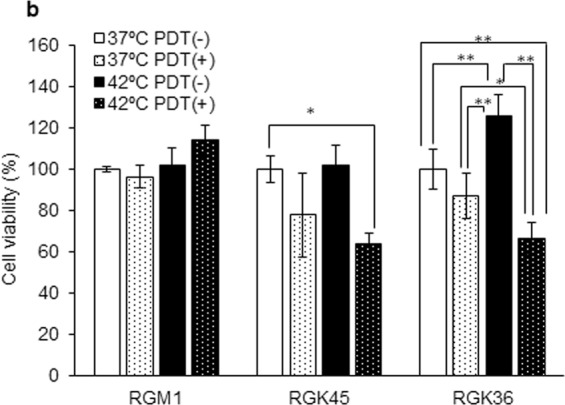
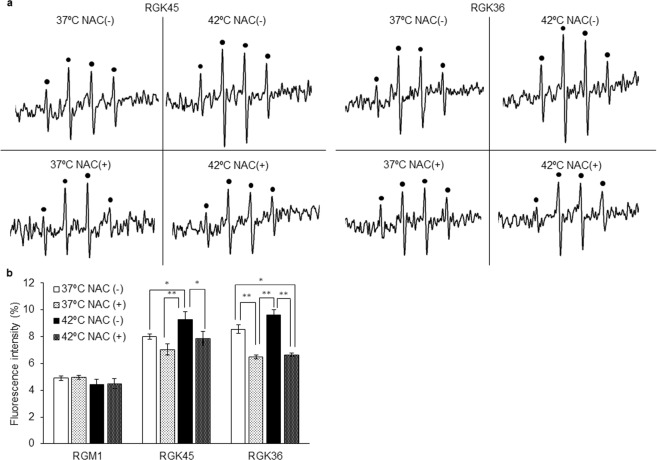
Photodynamic therapy (PDT) is a cancer treatment that make use of the cancer-specific accumulation of porphyrins. We have reported that mitochondrial reactive oxygen species (mitROS) upregulate uptake transporter of porphyrins, heme carrier protein-1 (HCP-1). The accumulation of cancer-specific porphyrins was increased by mitROS production, thereby the cancer-specific PDT cytotoxicity was enhanced. Thus we investigated whether mitROS production by hyperthermia can enhanced the cytotoxicity of PDT or not. In this study, 1 h of hyperthermia at 42 °C increased the mitROS production, and both the accumulation of cancer-specific porphyrins and the PDT cytotoxicity increased. Moreover, the authors treated cells with N-acetyl-L-cysteine (NAC) to examine the effect of mitROS. NAC inhibited the increasing ROS production after hyperthermia to restrain the post-treatment increase of cancer-specific porphyrins accumulation. Moreover, the increase of ROS production in cancer cells after hyperthermia upregulated HCP-1 expression and downregulated ABCG2 expression. These regulation were inhibited by NAC. These results suggest that hyperthermia treatment increased mitROS production, which involved HpD accumulation and enhanced PDT effects in cancer cells. The mechanism of this phenomenon was most likely to be due to both the upregulation of HCP-1 and the downregulation of ABCG2 by mitROS.
光动力疗法(PDT)是一种利用癌组织中卟啉类物质特异性聚集的癌症治疗方法。我们曾报道过,线粒体活性氧(mitROS)可上调卟啉类物质、血红素载体蛋白-1(HCP-1)的摄取转运体。mitROS 的产生增加了癌组织中特异性卟啉类物质的积累,从而增强了癌组织特异性 PDT 细胞毒性。因此,我们研究了热疗是否能通过产生 mitROS 来增强 PDT 的细胞毒性。在这项研究中,42°C 下 1 小时的热疗会增加 mitROS 的产生,同时增加癌组织特异性卟啉类物质的积累和 PDT 细胞毒性。此外,作者用 N-乙酰-L-半胱氨酸(NAC)处理细胞以研究 mitROS 的作用。NAC 抑制了热疗后 ROS 产生的增加,从而抑制了治疗后癌组织特异性卟啉类物质积累的增加。此外,热疗后癌细胞中 ROS 产生的增加上调了 HCP-1 的表达并下调了 ABCG2 的表达。这些调节被 NAC 抑制。这些结果表明,热疗增加了 mitROS 的产生,这涉及 HpD 的积累并增强了癌细胞中的 PDT 效应。这种现象的机制很可能是由于 mitROS 同时上调了 HCP-1 和下调了 ABCG2。