Eun Kiyoung, Ham Seok Won, Kim Hyunggee
Department of Biotechnology, College of Life Sciences and Biotechnology, Korea University, Seoul 02841, Korea.
BMB Rep. 2017 Mar;50(3):117-125. doi: 10.5483/bmbrep.2017.50.3.222.
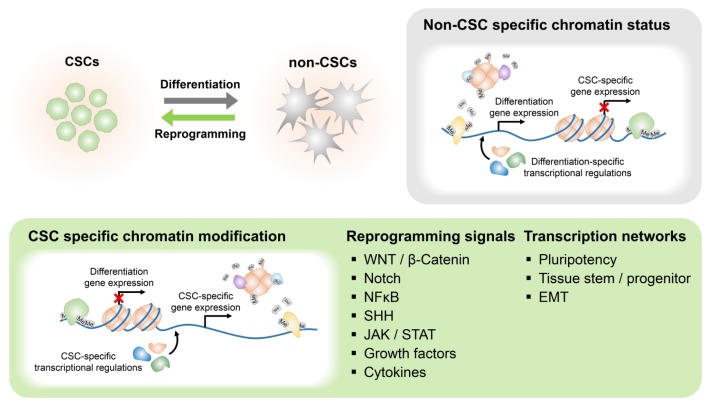
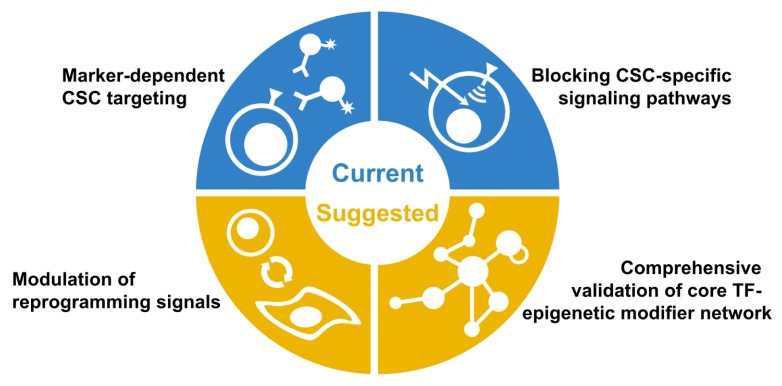
Most of the cancers are still incurable human diseases. According to recent findings, especially targeting cancer stem cells (CSCs) is the most promising therapeutic strategy. CSCs take charge of a cancer hierarchy, harboring stem cell-like properties involving self-renewal and aberrant differentiation potential. Most of all, the presence of CSCs is closely associated with tumorigenesis and therapeutic resistance. Despite the numerous efforts to target CSCs, current anti-cancer therapies are still impeded by CSC-derived cancer malignancies; increased metastases, tumor recurrence, and even acquired resistance against the anti-CSC therapies developed in experimental models. One of the most forceful underlying reasons is a "cancer heterogeneity" due to "CSC plasticity". A comprehensive understanding of CSC-derived heterogeneity will provide novel insights into the establishment of efficient targeting strategies to eliminate CSCs. Here, we introduce findings on mechanisms of CSC reprogramming and CSC plasticity, which give rise to phenotypically varied CSCs. Also, we suggest concepts to improve CSC-targeted therapy in order to overcome therapeutic resistance caused by CSC plasticity and heterogeneity. [BMB Reports 2017; 50(3): 117-125].
大多数癌症仍然是无法治愈的人类疾病。根据最近的研究结果,尤其针对癌症干细胞(CSCs)是最有前景的治疗策略。癌症干细胞掌控着癌症层级结构,具有类似干细胞的特性,包括自我更新和异常分化潜能。最重要的是,癌症干细胞的存在与肿瘤发生和治疗抗性密切相关。尽管针对癌症干细胞进行了大量努力,但目前的抗癌疗法仍然受到癌症干细胞衍生的恶性肿瘤的阻碍;转移增加、肿瘤复发,甚至对实验模型中开发的抗癌症干细胞疗法产生获得性抗性。最有力的潜在原因之一是由于“癌症干细胞可塑性”导致的“癌症异质性”。对癌症干细胞衍生的异质性的全面理解将为建立消除癌症干细胞的有效靶向策略提供新的见解。在此,我们介绍关于癌症干细胞重编程和癌症干细胞可塑性机制的研究结果,这些机制导致了表型各异的癌症干细胞。此外,我们提出改进针对癌症干细胞治疗的概念,以克服由癌症干细胞可塑性和异质性引起的治疗抗性。[《BMB报告》2017年;50(3): 117 - 125]