1Department of Biology, University of Miami, Coral Gables, FL USA.
2Seaver Autism Center for Research and Treatment, Department of Psychiatry, Friedman Brain Institute and Mindich Child Health and Development Institute, Icahn School of Medicine at Mount Sinai, New York, NY USA.
Mol Autism. 2019 Jan 31;10:3. doi: 10.1186/s13229-018-0250-4. eCollection 2019.
Autism spectrum disorder (ASD) is currently estimated to affect more than 1% of the world population. For people with ASD, gastrointestinal (GI) distress is a commonly reported but a poorly understood co-occurring symptom. Here, we investigate the physiological basis for GI distress in ASD by studying gut function in a zebrafish model of Phelan-McDermid syndrome (PMS), a condition caused by mutations in the gene.
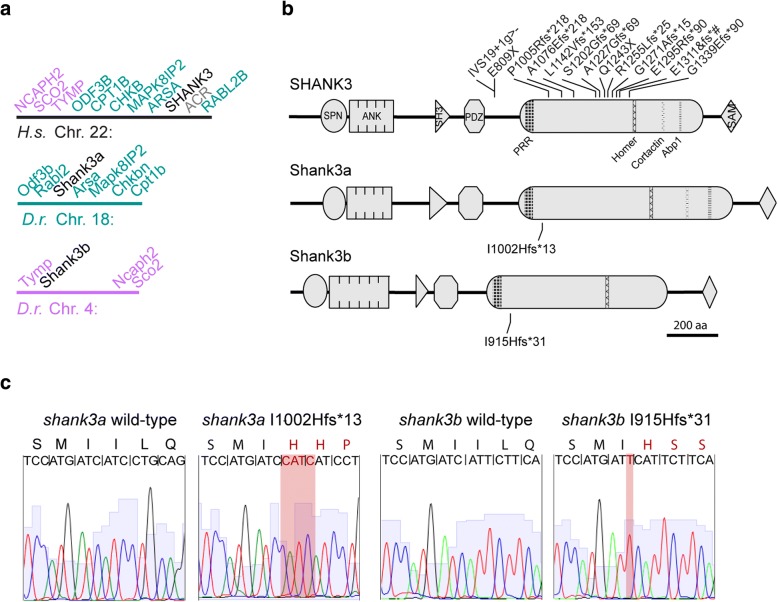
To generate a zebrafish model of PMS, we used CRISPR/Cas9 to introduce clinically related C-terminal frameshift mutations in and zebrafish paralogues (). Because PMS is caused by haploinsufficiency, we assessed the digestive tract (DT) structure and function in zebrafish heterozygotes. Human mRNA was then used to rescue DT phenotypes in larval zebrafish.
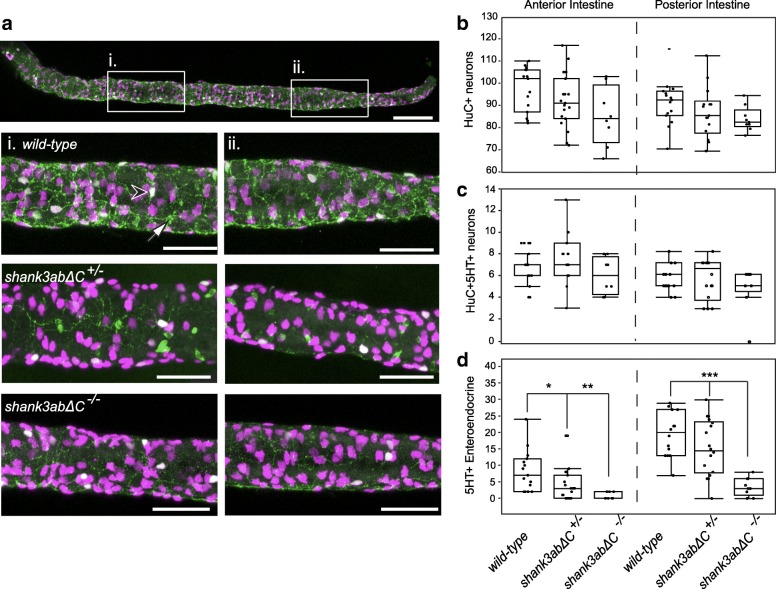
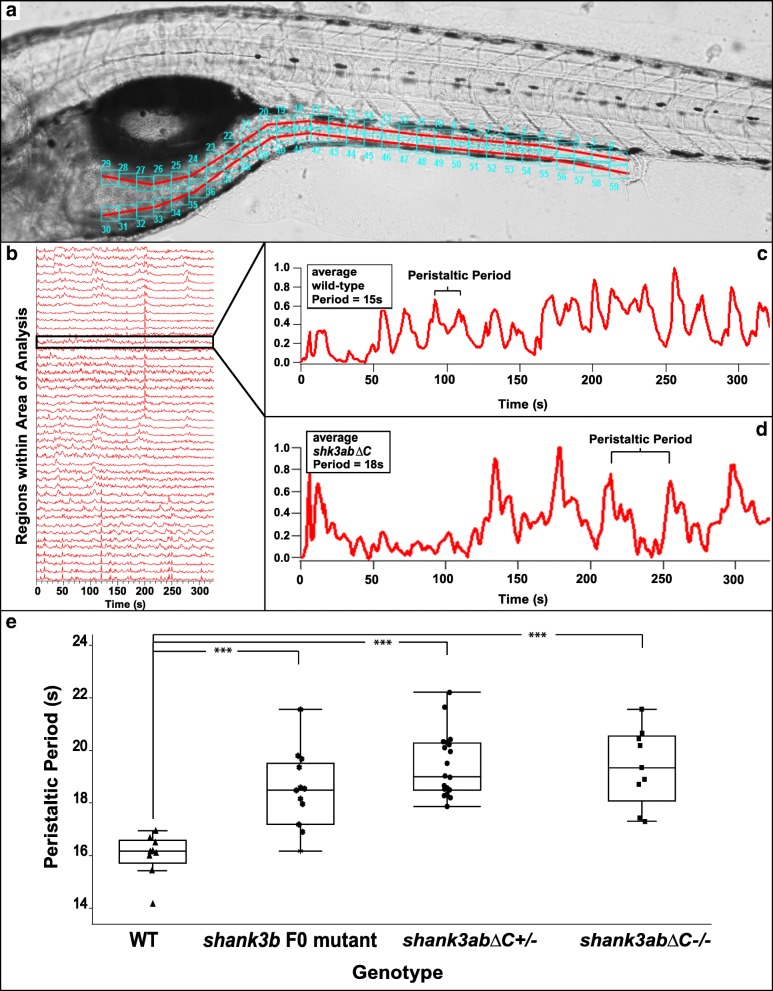
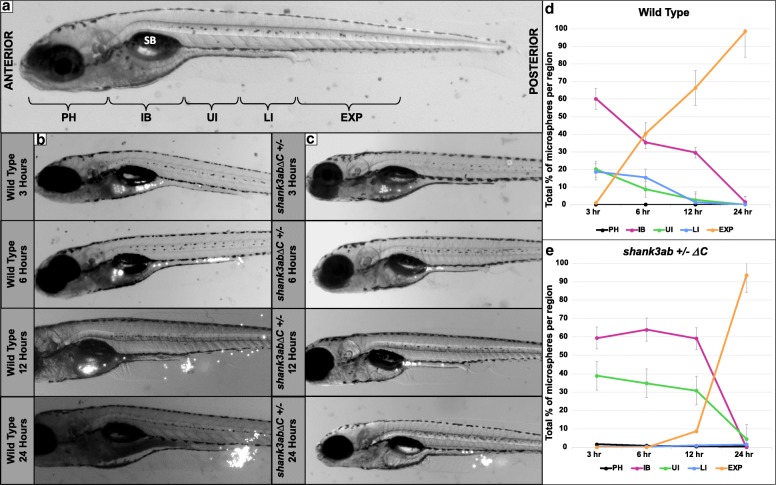
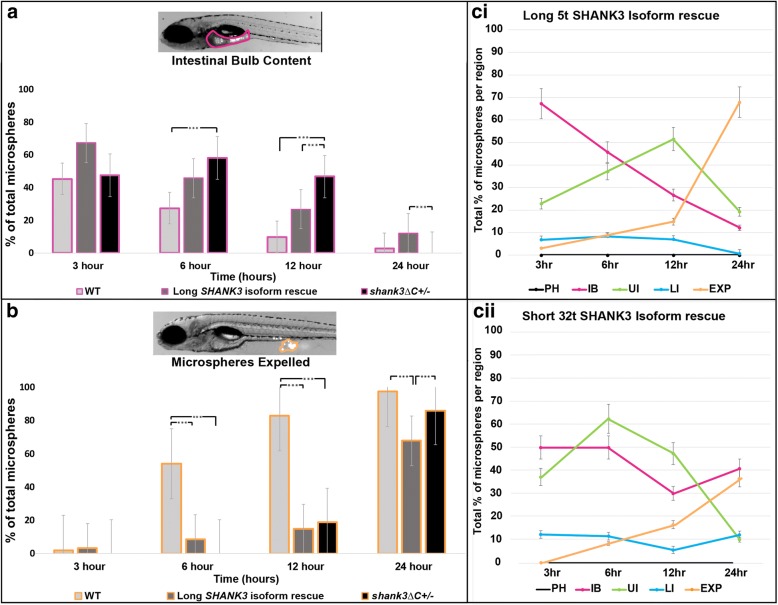
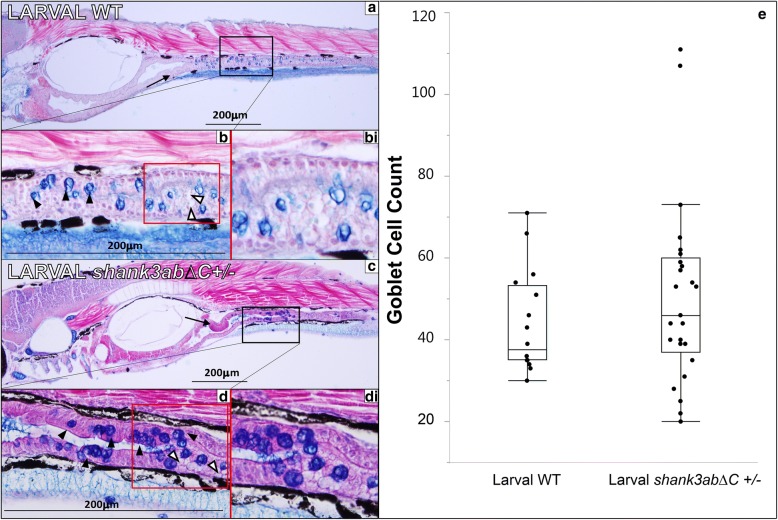
Significantly slower rates of DT peristaltic contractions ( < 0.001) with correspondingly prolonged passage time ( < 0.004) occurred in mutants. Rescue injections of mRNA encoding the longest human isoform into mutants produced larvae with intestinal bulb emptying similar to wild type (WT), but still deficits in posterior intestinal motility. Serotonin-positive enteroendocrine cells (EECs) were significantly reduced in both and mutants ( < 0.05) while enteric neuron counts and overall structure of the DT epithelium, including goblet cell number, were unaffected in larvae.
Our data and rescue experiments support mutations in as causal for GI transit and motility abnormalities. Reductions in serotonin-positive EECs and serotonin-filled ENS boutons suggest an endocrine/neural component to this dysmotility. This is the first study to date demonstrating DT dysmotility in a zebrafish single gene mutant model of ASD.
自闭症谱系障碍(ASD)目前估计影响全球超过 1%的人口。对于 ASD 患者来说,胃肠道(GI)不适是一种常见的报告但理解较差的共病症状。在这里,我们通过研究 Phelan-McDermid 综合征(PMS)斑马鱼模型中的肠道功能来研究 ASD 中 GI 不适的生理基础,PMS 是由 基因突变引起的。
为了生成 PMS 的斑马鱼模型,我们使用 CRISPR/Cas9 在 和 斑马鱼同源基因()中引入临床上相关的 C 末端移码突变。由于 PMS 是由 杂合不足引起的,我们评估了斑马鱼杂合子的消化道(DT)结构和功能。然后,使用人类 mRNA 挽救幼鱼的 DT 表型。
突变体的 DT 蠕动收缩率明显较慢(<0.001),相应的通过时间延长(<0.004)。将编码人类 最长同工型的 mRNA 进行rescue 注射到 突变体中,产生的幼虫的肠泡排空与野生型(WT)相似,但在后肠运动方面仍存在缺陷。 和 突变体中的 5-羟色胺阳性肠内分泌细胞(EEC)明显减少(<0.05),而 幼虫的肠神经元计数和 DT 上皮的整体结构,包括杯状细胞数量,均不受影响。
我们的数据和挽救实验支持 突变是导致 GI 转运和运动异常的原因。5-羟色胺阳性 EEC 减少和充满 5-羟色胺的 ENS 末梢减少表明这种运动障碍存在内分泌/神经成分。这是迄今为止首次在 ASD 的斑马鱼单基因突变模型中证明 DT 运动障碍的研究。