Department of Molecular Genetics and Microbiology, Duke Microbiome Center, Duke University School of Medicine, Durham, NC 27710, USA; Division of Gastroenterology, Department of Medicine, Duke University School of Medicine, Durham, NC 27710, USA.
Department of Biological Chemistry and Molecular Pharmacology, Harvard Medical School, Boston, MA 02115, USA.
Cell Host Microbe. 2021 Feb 10;29(2):179-196.e9. doi: 10.1016/j.chom.2020.11.011. Epub 2020 Dec 21.
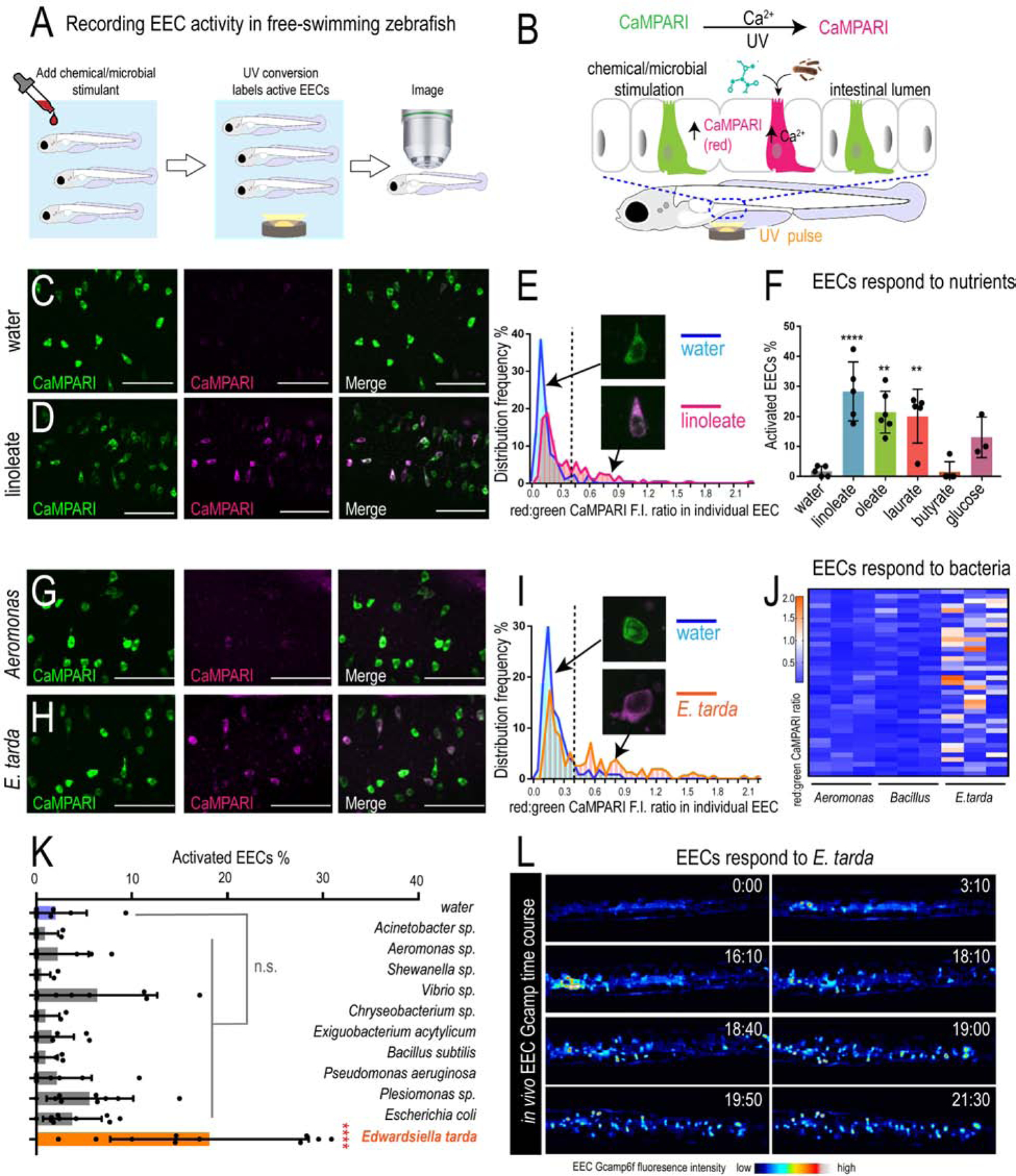
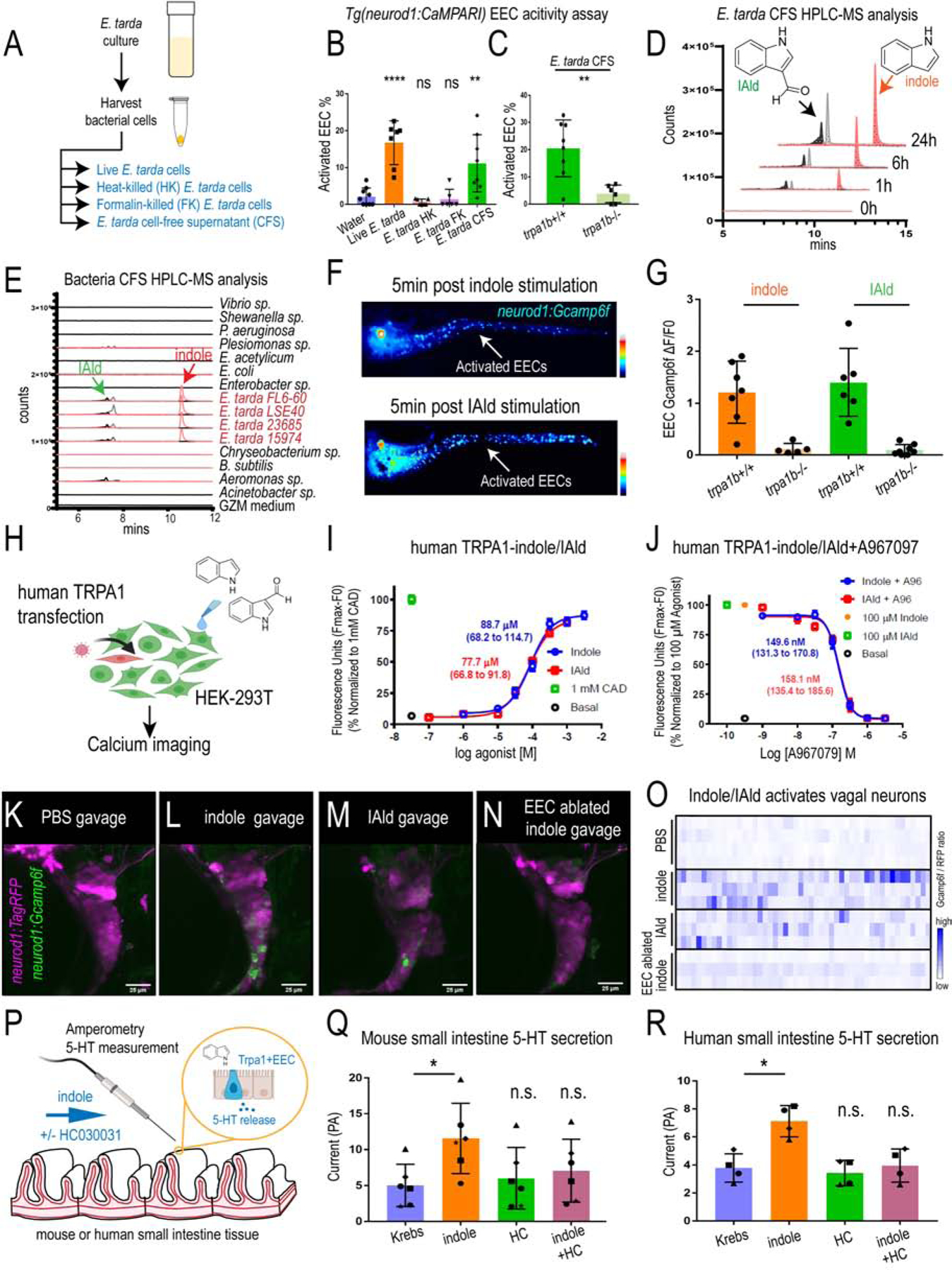
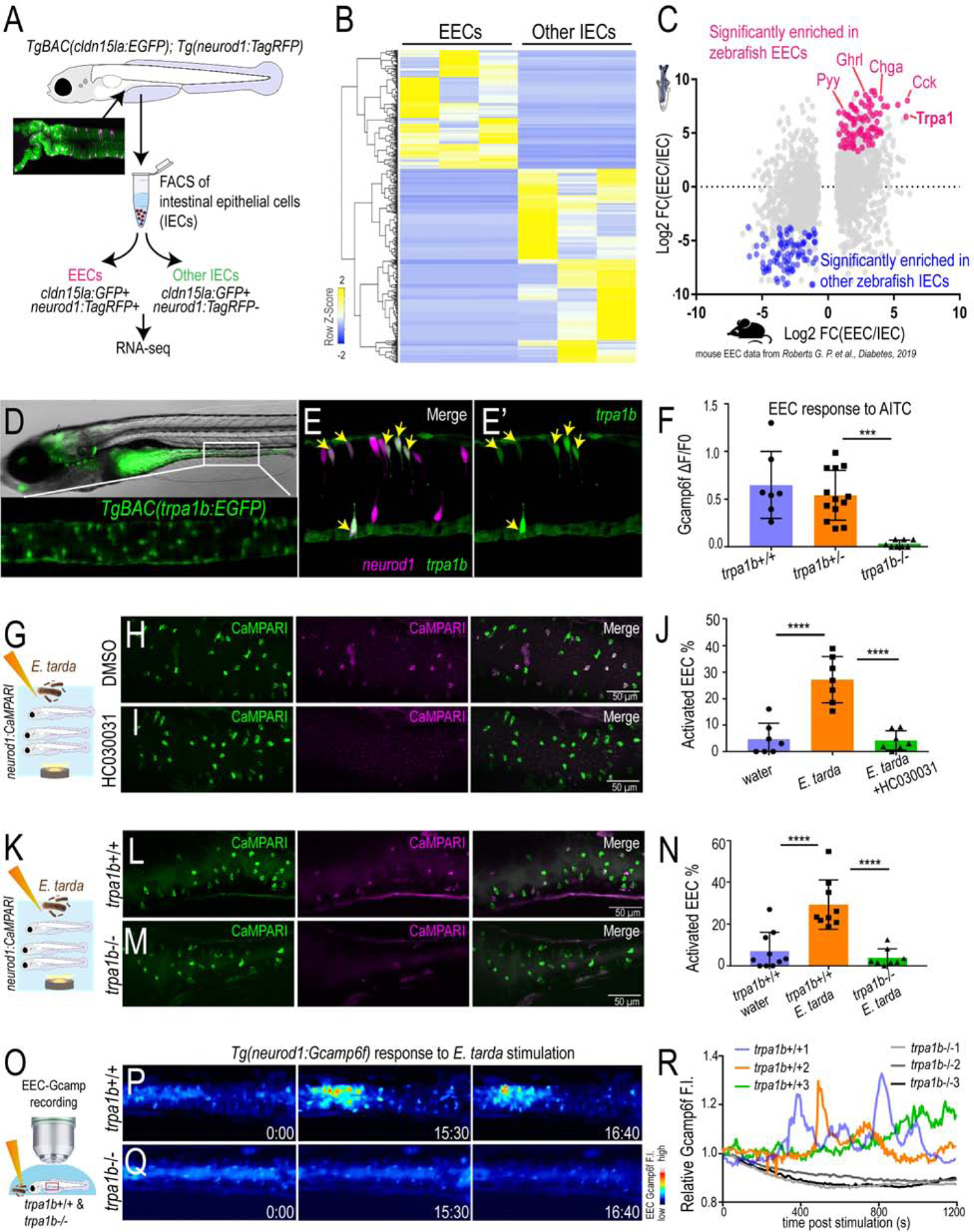
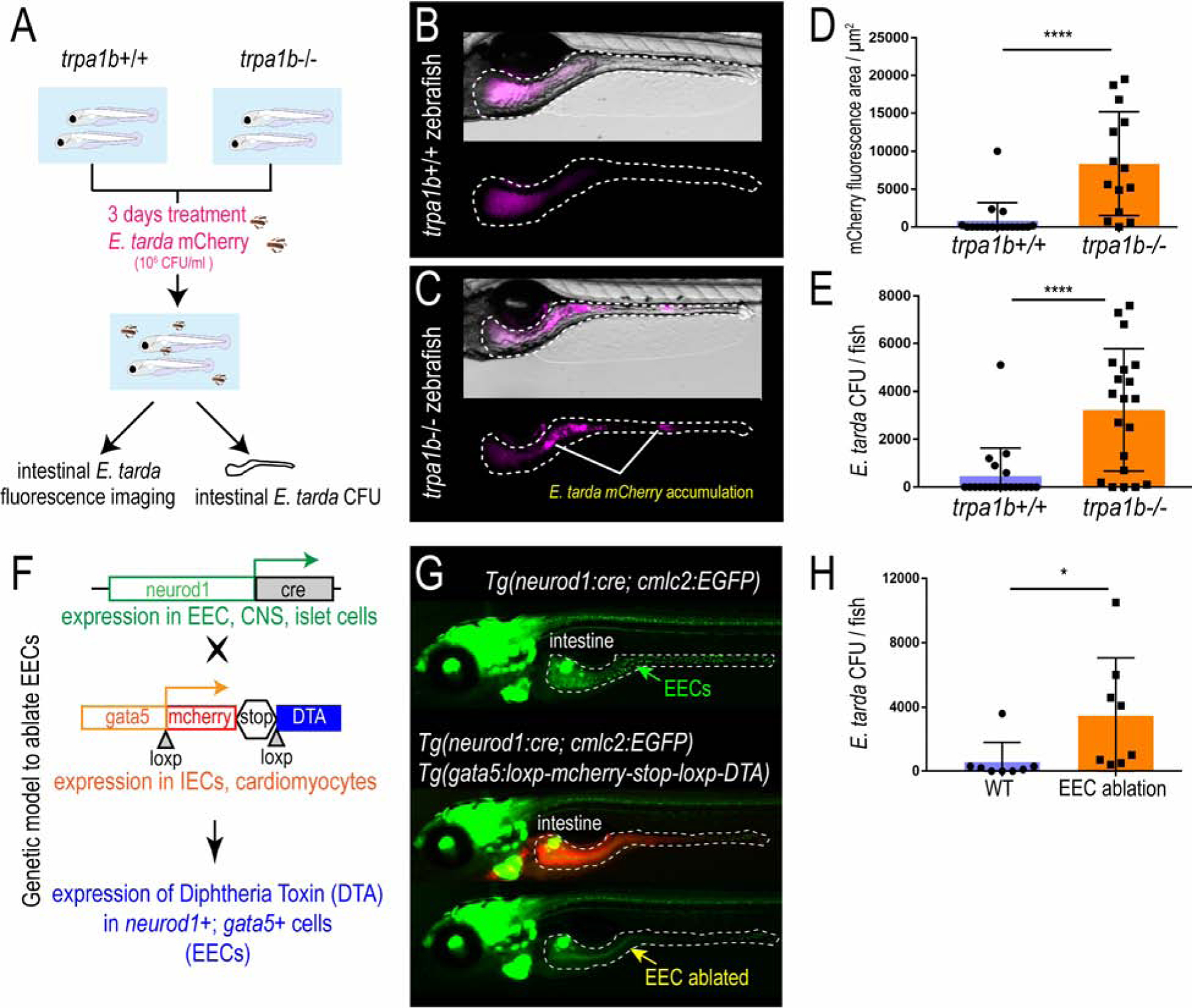
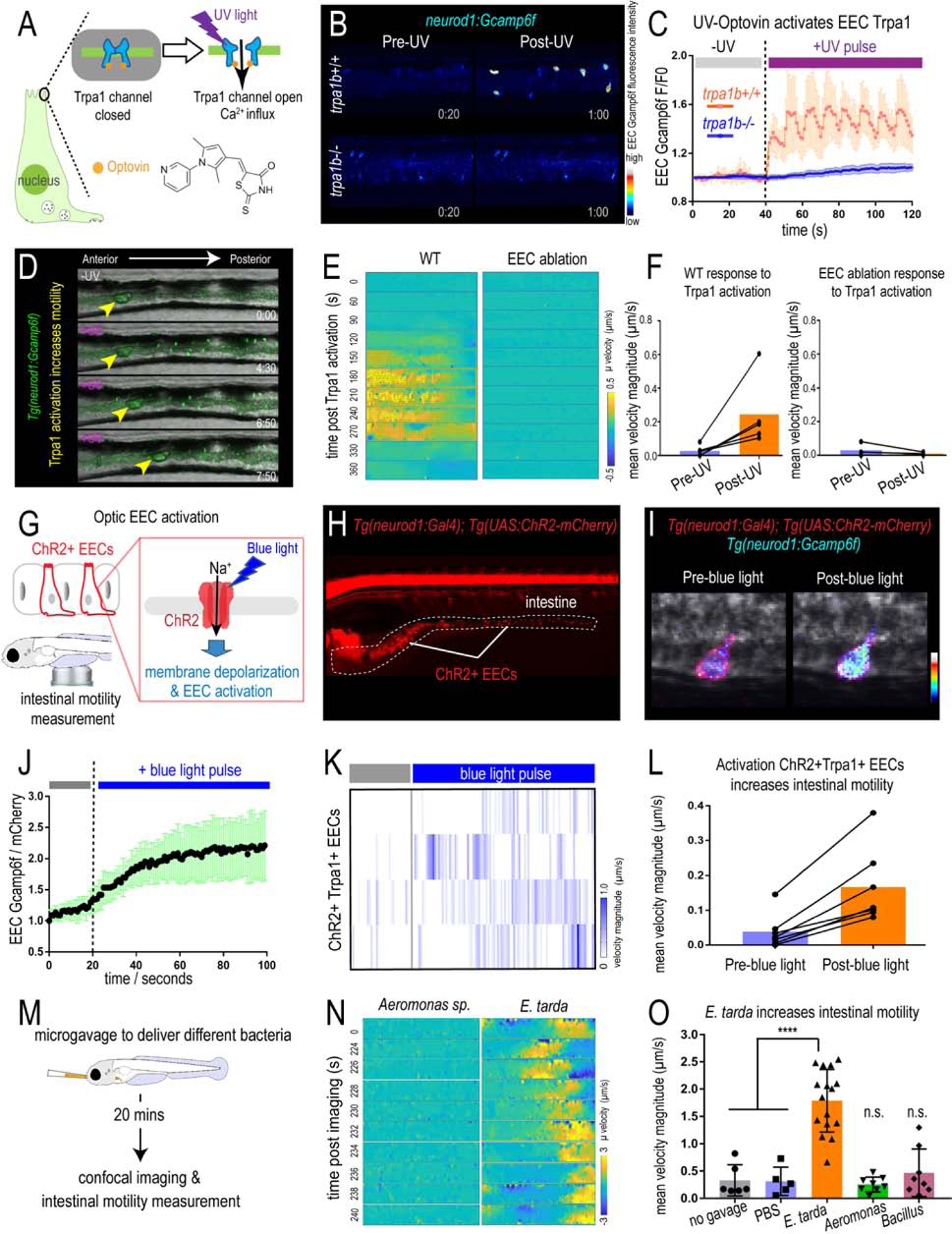
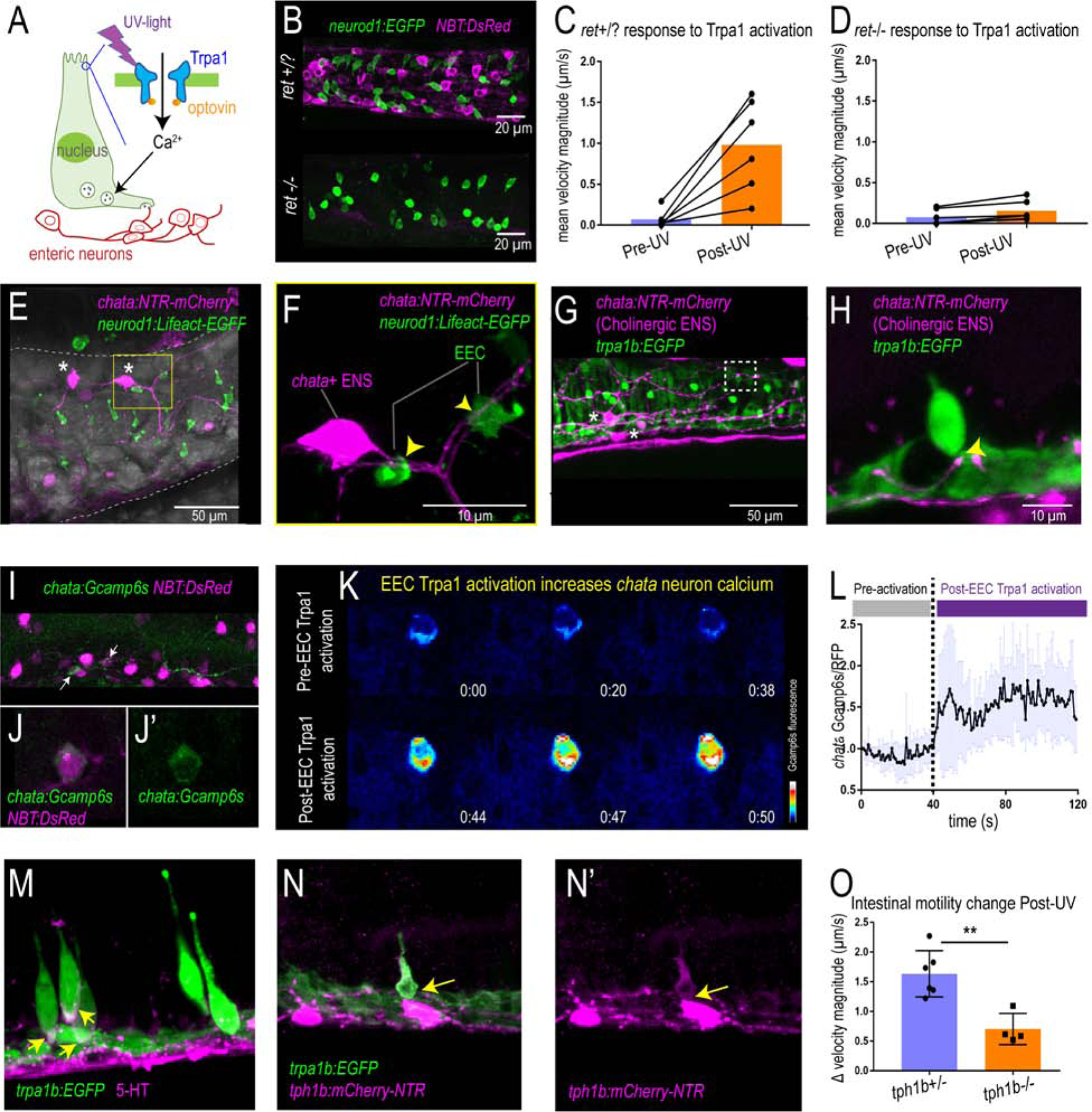
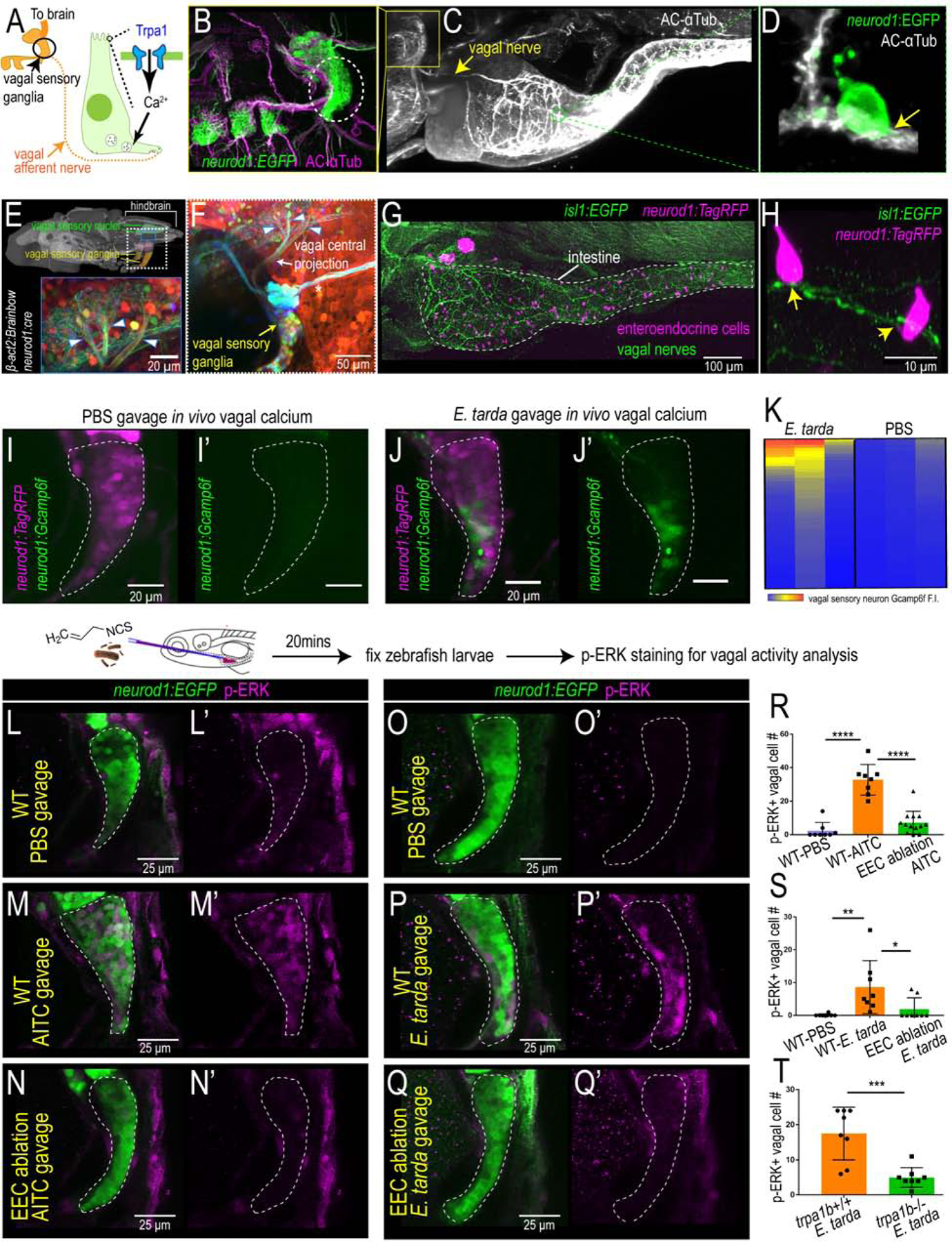
The intestinal epithelium senses nutritional and microbial stimuli using epithelial sensory enteroendocrine cells (EEC). EECs communicate nutritional information to the nervous system, but whether they also relay signals from intestinal microbes remains unknown. Using in vivo real-time measurements of EEC and nervous system activity in zebrafish, we discovered that the bacteria Edwardsiella tarda activate EECs through the receptor transient receptor potential ankyrin A1 (Trpa1) and increase intestinal motility. Microbial, pharmacological, or optogenetic activation of Trpa1EECs directly stimulates vagal sensory ganglia and activates cholinergic enteric neurons by secreting the neurotransmitter 5-hydroxytryptamine (5-HT). A subset of indole derivatives of tryptophan catabolism produced by E. tarda and other gut microbes activates zebrafish EEC Trpa1 signaling. These catabolites also directly stimulate human and mouse Trpa1 and intestinal 5-HT secretion. These results establish a molecular pathway by which EECs regulate enteric and vagal neuronal pathways in response to microbial signals.
肠上皮通过上皮感觉肠内分泌细胞 (EEC) 感知营养和微生物刺激。EEC 将营养信息传达给神经系统,但它们是否也传递来自肠道微生物的信号尚不清楚。通过对斑马鱼中 EEC 和神经系统活动的体内实时测量,我们发现细菌爱德华氏菌通过受体瞬时受体电位锚蛋白 A1 (Trpa1) 激活 EEC,并增加肠道蠕动。Trpa1EEC 的微生物、药理学或光遗传学激活通过分泌神经递质 5-羟色胺 (5-HT) 直接刺激迷走感觉神经节并激活胆碱能肠神经元。由爱德华氏菌和其他肠道微生物产生的色氨酸分解代谢的吲哚衍生物的一部分激活斑马鱼 EEC Trpa1 信号。这些代谢物还直接刺激人和小鼠的 Trpa1 和肠道 5-HT 分泌。这些结果确立了一条分子途径,通过该途径,EEC 响应微生物信号调节肠和迷走神经元通路。