Castle Katherine D, Chen Mark, Wisdom Amy J, Kirsch David G
Department of Pharmacology and Cancer Biology, Duke University Medical Center, Durham, North Carolina, USA.
Medical Scientist Training Program, Duke University Medical Center, Durham, North Carolina, USA.
Transl Cancer Res. 2017 Jul;6(Suppl 5):S900-S913. doi: 10.21037/tcr.2017.06.19.
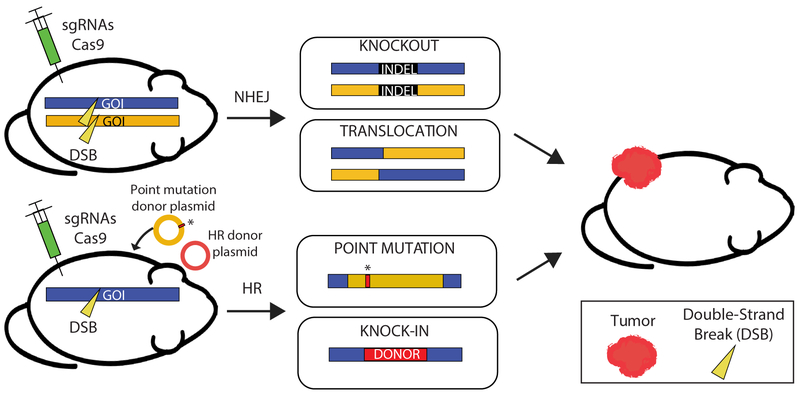
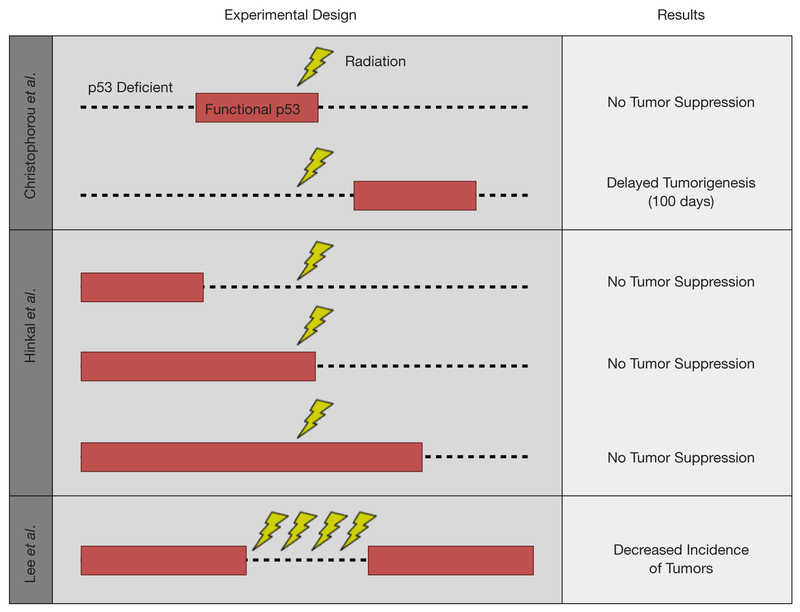
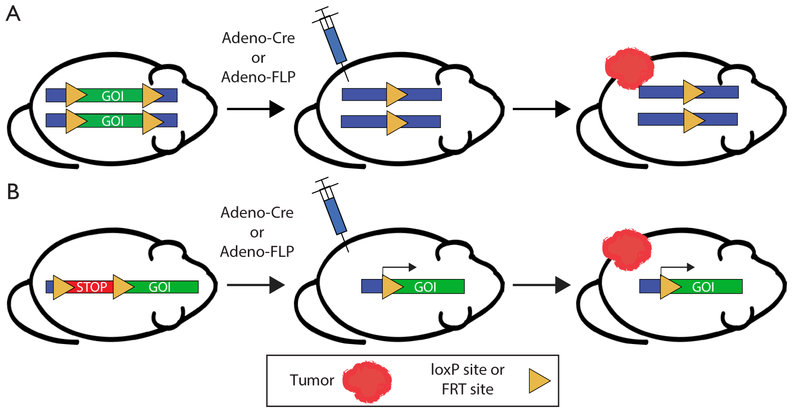
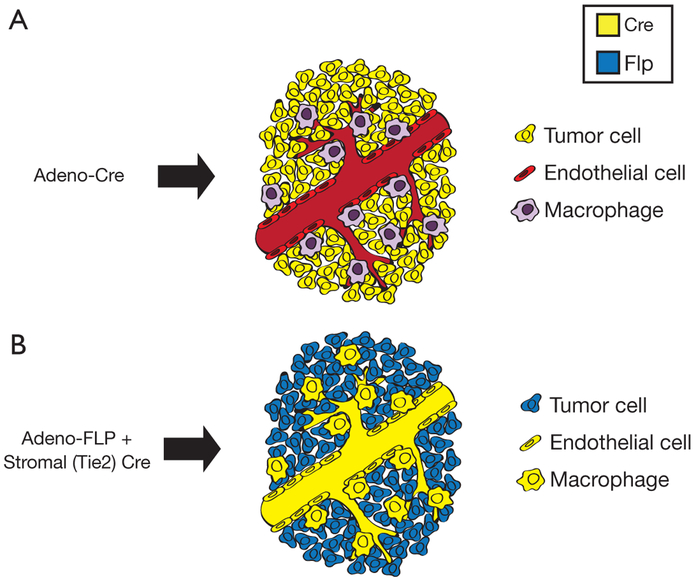
Genetically engineered mouse models (GEMMs) are valuable research tools that have transformed our understanding of cancer. The first GEMMs generated in the 1980s and 1990s were knock-in and knock-out models of single oncogenes or tumor suppressors. The advances that made these models possible catalyzed both technological and conceptual shifts in the way cancer research was conducted. As a result, dozens of mouse models of cancer exist today, covering nearly every tissue type. The advantages inherent to GEMMs compared to and transplant models are compounded in preclinical radiobiology research for several reasons. First, they accurately and robustly recapitulate primary cancers anatomically, histopathologically, and genetically. Reliable models are a prerequisite for predictive preclinical studies. Second, they preserve the tumor microenvironment, including the immune, vascular, and stromal compartments, which enables the study of radiobiology at a systems biology level. Third, they provide exquisite control over the genetics and kinetics of tumor initiation, which enables the study of specific gene mutations on radiation response and functional genomics . Taken together, these facets allow researchers to utilize GEMMs for rigorous and reproducible preclinical research. In the three decades since the generation of the first GEMMs of cancer, advancements in modeling approaches have rapidly progressed and expanded the mouse modeling toolbox with techniques such as short hairpin RNA (shRNA) knockdown, inducible gene expression, site-specific recombinases, and dual recombinase systems. Our lab and many others have utilized these tools to study cancer and radiobiology. Recent advances in genome engineering with CRISPR/Cas9 technology have made GEMMs even more accessible to researchers. Here, we review current and future approaches to mouse modeling with a focus on applications in preclinical radiobiology research.
基因工程小鼠模型(GEMMs)是宝贵的研究工具,改变了我们对癌症的理解。20世纪80年代和90年代产生的首批GEMMs是单个癌基因或肿瘤抑制基因的敲入和敲除模型。使这些模型成为可能的进展催化了癌症研究开展方式的技术和概念转变。结果,如今存在数十种癌症小鼠模型,涵盖几乎每种组织类型。与移植模型相比,GEMMs固有的优势在临床前放射生物学研究中因多种原因而更加突出。首先,它们在解剖学、组织病理学和遗传学上准确且有力地重现原发性癌症。可靠的模型是预测性临床前研究的先决条件。其次,它们保留肿瘤微环境,包括免疫、血管和基质成分,这使得能够在系统生物学水平研究放射生物学。第三,它们对肿瘤起始的遗传学和动力学提供精确控制,这使得能够研究特定基因突变对辐射反应和功能基因组学的影响。总之,这些方面使研究人员能够利用GEMMs进行严谨且可重复的临床前研究。自首批癌症GEMMs产生后的三十年里,建模方法迅速发展,并用短发夹RNA(shRNA)敲低、诱导型基因表达、位点特异性重组酶和双重组酶系统等技术扩展了小鼠建模工具箱。我们实验室和许多其他实验室已利用这些工具研究癌症和放射生物学。CRISPR/Cas9技术在基因组工程方面的最新进展使研究人员更容易获得GEMMs。在此,我们综述当前和未来的小鼠建模方法,重点关注其在临床前放射生物学研究中的应用。