Department of Psychology, Center for Neural Science, New York University, New York, United States.
Department of Psychology, Royal Holloway, University of London, Egham, United Kingdom.
Elife. 2019 Feb 8;8:e43467. doi: 10.7554/eLife.43467.
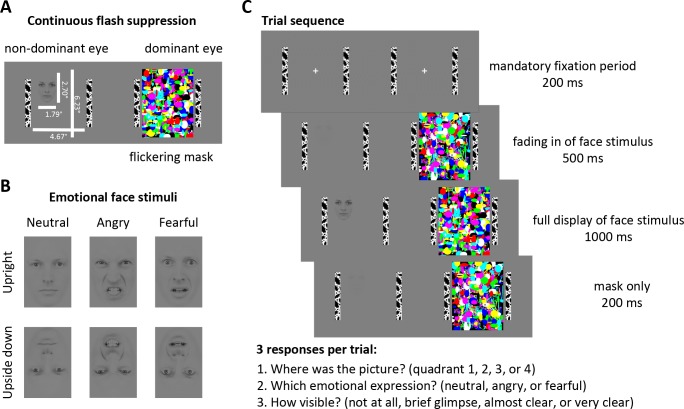
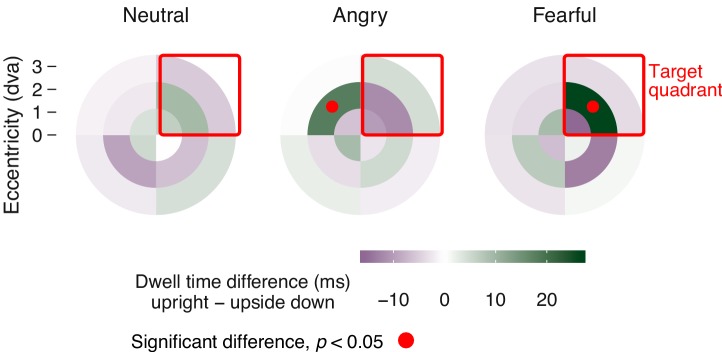
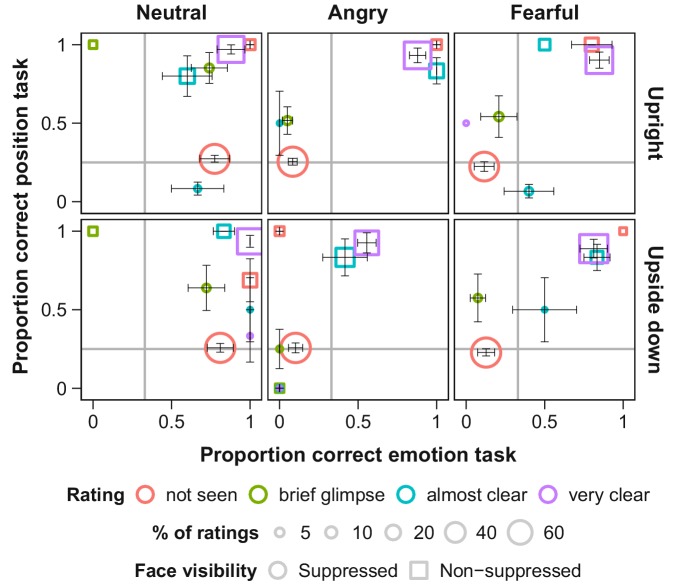
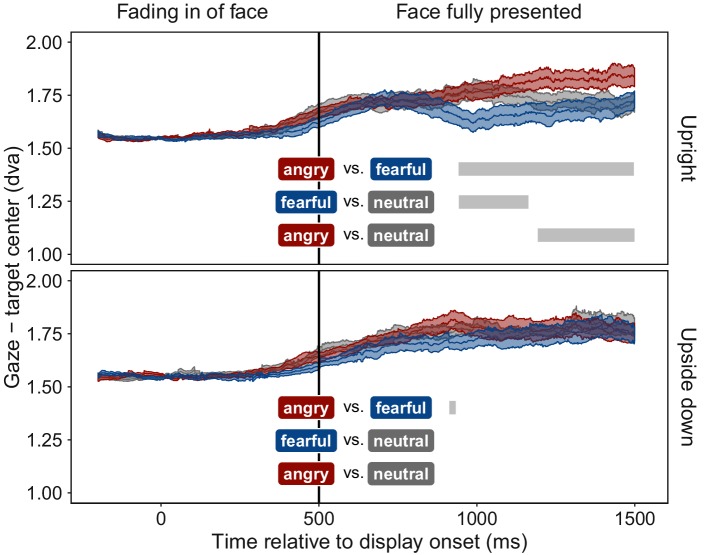
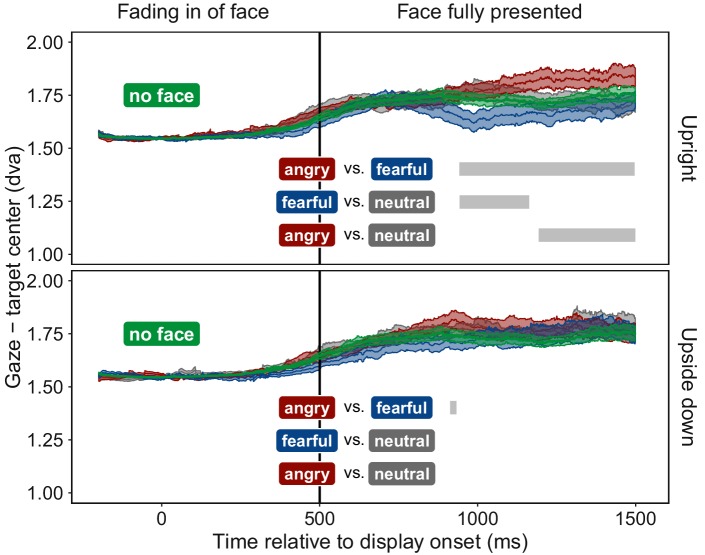
The ability to act quickly to a threat is a key skill for survival. Under awareness, threat-related emotional information, such as an angry or fearful face, has not only perceptual advantages but also guides rapid actions such as eye movements. Emotional information that is suppressed from awareness still confers perceptual and attentional benefits. However, it is unknown whether suppressed emotional information can directly guide actions, or whether emotional information has to enter awareness to do so. We suppressed emotional faces from awareness using continuous flash suppression and tracked eye gaze position. Under successful suppression, as indicated by objective and subjective measures, gaze moved towards fearful faces, but away from angry faces. Our findings reveal that: (1) threat-related emotional stimuli can guide eye movements in the absence of visual awareness; (2) threat-related emotional face information guides distinct oculomotor actions depending on the type of threat conveyed by the emotional expression.
快速应对威胁的能力是生存的关键技能。在意识下,与威胁相关的情绪信息,如愤怒或恐惧的面孔,不仅具有感知优势,还能引导眼球运动等快速动作。从意识中抑制的情绪信息仍然具有感知和注意力方面的优势。然而,目前尚不清楚被抑制的情绪信息是否可以直接引导行动,或者情绪信息是否必须进入意识才能做到这一点。我们使用连续闪光抑制技术从意识中抑制情绪面孔,并跟踪眼球注视位置。在成功抑制的情况下,通过客观和主观的测量指标都表明,被试的目光会移向恐惧的面孔,而不是愤怒的面孔。我们的研究结果表明:(1)与威胁相关的情绪刺激可以在没有视觉意识的情况下引导眼球运动;(2)与威胁相关的情绪面孔信息根据情绪表达所传达的威胁类型引导不同的眼球运动动作。