Janechek Nathan J, Hansen Kaj M, Stanier Charles O
Department of Chemical and Biochemical Engineering, University of Iowa, Iowa City, IA 52242, USA.
IIHR Hydroscience and Engineering, University of Iowa, Iowa City, IA 52242, USA.
Atmos Chem Phys. 2017 Jul;17(13):8357-8370. doi: 10.5194/acp-17-8357-2017. Epub 2017 Jul 10.
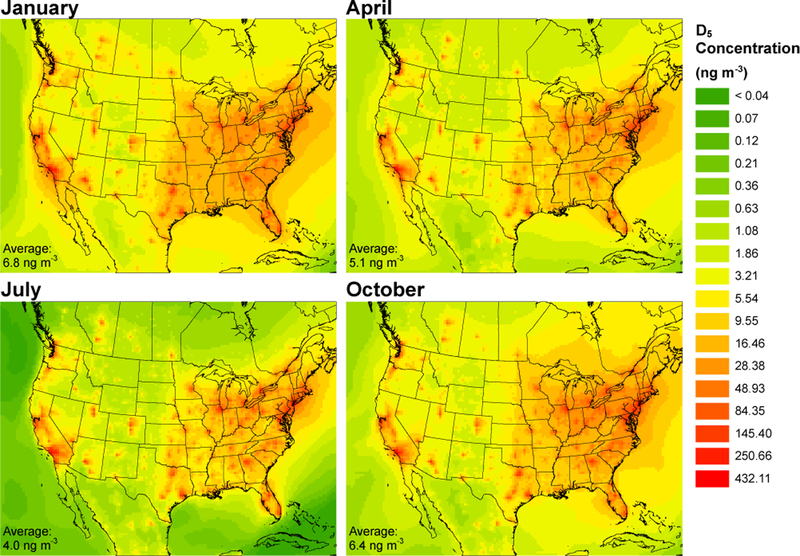
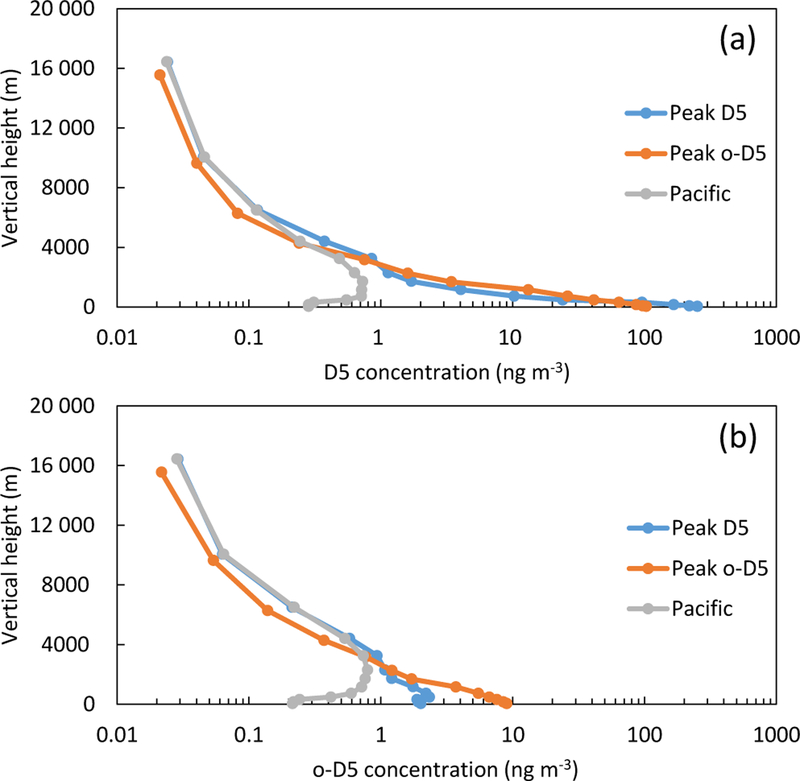
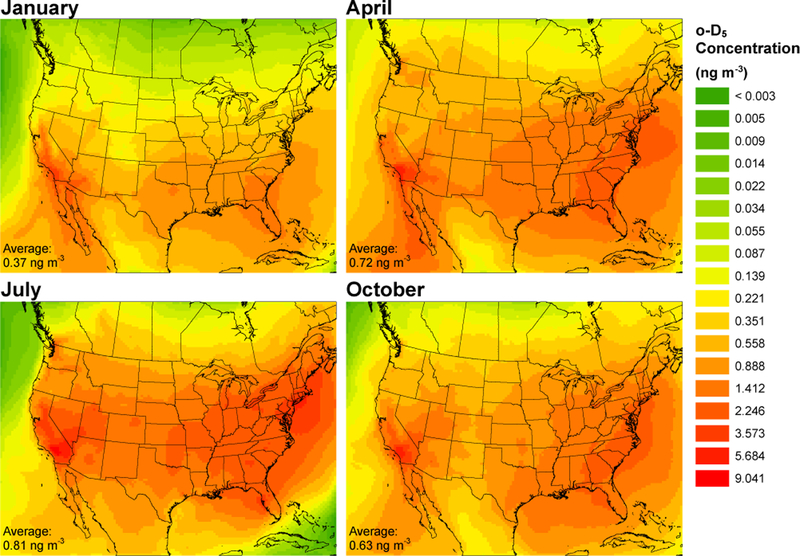
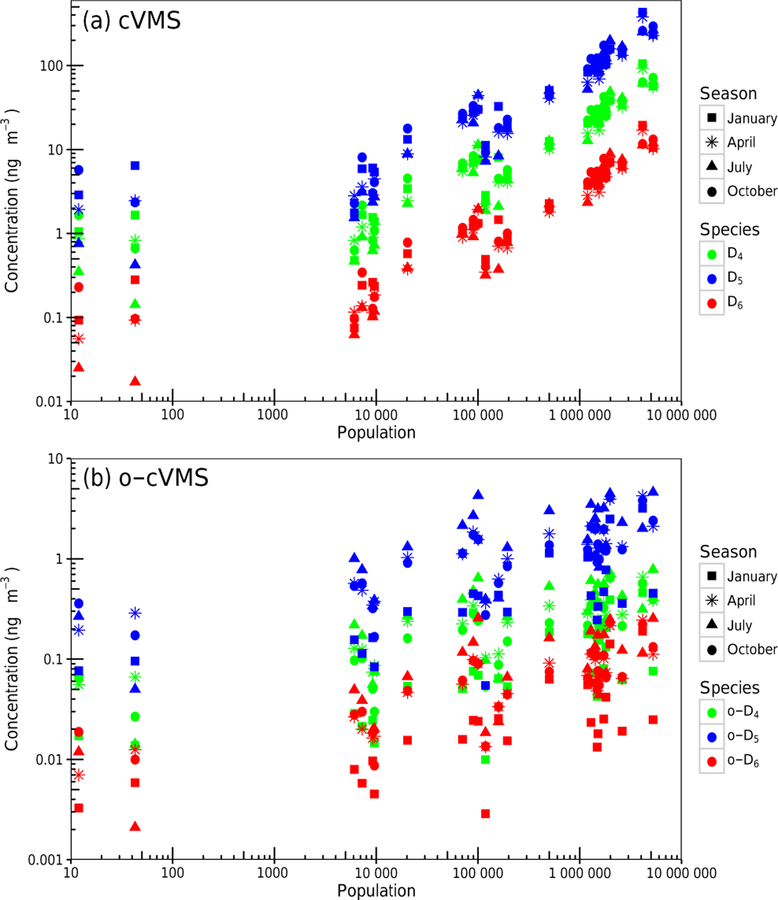
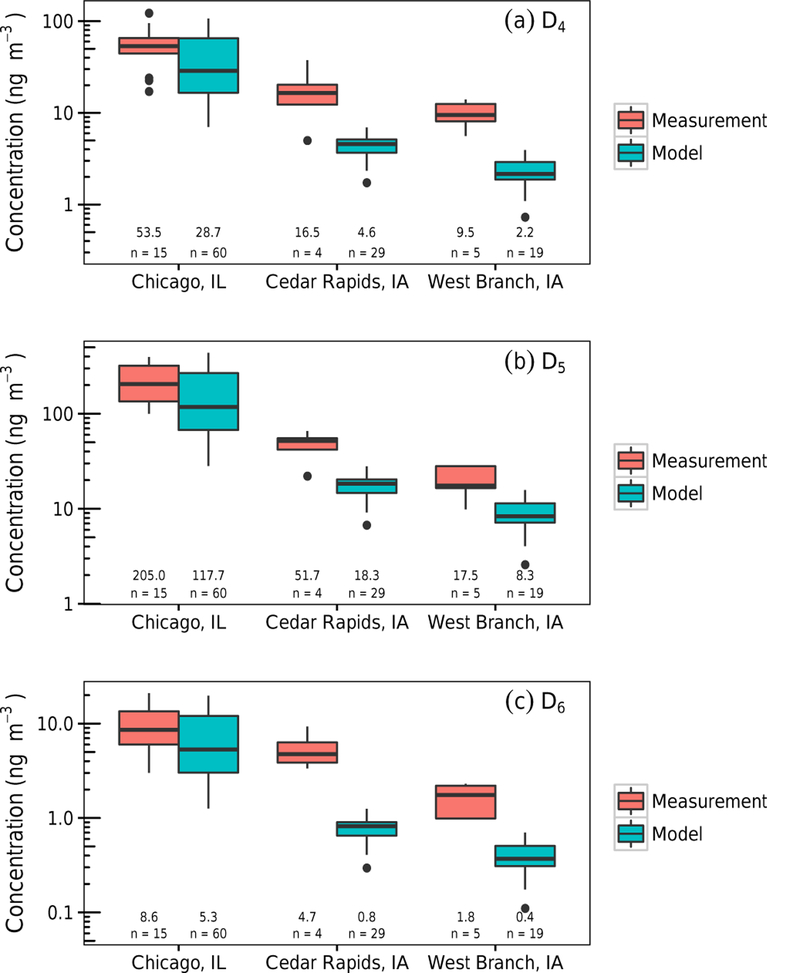
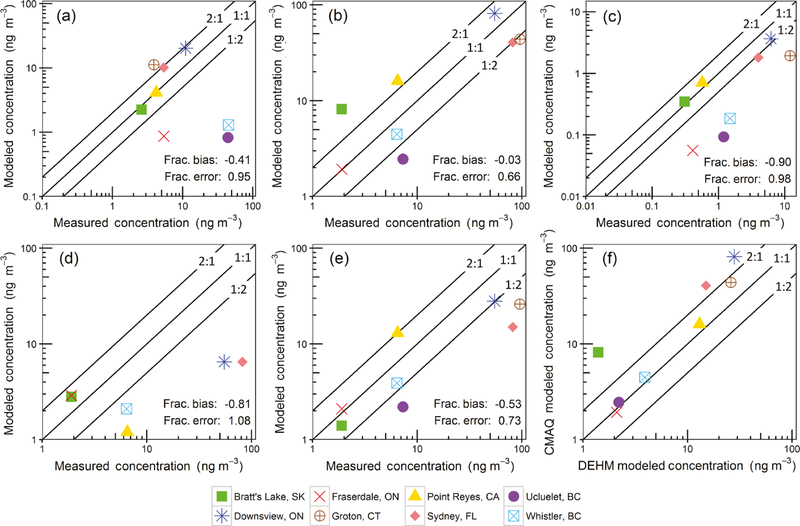
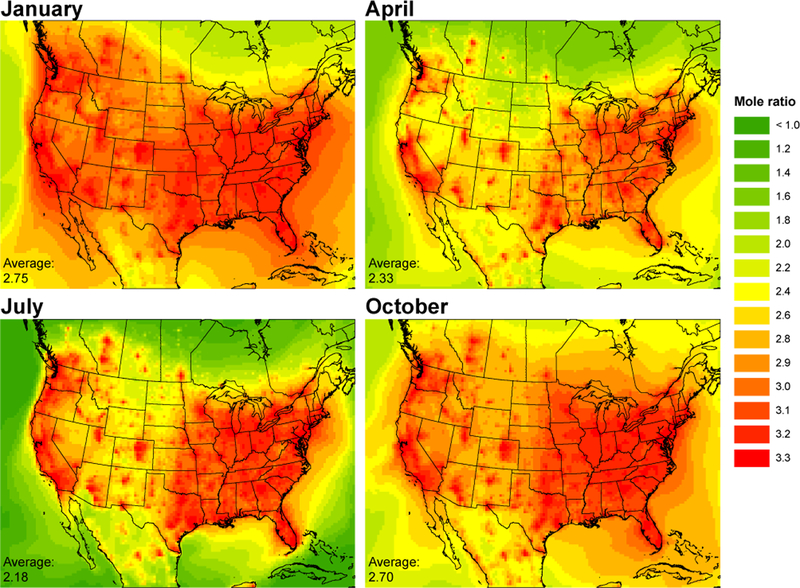
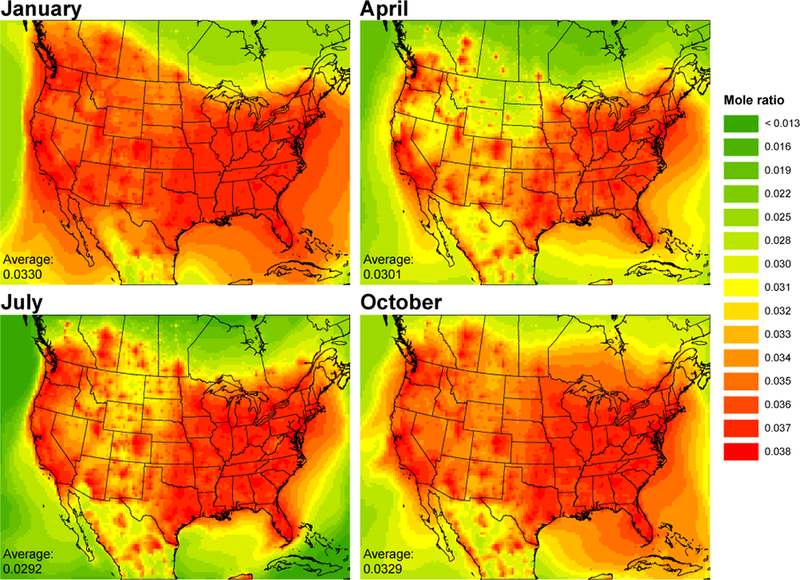
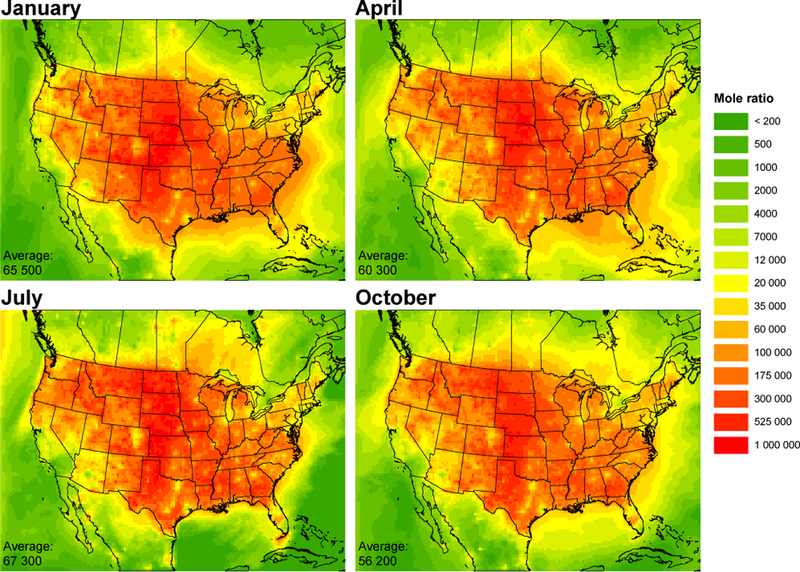
Cyclic volatile methyl siloxanes (cVMSs) are important components in personal care products that transport and react in the atmosphere. Octamethylcyclotetrasiloxane (D), decamethylcyclopentasiloxane (D), dodecamethylcyclohexasiloxane (D), and their gas-phase oxidation products have been incorporated into the Community Multiscale Air Quality (CMAQ) model. Gas-phase oxidation products, as the precursor to secondary organic aerosol from this compound class, were included to quantify the maximum potential for aerosol formation from gas-phase reactions with OH. Four 1-month periods were modeled to quantify typical concentrations, seasonal variability, spatial patterns, and vertical profiles. Typical model concentrations showed parent compounds were highly dependent on population density as cities had monthly averaged peak D concentrations up to 432ngm. Peak oxidized D concentrations were significantly less, up to 9ngm, and were located downwind of major urban areas. Model results were compared to available measurements and previous simulation results. Seasonal variation was analyzed and differences in seasonal influences were observed between urban and rural locations. Parent compound concentrations in urban and peri-urban locations were sensitive to transport factors, while parent compounds in rural areas and oxidized product concentrations were influenced by large-scale seasonal variability in OH.
环状挥发性甲基硅氧烷(cVMSs)是个人护理产品中的重要成分,它们会在大气中传输并发生反应。八甲基环四硅氧烷(D4)、十甲基环五硅氧烷(D5)、十二甲基环六硅氧烷(D6)及其气相氧化产物已被纳入社区多尺度空气质量(CMAQ)模型。气相氧化产物作为该化合物类二次有机气溶胶的前体,被纳入模型以量化与OH气相反应形成气溶胶的最大潜在可能性。对四个1个月的时间段进行了建模,以量化典型浓度、季节变化、空间格局和垂直剖面。典型的模型浓度表明,母体化合物高度依赖于人口密度,因为城市地区每月平均D4峰值浓度高达432纳克/立方米。氧化D4的峰值浓度显著较低,高达9纳克/立方米,且位于主要城市地区的下风处。将模型结果与现有测量值和先前的模拟结果进行了比较。分析了季节变化,并观察到城乡地区季节影响的差异。城市和城郊地区的母体化合物浓度对传输因素敏感,而农村地区的母体化合物和氧化产物浓度则受OH大规模季节变化的影响。