State Key Laboratory of Oncogenes and Related Genes, Shanghai Cancer Institute, Renji Hospital, Shanghai Jiao Tong University School of Medicine, 25/Ln. 2200 Xietu Road, Shanghai 200032, China.
Department of Otorhinolaryngology-Head and Neck Surgery, Renji Hospital, Shanghai Jiao Tong University School of Medicine, 1630 Dongfang Road, Shanghai 200127, China.
Int J Biol Sci. 2019 Jan 1;15(2):253-264. doi: 10.7150/ijbs.27420. eCollection 2019.
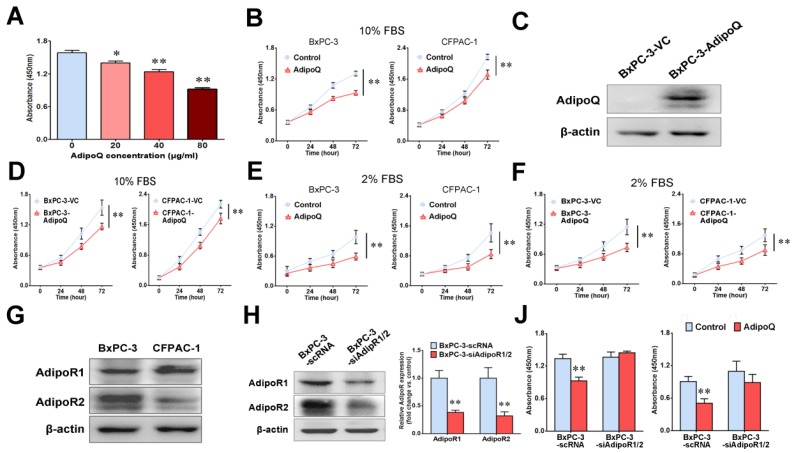
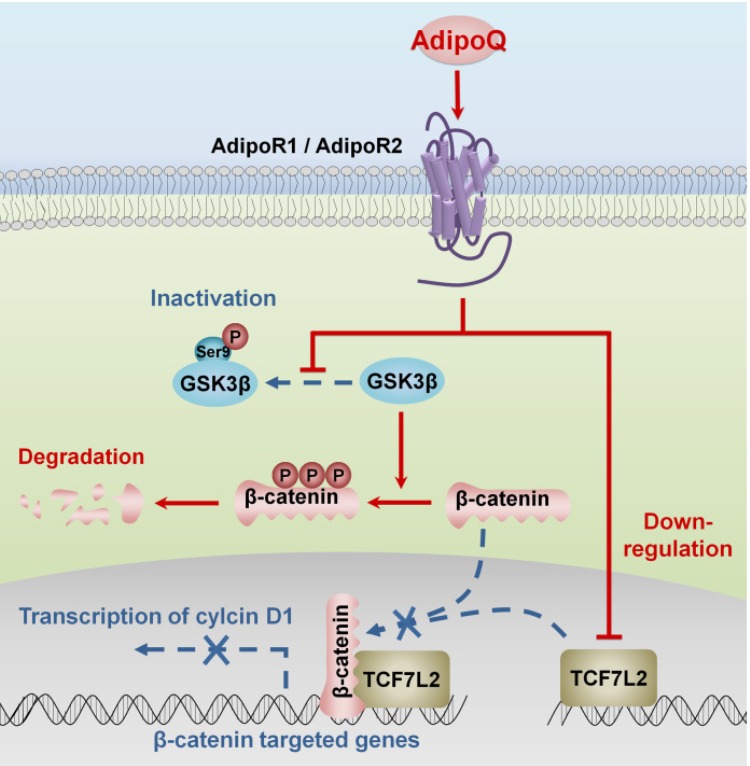
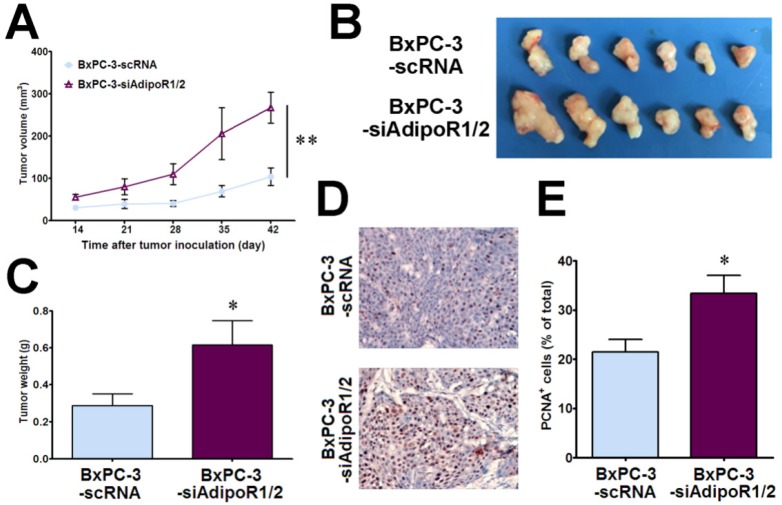
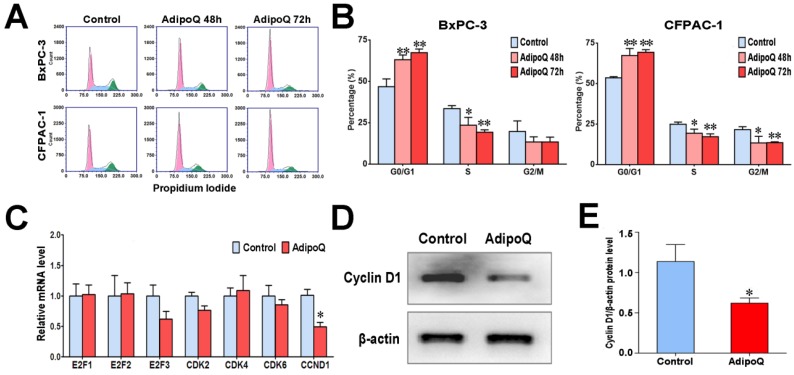
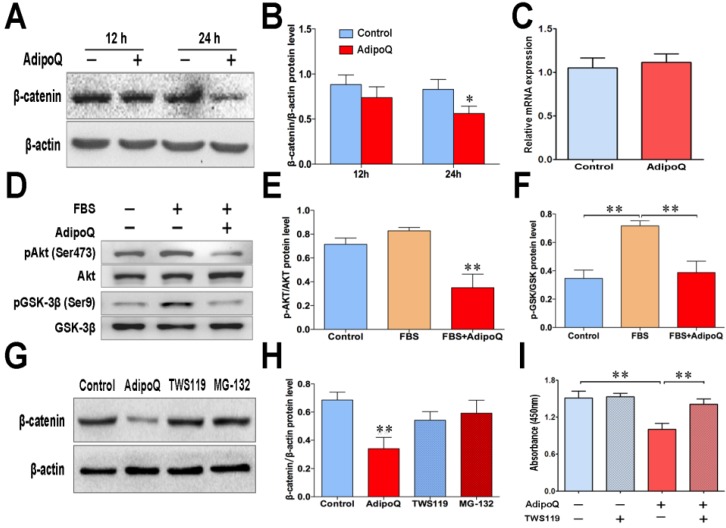
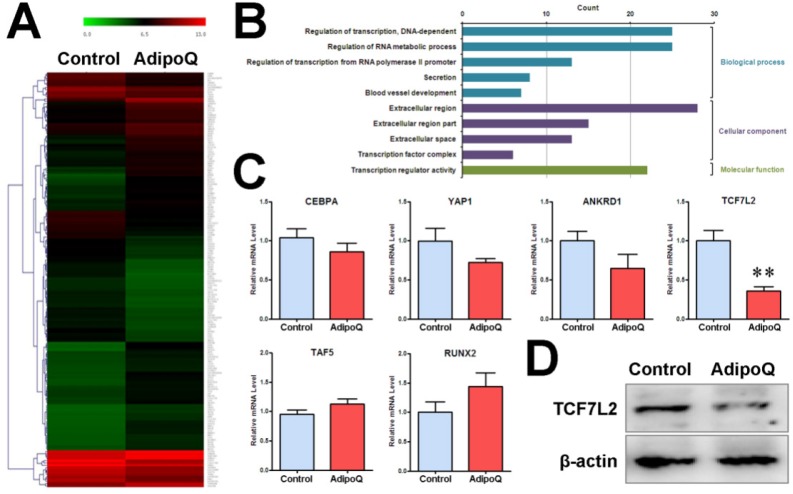
Adipokines are emerging as a link between obesity and obesity-related cancers, including pancreatic cancer. Adiponectin is an abundant adipokine with pleiotropic beneficial roles in metabolic disorders. Low adiponectin levels are commonly observed in human obesity and have been associated with increased pancreatic cancer risk in prospective epidemiologic studies. Here, we investigated the direct effect of adiponectin on human pancreatic cancer and . Our results showed that adiponectin treatment significantly inhibited the proliferation of human pancreatic cancer cells. Knockdown of adiponectin receptors completely eliminated the antiproliferation effect of adiponectin and markedly promoted the growth of human pancreatic cancer xenografts in nude mice Further analysis revealed that adiponectin blocked the phosphorylation/inactivation of GSK-3β, suppressed the intracellular accumulation of β-catenin, reduced the expression of cyclin D1, and consequently caused cell cycle accumulation at the G-G phase in pancreatic cancer cells. Adiponectin-mediated attenuation of cell proliferation was abrogated by the GSK-3β inhibitor. In addition, a microarray analysis revealed that adiponectin also downregulated the expression of TCF7L2, a coactivator of β-catenin, at the transcriptional level in pancreatic cancer cells. These results indicated that the protective role of adiponectin against human pancreatic cancer might be attributed to its attenuating effect on the β-catenin signaling pathway. Taken together, our findings support a causal link between hypoadiponectinemia and increased pancreatic cancer risk, and suggest that activating adiponectin signaling could be a novel therapeutic strategy for obesity-related pancreatic cancer.
脂联素是肥胖与肥胖相关癌症(包括胰腺癌)之间的关联因子。脂联素是一种丰富的脂肪因子,在代谢紊乱中具有多种有益作用。在人类肥胖中,通常观察到脂联素水平降低,并与前瞻性流行病学研究中胰腺癌风险增加相关。在这里,我们研究了脂联素对人胰腺癌细胞的直接作用。我们的结果表明,脂联素处理显著抑制了人胰腺癌细胞的增殖。脂联素受体的敲低完全消除了脂联素的抗增殖作用,并显著促进了裸鼠中人类胰腺癌细胞异种移植物的生长。进一步分析表明,脂联素阻断了 GSK-3β的磷酸化/失活,抑制了β-连环蛋白的细胞内积累,降低了细胞周期蛋白 D1 的表达,从而导致胰腺癌细胞在 G-G 期的细胞周期积累。GSK-3β抑制剂可阻断脂联素介导的细胞增殖减弱。此外,微阵列分析表明,脂联素还在转录水平下调了胰腺癌细胞中β-连环蛋白的共激活因子 TCF7L2 的表达。这些结果表明,脂联素对人胰腺癌细胞的保护作用可能归因于其对β-连环蛋白信号通路的抑制作用。总之,我们的发现支持低脂联素血症与胰腺癌风险增加之间的因果关系,并表明激活脂联素信号可能是肥胖相关胰腺癌的一种新的治疗策略。