The Department of Urology, Sun Yat-Sen Memorial Hospital, Sun Yat-Sen University, Guangzhou, China.
The Department of Urology, Yan'an Hospital Affiliated with Kunming Medical University, Kunming, China.
Int J Biol Sci. 2019 Jan 1;15(2):441-452. doi: 10.7150/ijbs.26826. eCollection 2019.
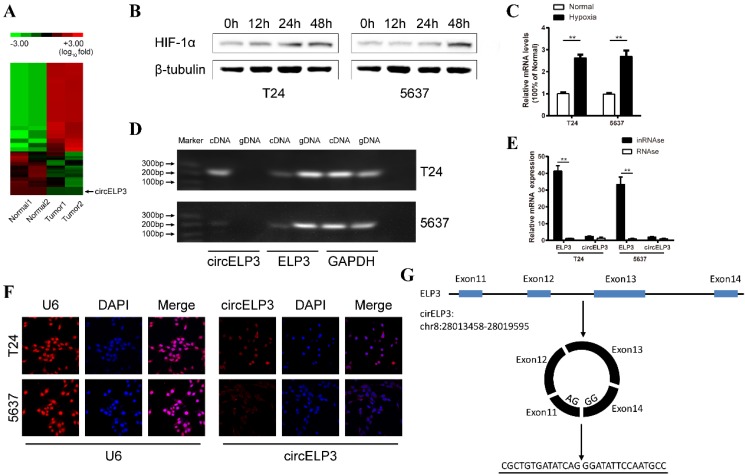
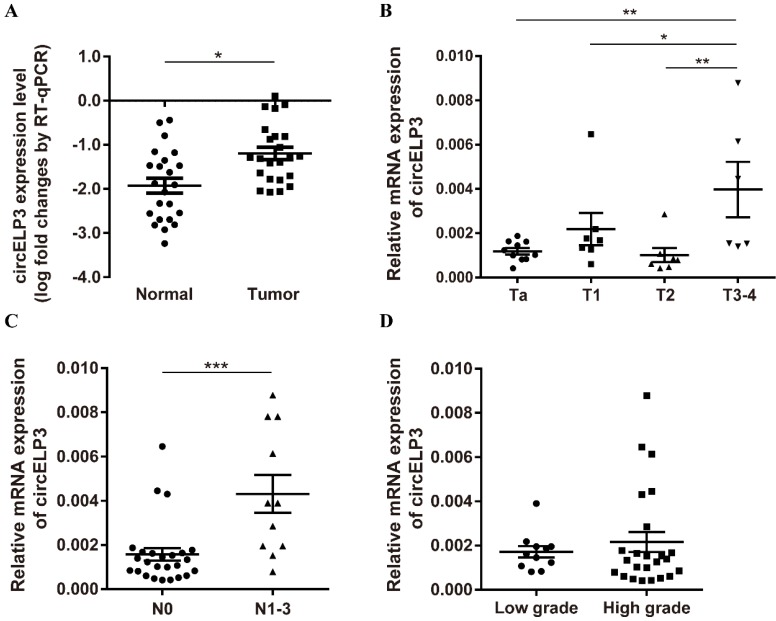
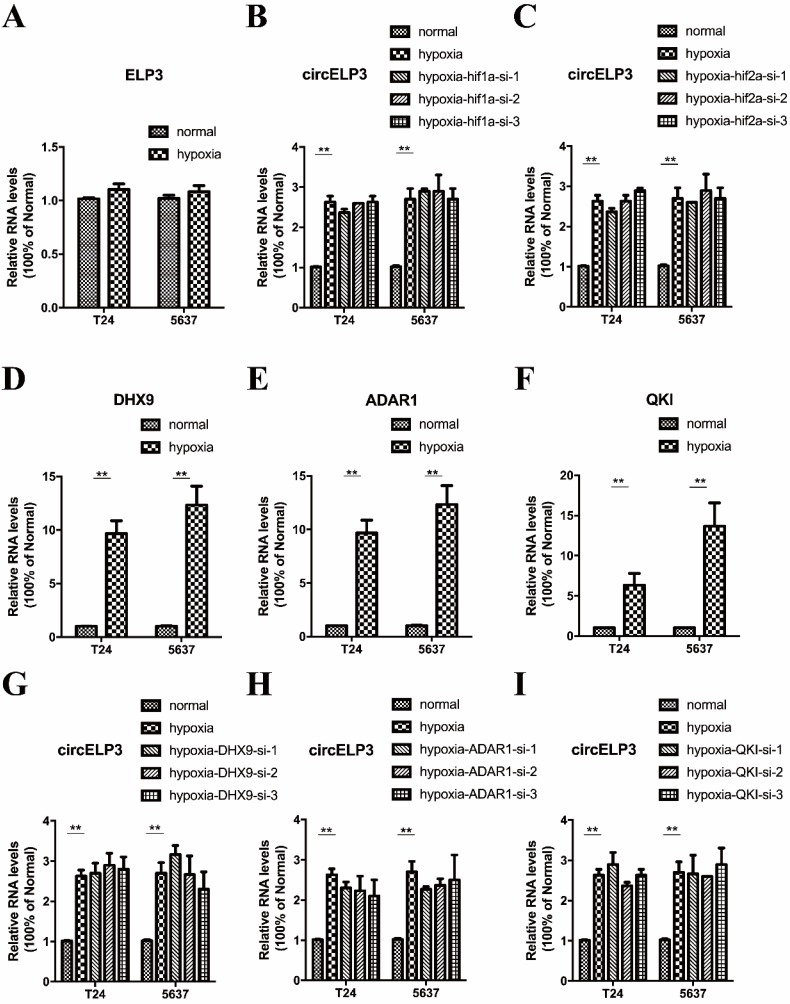
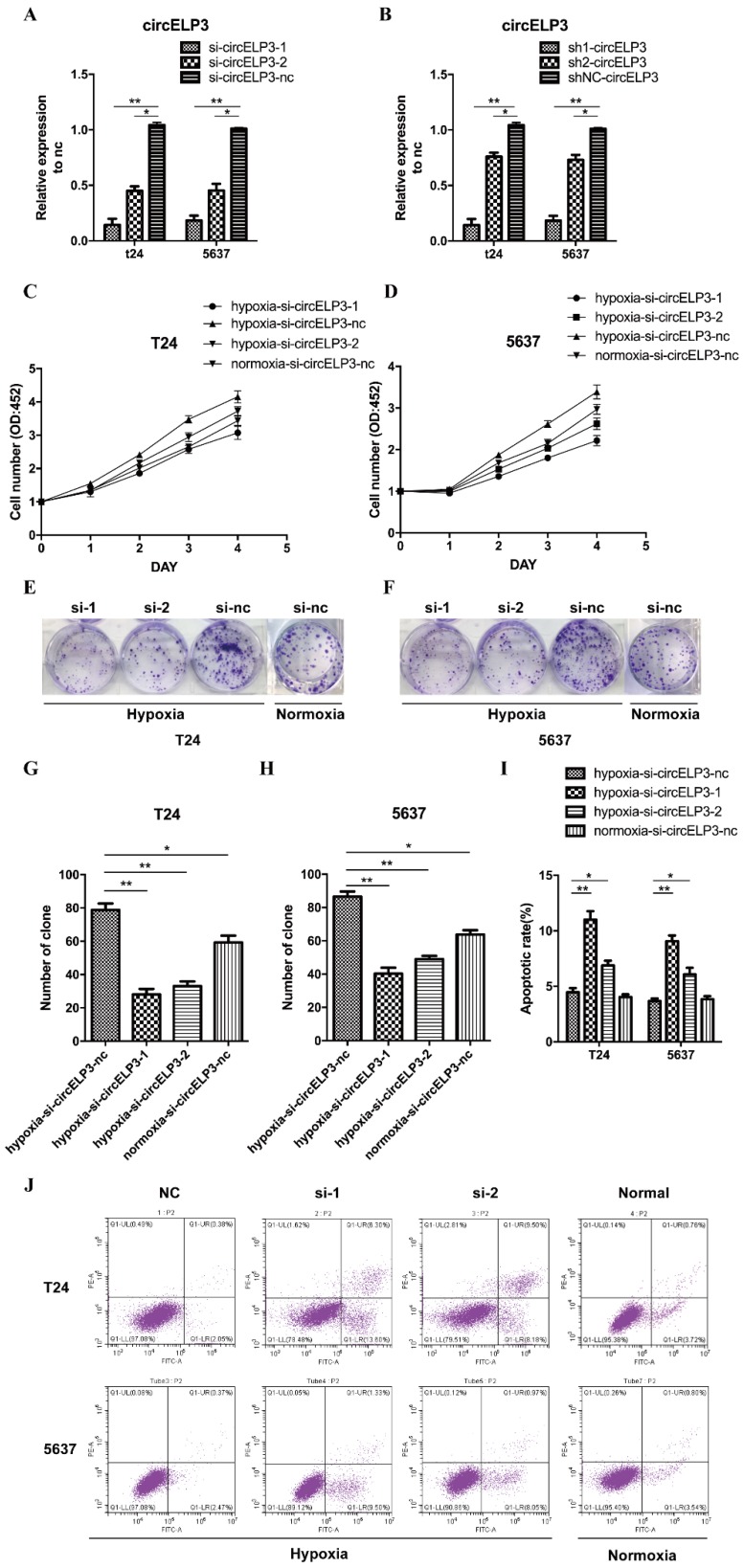
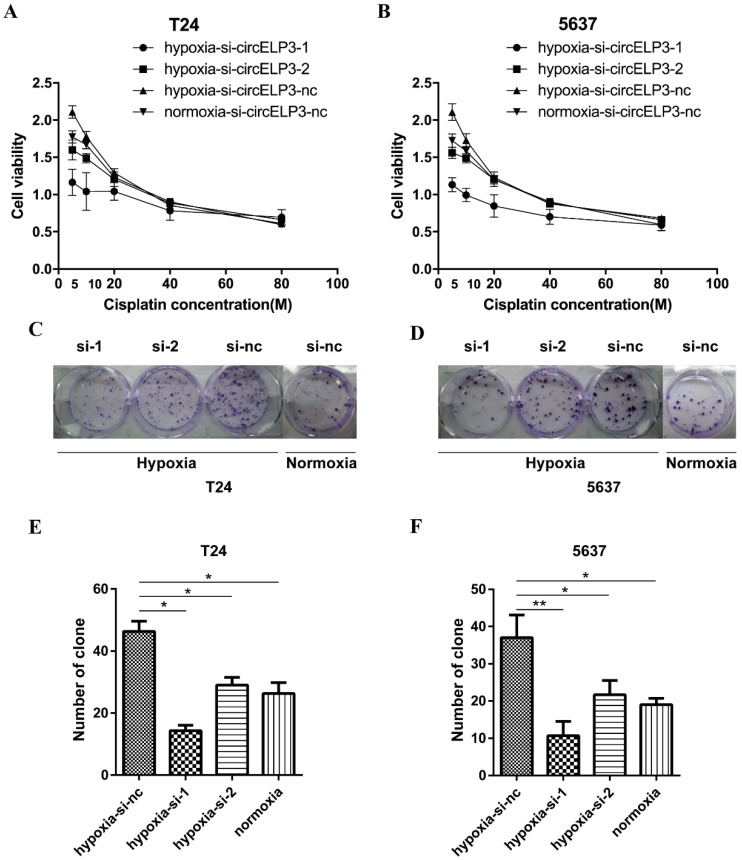
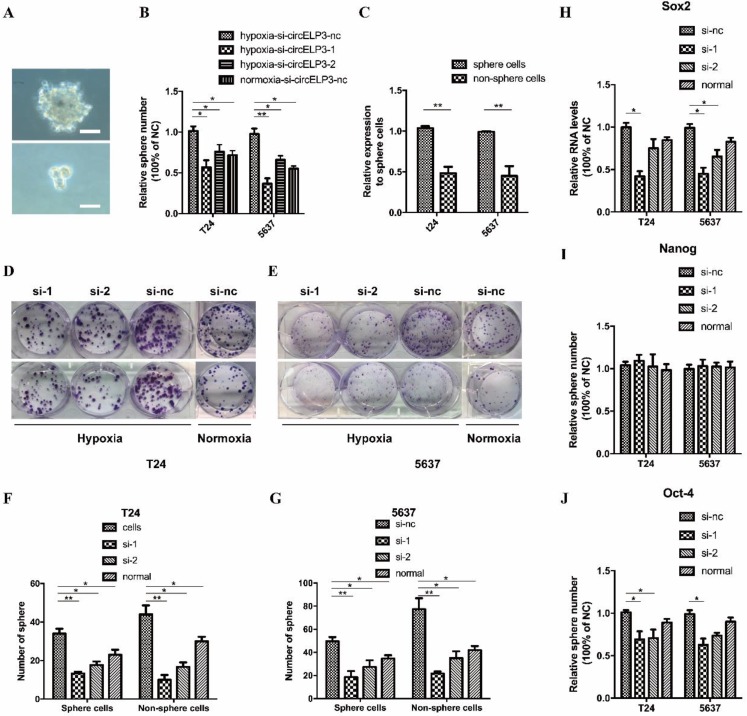
Hypoxia plays a critical role in cancer biology. It induces genomic instability, which in turn helps cancer cells respond adaptively to meet the needs of carcinogenesis, cancer progression and relapse. Circular RNA has not been reported among the variety of downstream factors in this adaptive response. Although a few studies have demonstrated the important role of circular RNAs in driving human bladder cancer progression, their carcinogenic roles are still under investigated. Here, we identified a hypoxia-elevated circular RNA, circELP3, that contributes to bladder cancer progression and cisplatin resistance. Decreasing the level of circELP3 via siRNA clearly reduced the proliferation and cisplatin resistance of bladder cancer cells and promoted apoptosis. Interfering with circELP3 suppressed tumor xenograft growth in nude mice . In addition, lower circELP3-expressing bladder cancer cells displayed poorer self-renewal capacity, as demonstrated by lower levels of sphere formation and stem cell marker expression. Furthermore, in human bladder cancer patients, strong correlations between a high circELP3 level and advanced tumor grade and lymph node metastasis were observed. In summary, we provide the first direct evidence that circular RNA participates in the adaptive response to hypoxia and may play a role in the progression and drug resistance of bladder cancer.
缺氧在癌症生物学中起着关键作用。它诱导基因组不稳定性,进而帮助癌细胞适应环境,以满足致癌、癌症进展和复发的需求。在这种适应性反应的多种下游因素中,尚未报道环状 RNA 的存在。尽管有几项研究表明环状 RNA 在推动人类膀胱癌进展方面发挥了重要作用,但它们的致癌作用仍在研究中。在这里,我们鉴定了一个受缺氧上调的环状 RNA,circELP3,它有助于膀胱癌的进展和顺铂耐药性。通过 siRNA 降低 circELP3 的水平可明显降低膀胱癌细胞的增殖和顺铂耐药性,并促进细胞凋亡。干扰 circELP3 可抑制裸鼠中的肿瘤异种移植生长。此外,circELP3 表达水平较低的膀胱癌细胞表现出较差的自我更新能力,球体形成和干细胞标志物表达水平较低。此外,在人类膀胱癌患者中,观察到高水平的 circELP3 与高级别肿瘤和淋巴结转移之间存在强烈相关性。综上所述,我们提供了第一个直接证据,证明环状 RNA 参与了对缺氧的适应性反应,并且可能在膀胱癌的进展和耐药性中发挥作用。