Department of Cardiology, Renmin Hospital of Wuhan University, Wuhan 430060, RP China.
Cardiovascular Research Institute of Wuhan University, Wuhan 430060, RP China.
Int J Biol Sci. 2019 Jan 1;15(3):556-567. doi: 10.7150/ijbs.29907. eCollection 2019.
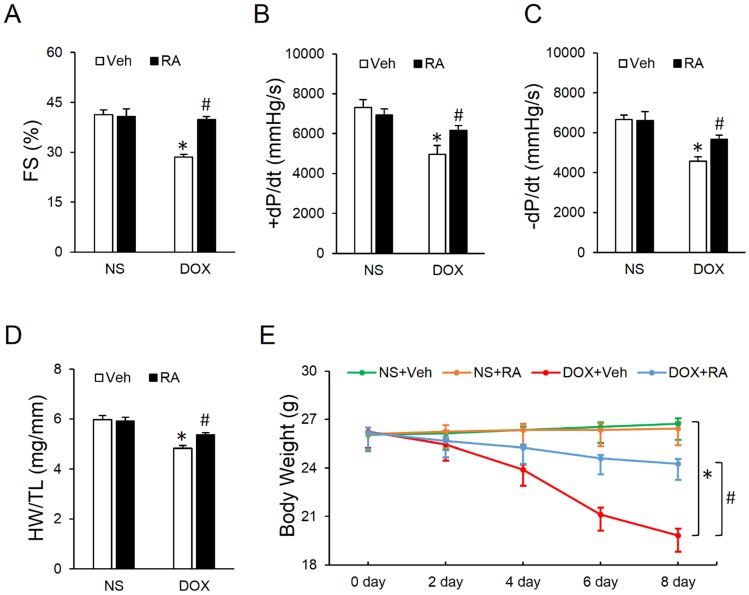
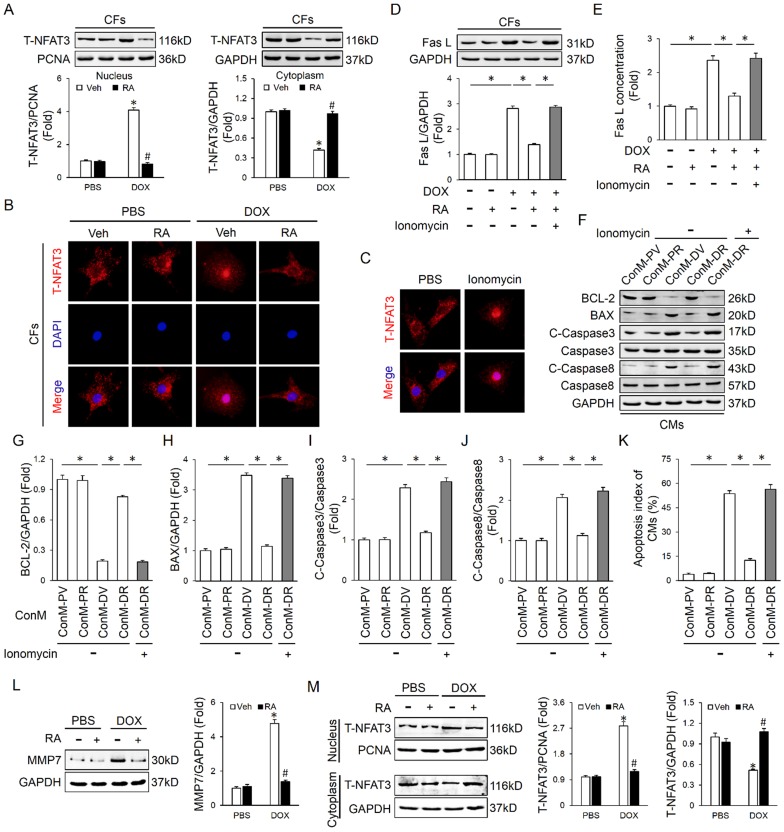
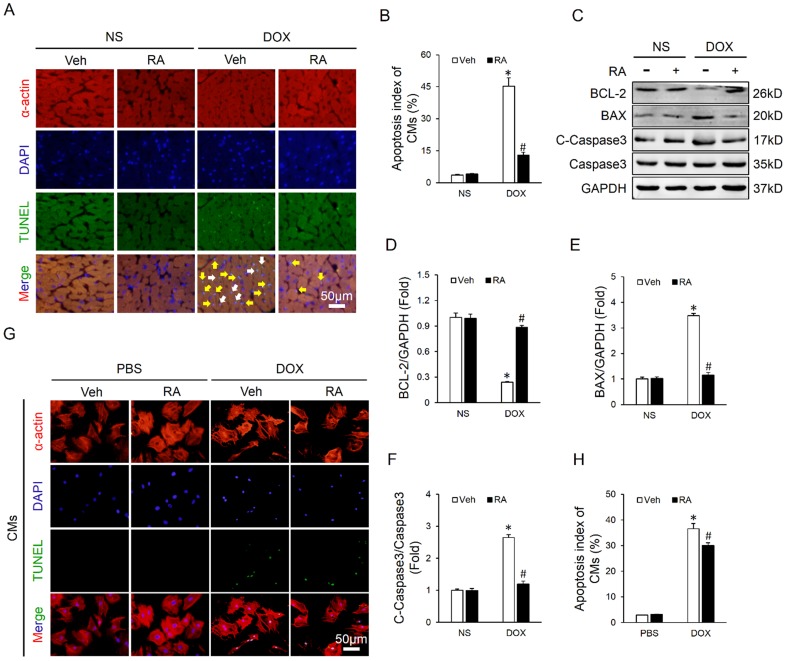
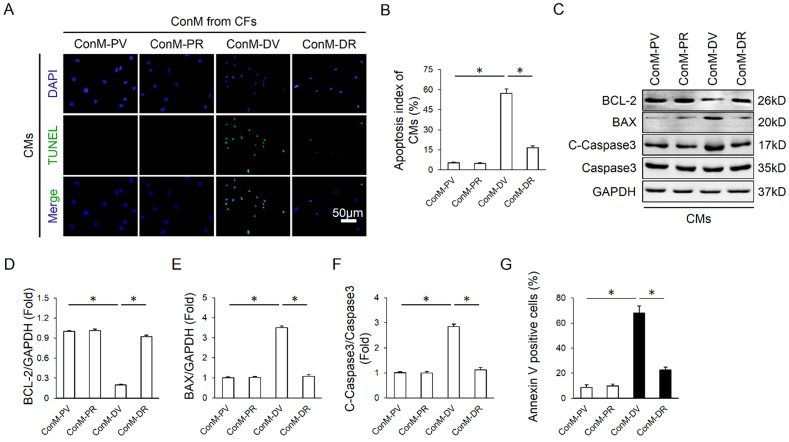
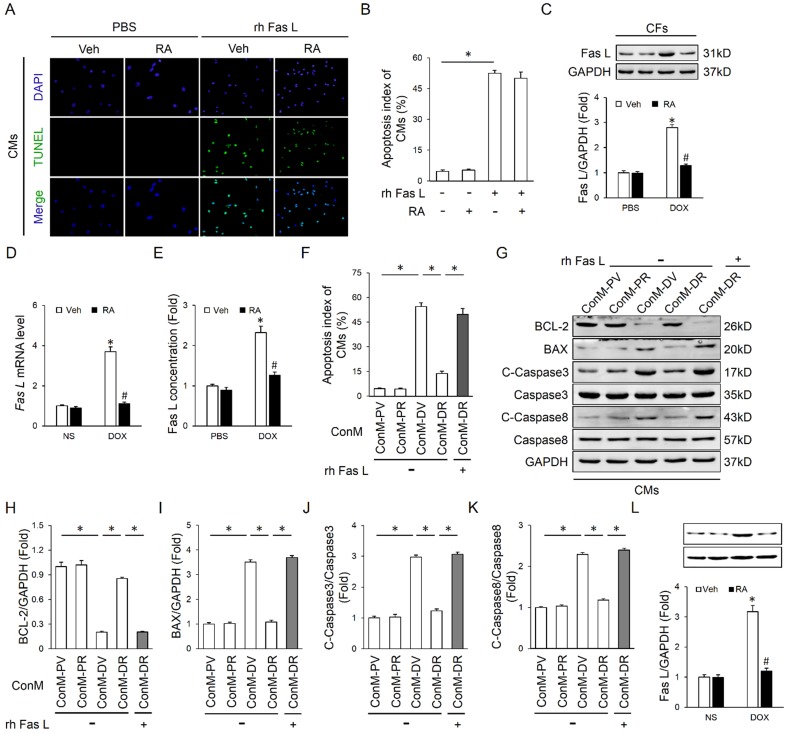
Cardiomyocyte apoptosis is a key event in the process of doxorubicin (DOX)-induced cardiotoxicity. Our previous study found that rosmarinic acid (RA) could attenuate pressure overload-induced cardiac dysfunction via cardiac fibroblasts (CFs), however its effect in DOX-induced cardiotoxicity remains unknown. In the present study, mice were subjected to a single intraperitoneal injection of DOX (15mg/kg) to generate DOX-induced cardiotoxicity. Histological examination, echocardiography, and molecular markers were used to evaluate the effects of RA. Neonatal rat cardiomyocytes (CMs) and CFs were used to verify the protective effect of RA in vitro. Conditioned medium derived from RA-treated CFs were prepared to illustrate the effect of RA on paracrine interplay between CFs and CMs. We found that RA significantly alleviated DOX-induced cardiomyocyte apoptosis and cardiac dysfunction in vivo, which, however, had almost negligible beneficial effect on DOX directly induced cardiomyocyte apoptosis in vitro. Mechanistically, CFs-derived Fas L was responsible for DOX-induced cardiomyocyte apoptosis, and RA treatment could decrease Fas L expression in CFs and its release to the conditioned medium by suppressing nuclear factor of activated T cells (NFAT) activation and metalloproteinase 7 (MMP7) expression, and exerted the anti-apoptotic effect on CMs via CFs. Ionomycin, and activator of NFAT, abrogated RA-mediated protective effect on cardiomyocyte apoptosis and cardiac dysfunction. In summary, RA alleviated cardiomyocyte apoptosis by inhibiting the expression and release of Fas L in CFs via a paracrine manner, moreover, NFAT as well as MMP7 inhibition were responsible for the suppression of Fas L. RA could be a powerful new therapeutic agent to mitigate cardiomyocyte apoptosis, thereby improving DOX-induced cardiotoxicity.
心肌细胞凋亡是多柔比星(DOX)诱导心脏毒性过程中的一个关键事件。我们之前的研究发现迷迭香酸(RA)可以通过心脏成纤维细胞(CFs)减轻压力超负荷引起的心脏功能障碍,但它在 DOX 诱导的心脏毒性中的作用尚不清楚。在本研究中,通过单次腹腔注射 DOX(15mg/kg)诱导小鼠产生 DOX 诱导的心脏毒性。使用组织学检查、超声心动图和分子标志物评估 RA 的作用。使用新生大鼠心肌细胞(CMs)和 CFs 来验证 RA 的保护作用。制备 RA 处理的 CFs 衍生的条件培养基,以说明 RA 对 CFs 和 CMs 之间旁分泌相互作用的影响。我们发现 RA 可显著减轻体内 DOX 诱导的心肌细胞凋亡和心脏功能障碍,而对体外 DOX 直接诱导的心肌细胞凋亡几乎没有有益作用。机制上,CFs 衍生的 FasL 负责 DOX 诱导的心肌细胞凋亡,RA 治疗通过抑制核因子活化 T 细胞(NFAT)激活和基质金属蛋白酶 7(MMP7)表达,降低 CFs 中的 FasL 表达及其释放到条件培养基中,从而对 CMs 发挥抗凋亡作用。离子霉素,NFAT 的激活剂,消除了 RA 对心肌细胞凋亡和心脏功能障碍的保护作用。总之,RA 通过抑制 CFs 中 FasL 的表达和释放来减轻心肌细胞凋亡,此外,NFAT 和 MMP7 的抑制是 FasL 抑制的原因。RA 可能是一种强大的新治疗剂,可减轻心肌细胞凋亡,从而改善 DOX 诱导的心脏毒性。