Neonatal Intensive Care Unit, The Rosie Hospital, Cambridge University Hospitals NHS Foundation Trust, Cambridge, CB2 0QQ, UK.
Department of Medical Physics and Biomedical Engineering, University College London, Gower Street, London, WC1E 6BT, UK.
Pediatr Res. 2019 Jun;85(7):1001-1007. doi: 10.1038/s41390-018-0263-x. Epub 2019 Feb 13.
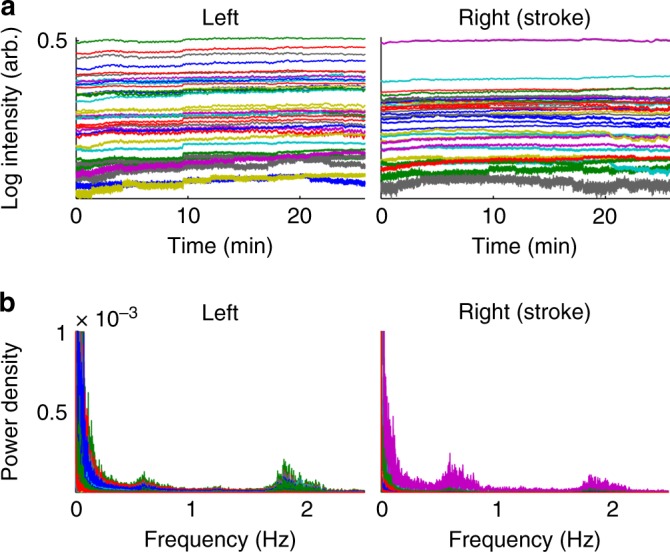
Perinatal stroke is a potentially debilitating injury, often under-diagnosed in the neonatal period. We conducted a pilot study investigating the role of the portable, non-invasive brain monitoring technique, diffuse optical tomography (DOT), as an early detection tool for infants with perinatal stroke.
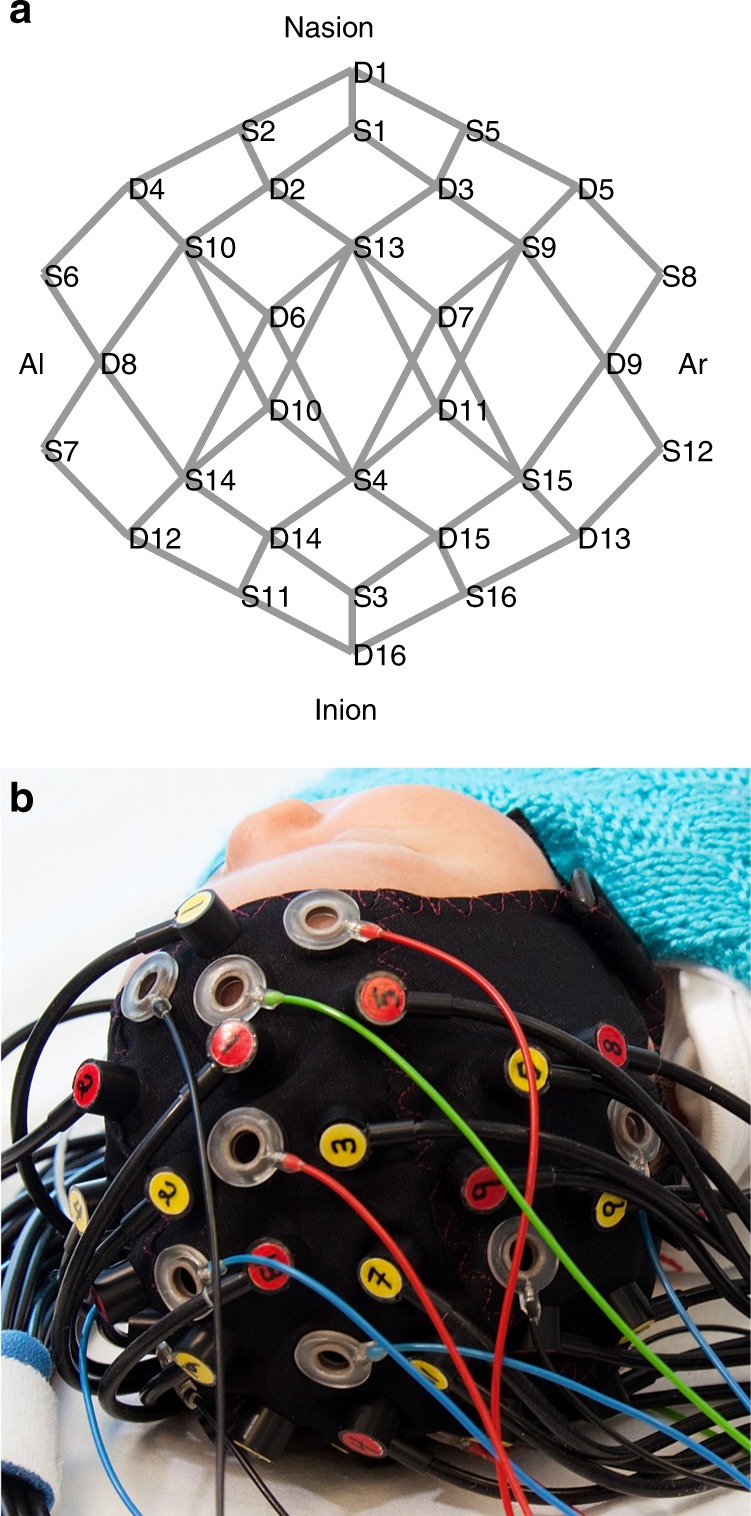
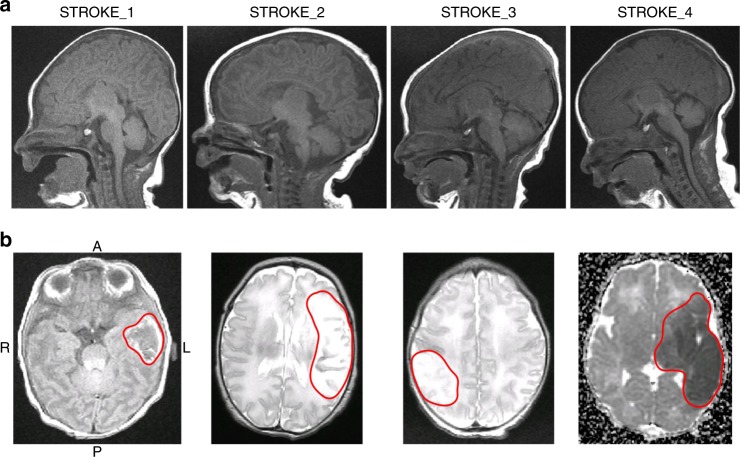
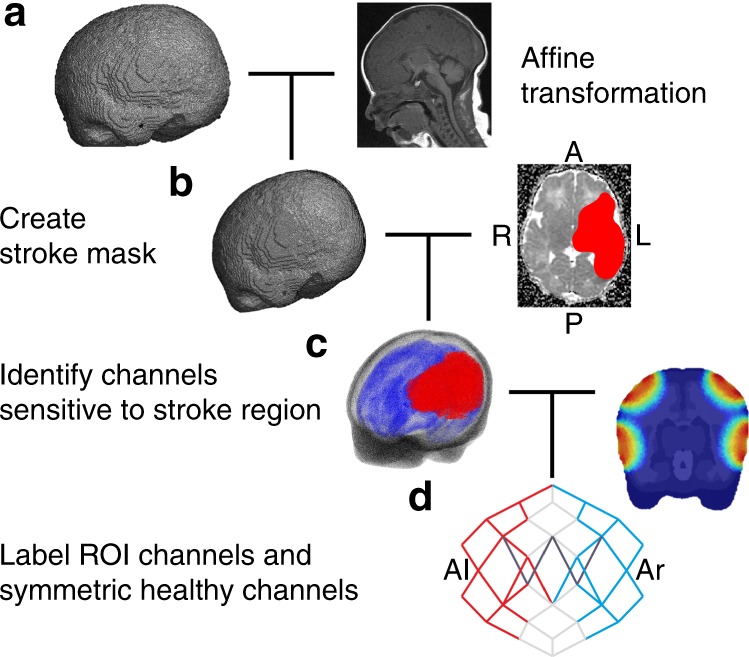
Four stroke-affected infants were scanned with a DOT system within the first 3 days of life and compared to four healthy control subjects. Spectral power, correlation, and phase lag between interhemispheric low frequency (0.0055-0.3 Hz) hemoglobin signals were assessed. Optical data analyses were conducted with and without magnetic resonance imaging (MRI)-guided stroke localization to assess the efficacy of DOT when used without stroke anatomical information.
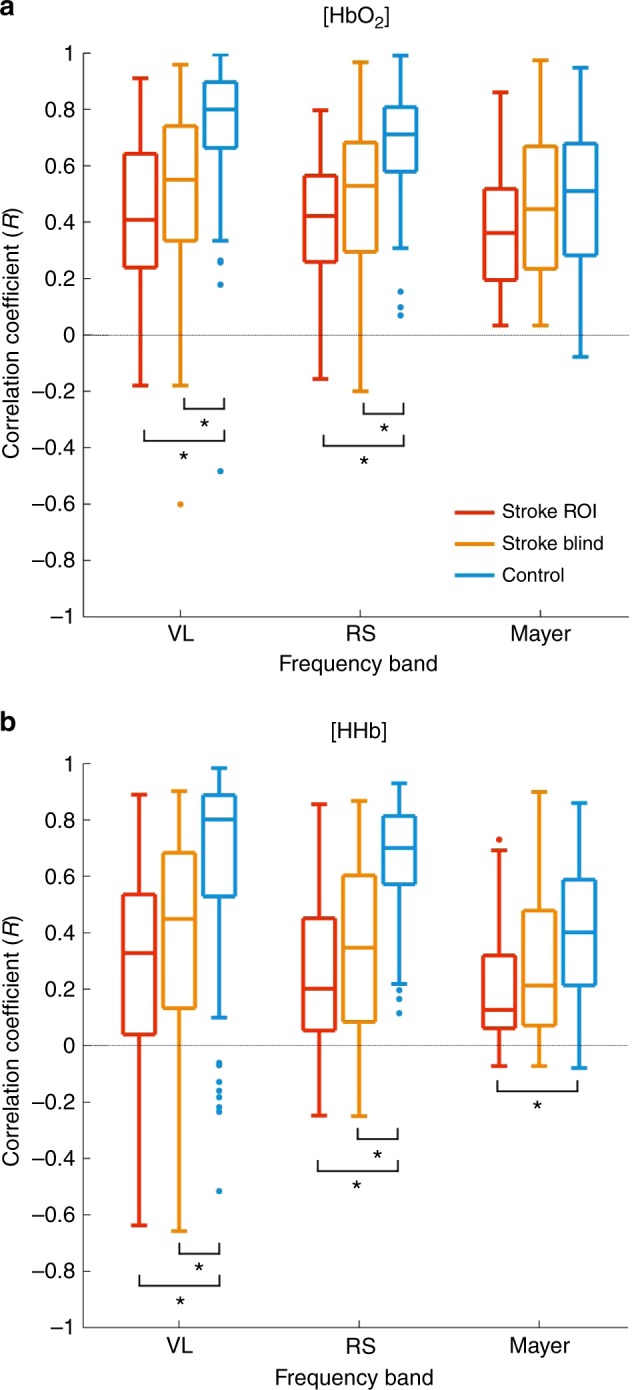
Interhemispheric correlations of both oxyhemoglobin and deoxyhemoglobin concentration were significantly reduced in the stroke-affected group within the very low (0.0055-0.0095 Hz) and resting state (0.01-0.08 Hz) frequencies (p < 0.003). There were no interhemispheric differences for spectral power. These results were observed even without MRI stroke localization.
This suggests that DOT and correlation-based analyses in the low-frequency range can potentially aid the early detection of perinatal stroke, prior to MRI acquisition. Additional methodological advances are required to increase the sensitivity and specificity of this technique.
围产期卒中是一种潜在的使人虚弱的损伤,在新生儿期常常诊断不足。我们进行了一项试点研究,旨在调查便携式、非侵入性脑监测技术——漫射光学断层扫描(DOT)作为一种早期检测围产期卒中婴儿的工具的作用。
4 名卒中患儿在生命的头 3 天内使用 DOT 系统进行扫描,并与 4 名健康对照者进行比较。评估了大脑半球间低频(0.0055-0.3 Hz)血红蛋白信号的光谱功率、相关性和相位滞后。在没有磁共振成像(MRI)引导的卒中定位的情况下进行光学数据分析,以评估在没有卒中解剖学信息的情况下使用 DOT 的效果。
在极低频率(0.0055-0.0095 Hz)和静息状态(0.01-0.08 Hz)频率下,卒中组的大脑半球间氧合血红蛋白和脱氧血红蛋白浓度的相关性明显降低(p<0.003)。光谱功率没有大脑半球间差异。即使没有 MRI 卒中定位,也观察到了这些结果。
这表明,在低频范围内的 DOT 和基于相关性的分析可能有助于在 MRI 采集之前早期检测围产期卒中。需要进一步的方法学进展来提高该技术的灵敏度和特异性。