Kumari Daman, Gazy Inbal, Usdin Karen
Section on Gene Structure and Disease, Laboratory of Cell and Molecular Biology, National Institute of Diabetes, Digestive and Kidney Diseases, National Institutes of Health, Bethesda, MD 20892, USA.
Brain Sci. 2019 Feb 12;9(2):39. doi: 10.3390/brainsci9020039.
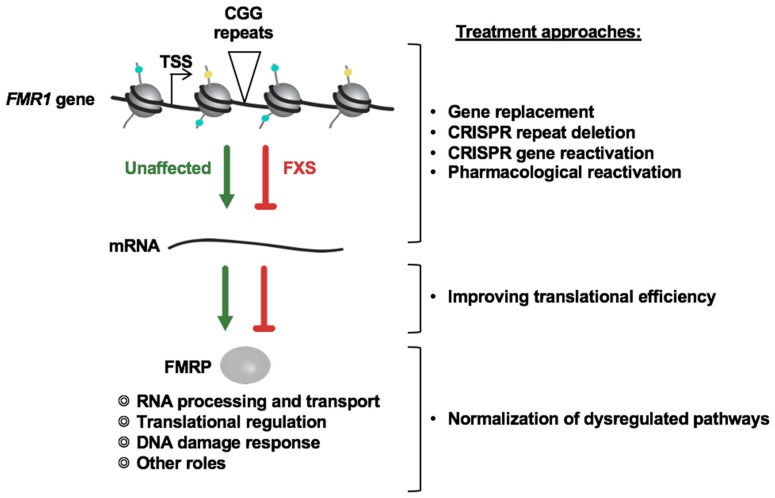
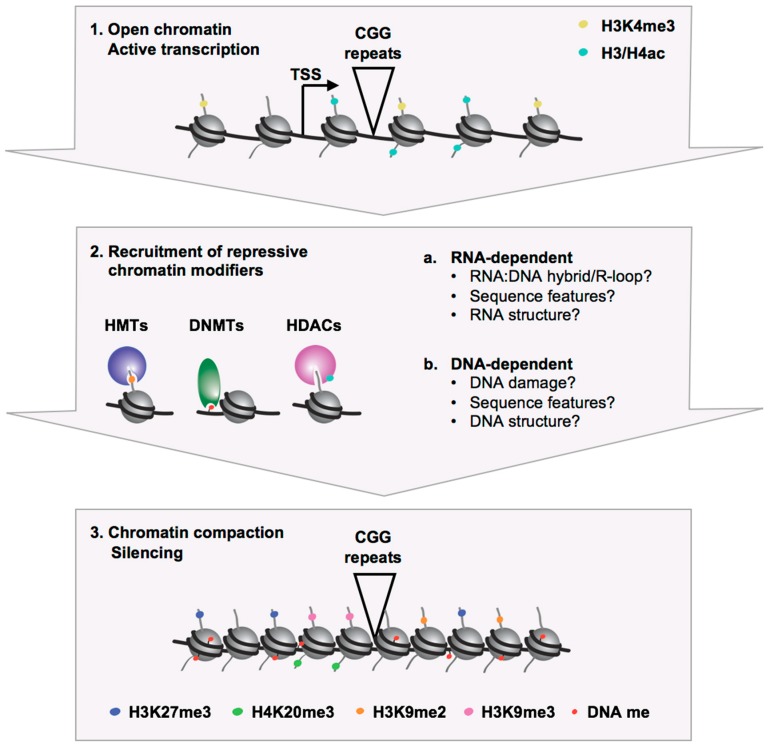
More than ~200 CGG repeats in the 5' untranslated region of the gene results in transcriptional silencing and the absence of the encoded protein, FMRP. FMRP is an RNA-binding protein that regulates the transport and translation of a variety of brain mRNAs in an activity-dependent manner. The loss of FMRP causes dysregulation of many neuronal pathways and results in an intellectual disability disorder, fragile X syndrome (FXS). Currently, there is no effective treatment for FXS. In this review, we discuss reactivation of the gene as a potential approach for FXS treatment with an emphasis on the use of small molecules to inhibit the pathways important for gene silencing.
该基因5'非翻译区超过约200个CGG重复序列会导致转录沉默以及编码蛋白FMRP缺失。FMRP是一种RNA结合蛋白,以活性依赖的方式调节多种脑内mRNA的转运和翻译。FMRP的缺失会导致许多神经元通路失调,进而引发一种智力残疾疾病——脆性X综合征(FXS)。目前,FXS尚无有效治疗方法。在本综述中,我们讨论了该基因的重新激活作为FXS治疗的一种潜在方法,重点是使用小分子抑制对基因沉默重要的通路。