Department of Microbiology and Immunology, Emory University School of Medicine, Atlanta, GA 30322.
Department of Microbiology and Immunology, Emory University School of Medicine, Atlanta, GA 30322
Proc Natl Acad Sci U S A. 2019 Mar 5;116(10):4611-4618. doi: 10.1073/pnas.1818494116. Epub 2019 Feb 13.
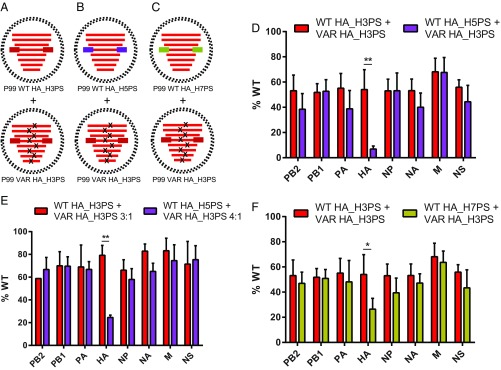
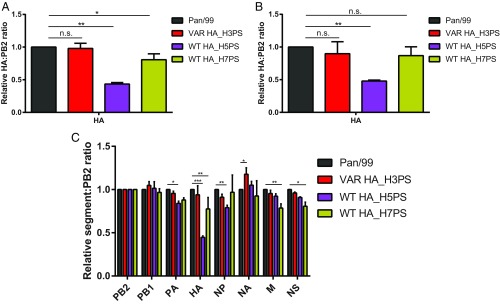
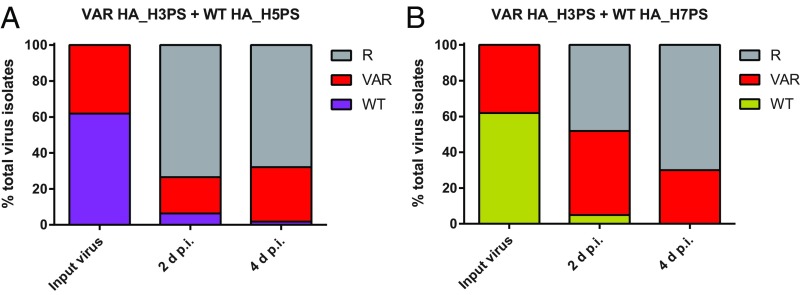
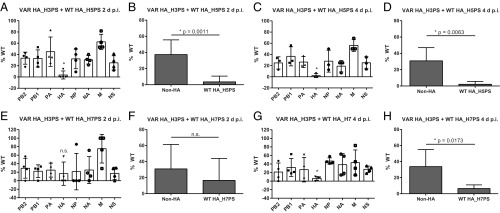
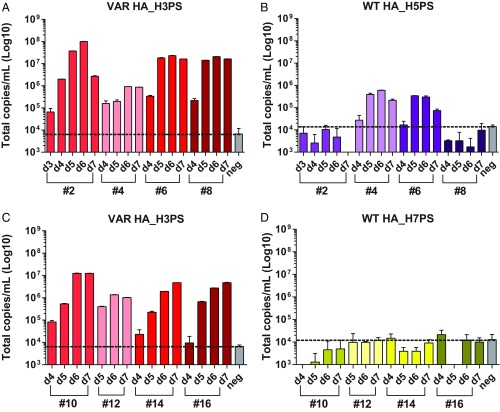
Influenza A virus (IAV) has a segmented genome, which () allows for exchange of gene segments in coinfected cells, termed reassortment, and () necessitates a selective packaging mechanism to ensure incorporation of a complete set of segments into virus particles. Packaging signals serve as segment identifiers and enable segment-specific packaging. We have previously shown that packaging signals limit reassortment between heterologous IAV strains in a segment-dependent manner. Here, we evaluated the extent to which packaging signals prevent reassortment events that would raise concern for pandemic emergence. Specifically, we tested the compatibility of hemagglutinin (HA) packaging signals from H5N8 and H7N9 avian IAVs with a human seasonal H3N2 IAV. By evaluating reassortment outcomes, we demonstrate that HA segments carrying H5 or H7 packaging signals are significantly disfavored for incorporation into a human H3N2 virus in both cell culture and a guinea pig model. However, incorporation of the heterologous HAs was not excluded fully, and variants with heterologous HA packaging signals were detected at low levels in vivo, including in naïve contact animals. This work indicates that the likelihood of reassortment between human seasonal IAV and avian IAV is reduced by divergence in the RNA packaging signals of the HA segment. These findings offer important insight into the molecular mechanisms governing IAV emergence and inform efforts to estimate the risks posed by H7N9 and H5N8 subtype avian IAVs.
甲型流感病毒(IAV)具有分段基因组,这使得在共感染的细胞中发生基因片段交换成为可能,这种现象被称为重配,并且需要一种选择性的包装机制来确保将完整的基因片段包装到病毒颗粒中。包装信号作为片段标识符,使特定片段的包装成为可能。我们之前已经表明,包装信号以依赖于片段的方式限制了异源 IAV 株之间的重配。在这里,我们评估了包装信号在多大程度上阻止了可能引发大流行的重配事件。具体来说,我们测试了来自 H5N8 和 H7N9 禽流感病毒的血凝素 (HA) 包装信号与人类季节性 H3N2 IAV 的兼容性。通过评估重配结果,我们证明携带 H5 或 H7 包装信号的 HA 片段在细胞培养和豚鼠模型中都明显不利于整合到人类 H3N2 病毒中。然而,异源 HA 的整合并未完全被排除,并且在体内(包括在无经验的接触动物中)以低水平检测到具有异源 HA 包装信号的变体。这项工作表明,人类季节性 IAV 和禽流感病毒之间重配的可能性因 HA 片段的 RNA 包装信号的差异而降低。这些发现为 IAV 出现的分子机制提供了重要的见解,并为评估 H7N9 和 H5N8 亚型禽流感病毒带来的风险提供了信息。