Institute of Medical Genetics, Center for Pathobiochemistry and Genetics, Medical University of Vienna (MUV), Vienna, Austria.
Section for Biosimulation and Bioinformatics, Center for Medical Statistics, Informatics and Intelligent Systems, Medical University of Vienna (MUV), Vienna, Austria.
Sci Rep. 2019 Feb 13;9(1):1897. doi: 10.1038/s41598-018-37491-w.
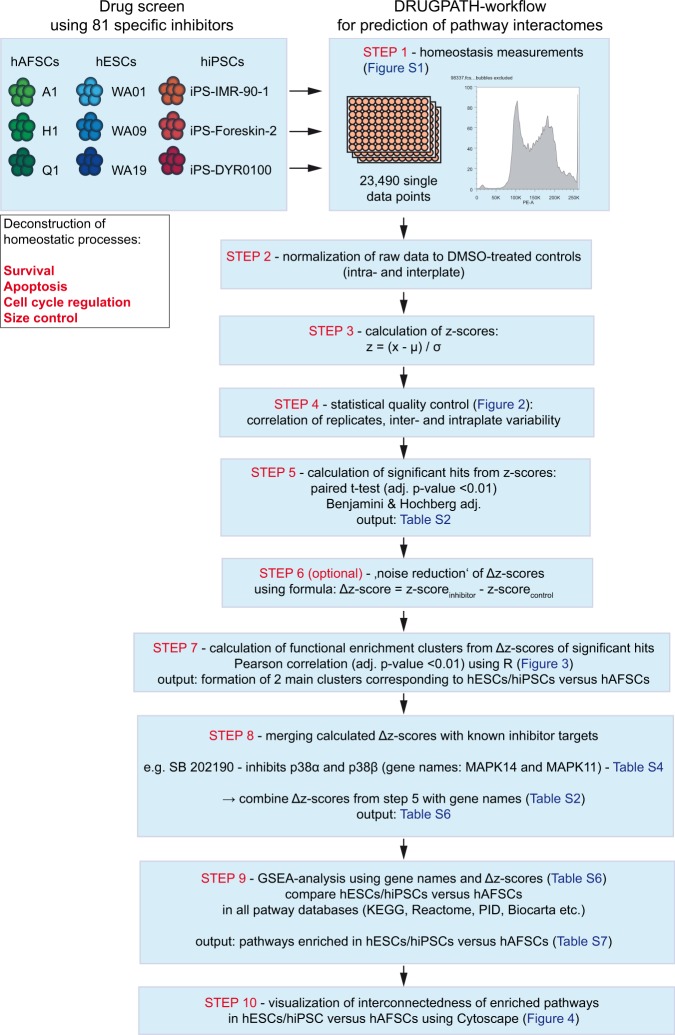
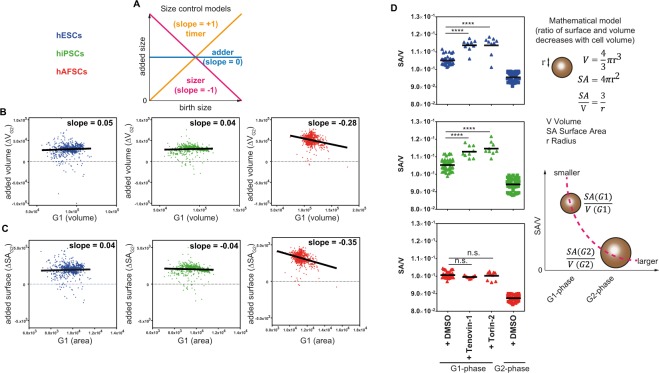
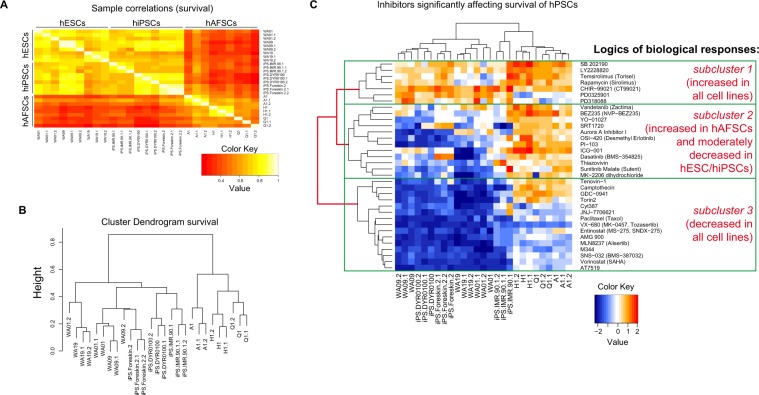
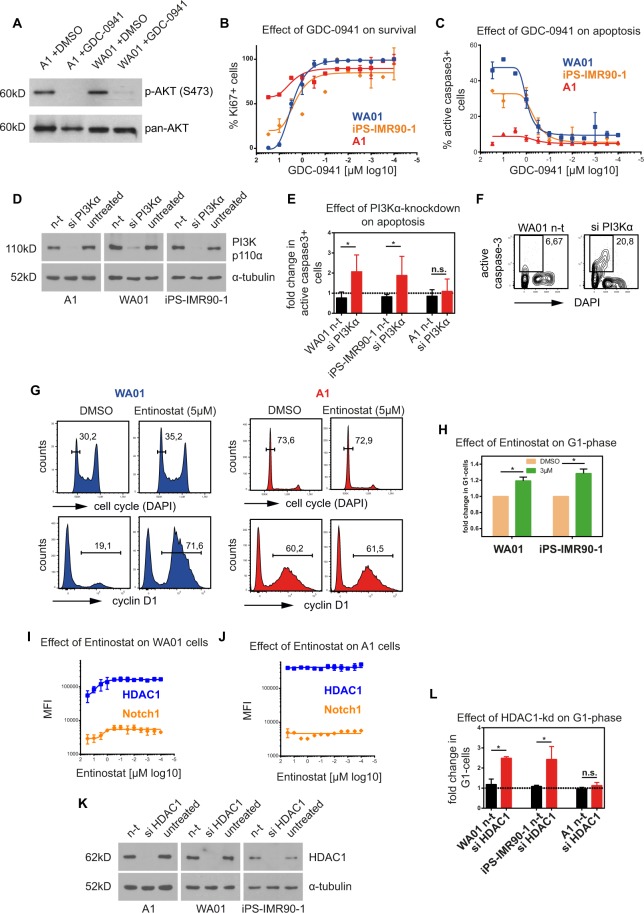
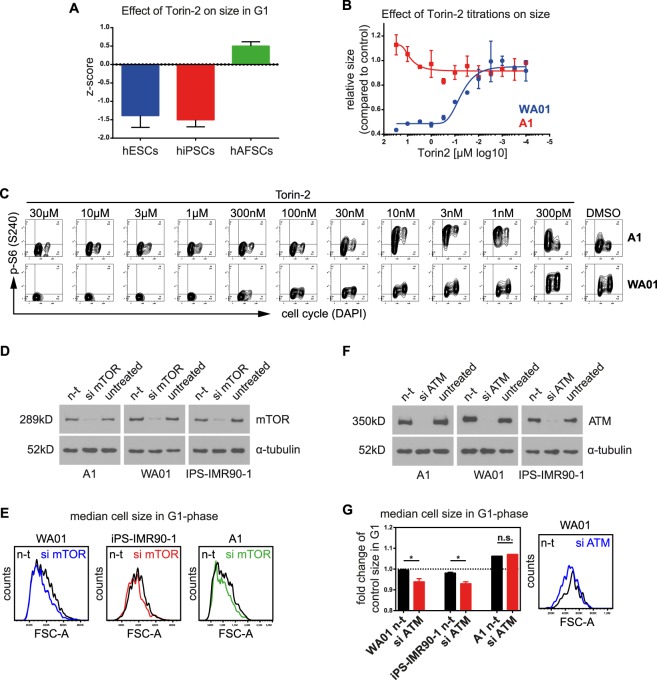
Genetic and biochemical screening approaches often fail to identify functionally relevant pathway networks because many signaling proteins contribute to multiple gene ontology pathways. We developed a DRUGPATH-approach to predict pathway-interactomes from high-content drug screen data. DRUGPATH is based upon combining z-scores of effective inhibitors with their corresponding and validated targets. We test DRUGPATH by comparing homeostatic pathways in human embryonic stem cells (hESCs), human induced pluripotent stem cells (hiPSCs) and human amniotic fluid stem cells (hAFSCs). We show that hAFSCs utilize distinct interactomes compared to hESCs/hiPSCs and that pathways orchestrating cell cycle and apoptosis are strongly interconnected, while pathways regulating survival and size are not. Interestingly, hESCs/hiPSCs regulate their size by growing exact additional sizes during each cell cycle. Chemical and genetic perturbation studies show that this "adder-model" is dependent on the DNA-damage pathway. In the future, the DRUGPATH-approach may help to predict novel pathway interactomes from high-content drug screens.
遗传和生化筛选方法往往无法识别功能相关的途径网络,因为许多信号蛋白参与多个基因本体途径。我们开发了一种 DRUGPATH 方法,从高内涵药物筛选数据中预测途径相互作用组。DRUGPATH 基于将有效抑制剂的 z 值与其相应的经证实的靶标相结合。我们通过比较人胚胎干细胞 (hESC)、人诱导多能干细胞 (hiPSC) 和人羊水干细胞 (hAFSC) 中的稳态途径来测试 DRUGPATH。我们表明,hAFSC 与 hESC/hiPSC 相比利用不同的相互作用组,并且协调细胞周期和细胞凋亡的途径强烈相互关联,而调节存活和大小的途径则没有。有趣的是,hESC/hiPSC 通过在每个细胞周期中生长确切的额外大小来调节其大小。化学和遗传扰动研究表明,这种“加法模型”依赖于 DNA 损伤途径。在未来,DRUGPATH 方法可能有助于从高内涵药物筛选中预测新的途径相互作用组。