Laboratorio de Genética Bioquímica (LAGENBIO), Universidad de Zaragoza, IA2, IIS Aragón, Zaragoza, 50013, Spain.
Centro de Investigación en Encefalopatías y Enfermedades Transmisibles Emergentes, Universidad de Zaragoza, IA2, IIS Aragón, Zaragoza, 50013, Spain.
Sci Rep. 2019 Feb 13;9(1):1911. doi: 10.1038/s41598-019-38500-2.
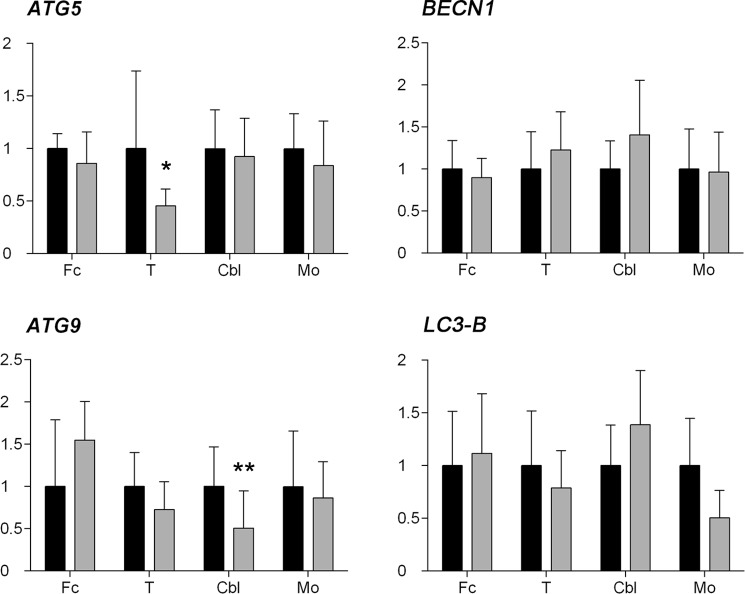
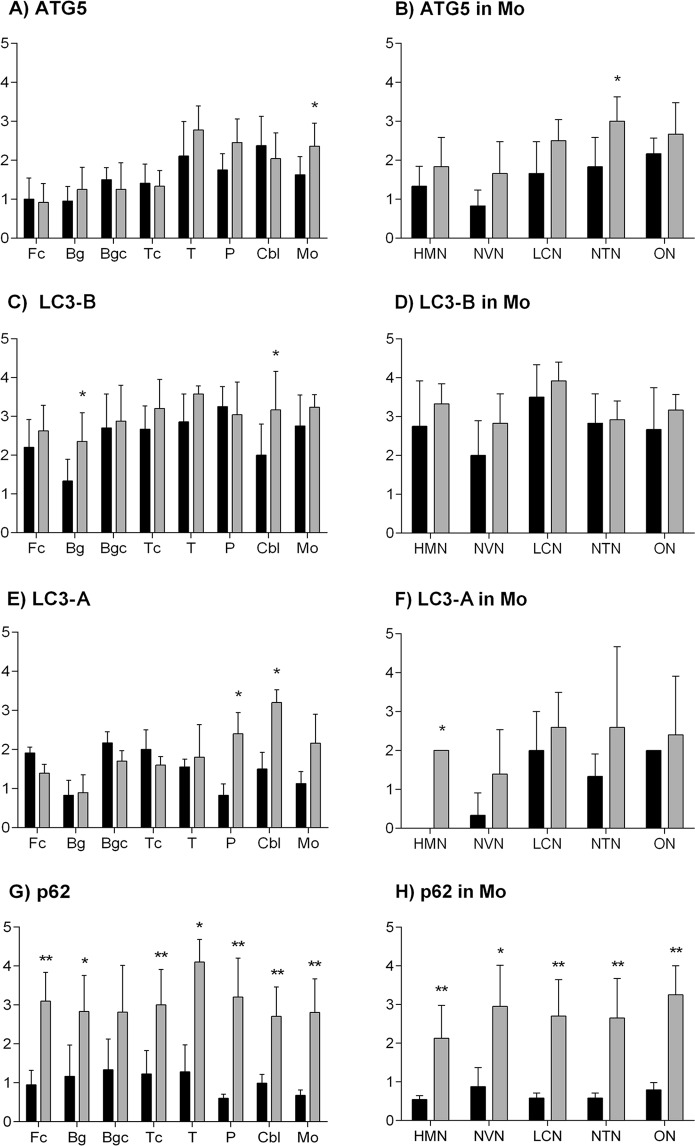
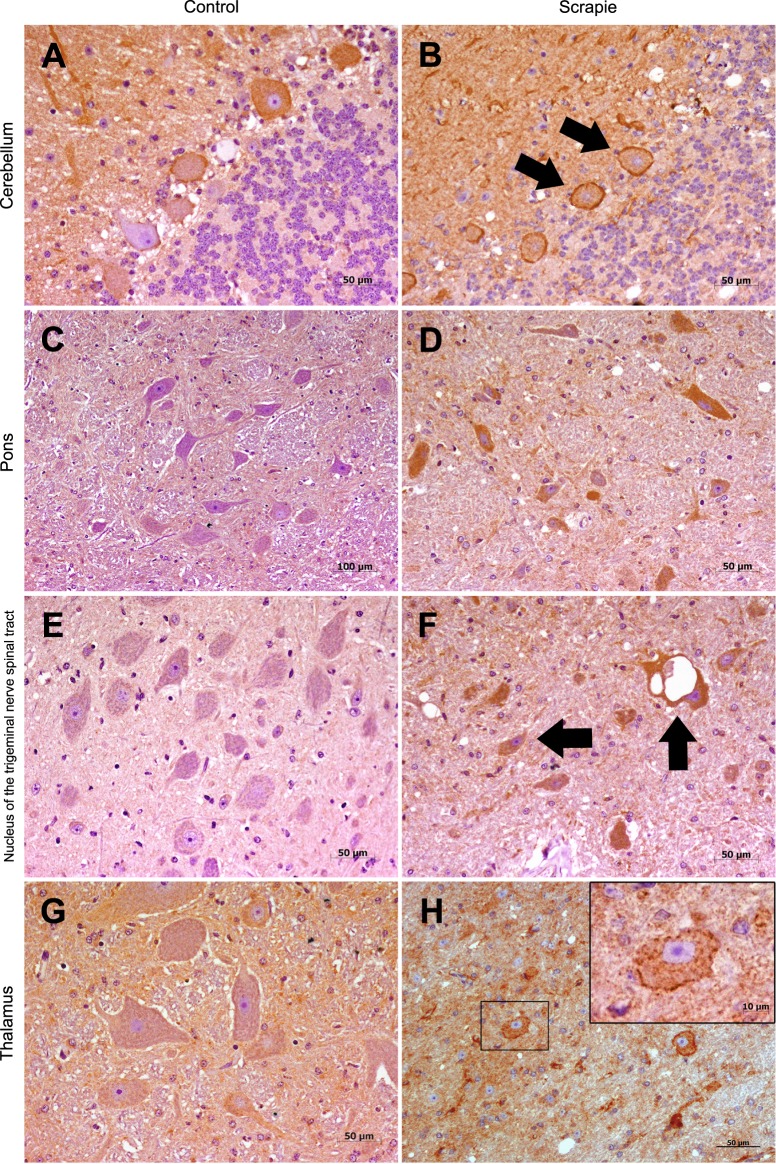
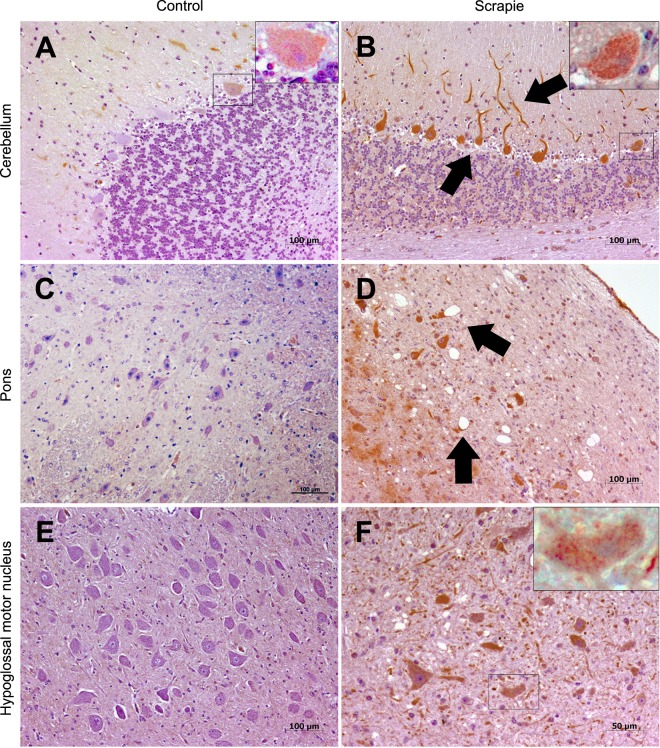
Autophagy is a dynamic cellular mechanism involved in protein and organelle turnover through lysosomal degradation. Autophagy regulation modulates the pathologies associated with many neurodegenerative diseases. Using sheep naturally infected with scrapie as a natural animal model of prion diseases, we investigated the regulation of autophagy in the central nervous system (CNS) during the clinical phase of the disease. We present a gene expression and protein distribution analysis of different autophagy-related markers and investigate their relationship with prion-associated lesions in several areas of the CNS. Gene expression of autophagy markers ATG5 and ATG9 was downregulated in some areas of scrapie brains. In contrast, ATG5 protein accumulates in medulla oblongata and positively correlates with prion deposition and scrapie-related lesions. The accumulation of this protein and p62, a marker of autophagy impairment, suggests that autophagy is decreased in the late phases of the disease. However, the increment of LC3 proteins and the mild expression of p62 in basal ganglia and cerebellum, primarily in Purkinje cells, suggests that autophagy machinery is still intact in less affected areas. We hypothesize that specific cell populations of the CNS may display neuroprotective mechanisms against prion-induced toxicity through the induction of PrP clearance by autophagy.
自噬是一种动态的细胞机制,通过溶酶体降解参与蛋白质和细胞器的周转。自噬调节可以调节与许多神经退行性疾病相关的病理学。我们使用自然感染瘙痒病的绵羊作为朊病毒病的天然动物模型,研究了在疾病的临床阶段中枢神经系统 (CNS) 中自噬的调节。我们对不同自噬相关标志物的基因表达和蛋白分布进行了分析,并研究了它们与 CNS 多个区域朊病毒相关病变的关系。在瘙痒病脑中的一些区域,自噬标志物 ATG5 和 ATG9 的基因表达下调。相比之下,ATG5 蛋白在延髓中积累,并与朊病毒沉积和瘙痒病相关病变呈正相关。这种蛋白和 p62(自噬损伤的标志物)的积累表明自噬在疾病的后期阶段减少。然而,在基底神经节和小脑中,尤其是在浦肯野细胞中,LC3 蛋白的增加和 p62 的轻度表达表明自噬机制在受影响较小的区域仍然完整。我们假设中枢神经系统的特定细胞群可能通过自噬诱导 PrP 清除来显示针对朊病毒诱导的毒性的神经保护机制。