Choi Kyeong Rok, Lee Sang Yup
Metabolic and Biomolecular Engineering National Research Laboratory, Systems Metabolic Engineering and Systems Healthcare Cross Generation Collaborative Laboratory, Department of Chemical and Biomolecular Engineering (BK21 Plus Program), Institute for the BioCentury, Korea Advanced Institute of Science and Technology (KAIST), 291 Daehak-ro, Yuseong-gu, Daejeon, 34141, Republic of Korea.
BioProcess Engineering Research Center, KAIST, 291 Daehak-ro, Yuseong-gu, Daejeon, 34141, Republic of Korea.
Microb Biotechnol. 2020 Jan;13(1):199-209. doi: 10.1111/1751-7915.13374. Epub 2019 Feb 14.
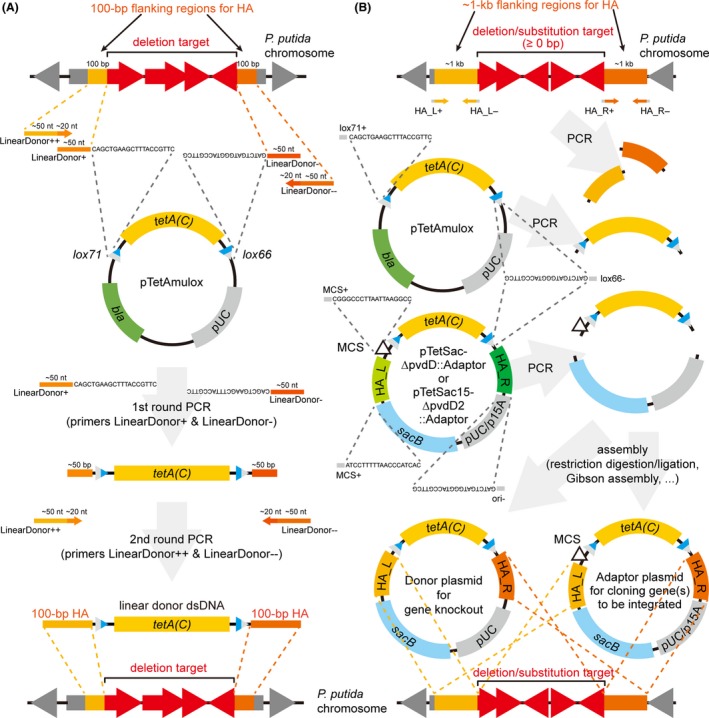
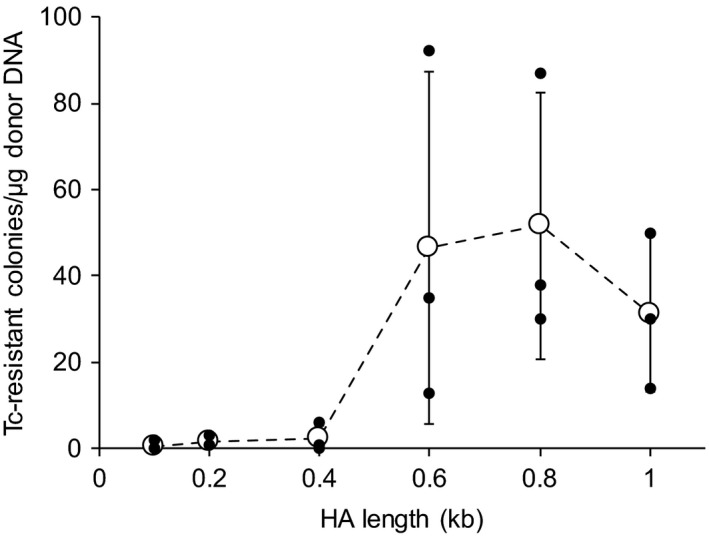
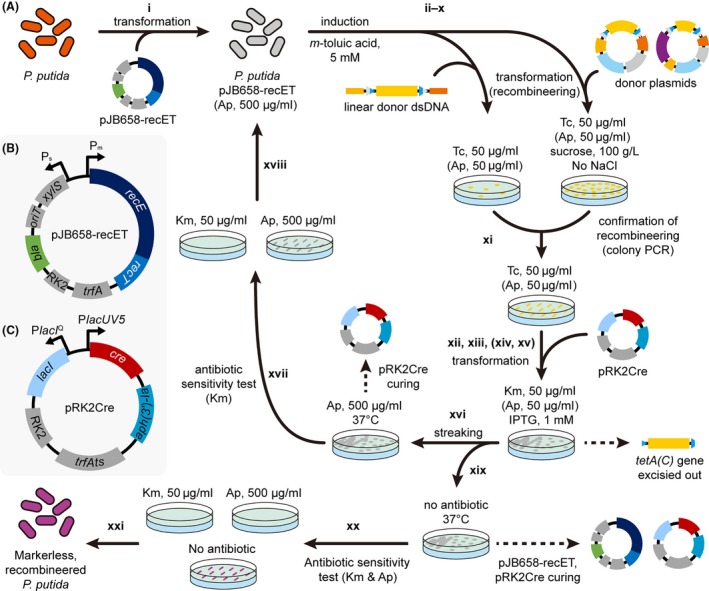
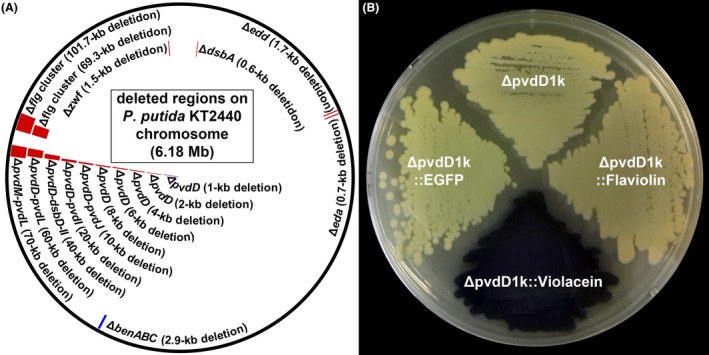
Pseudomonas putida has emerged as a promising host for the production of chemicals and materials thanks to its metabolic versatility and cellular robustness. In particular, P. putida KT2440 has been officially classified as a generally recognized as safe (GRAS) strain, which makes it suitable for the production of compounds that humans directly consume, including secondary metabolites of high importance. Although various tools and strategies have been developed to facilitate metabolic engineering of P. putida, modification of large genes/clusters essential for heterologous expression of natural products with large biosynthetic gene clusters (BGCs) has not been straightforward. Recently, we reported a RecET-based markerless recombineering system for engineering P. putida and demonstrated deletion of multiple regions as large as 101.7 kb throughout the chromosome by single rounds of recombineering. In addition, development of a donor plasmid system allowed successful markerless integration of heterologous BGCs to P. putida chromosome using the recombineering system with examples of - but not limited to - integrating multiple heterologous BGCs as large as 7.4 kb to the chromosome of P. putida KT2440. In response to the increasing interest in our markerless recombineering system, here we provide detailed protocols for markerless gene knockout and integration for the genome engineering of P. putida and related species of high industrial importance.
由于其代谢的多功能性和细胞的稳健性,恶臭假单胞菌已成为生产化学品和材料的有前景的宿主。特别是,恶臭假单胞菌KT2440已被正式归类为一般认为安全(GRAS)菌株,这使其适合生产人类直接消费的化合物,包括具有高度重要性的次级代谢产物。尽管已经开发了各种工具和策略来促进恶臭假单胞菌的代谢工程,但对具有大型生物合成基因簇(BGCs)的天然产物进行异源表达所必需的大基因/基因簇的修饰并非易事。最近,我们报道了一种基于RecET的无标记重组工程系统用于工程改造恶臭假单胞菌,并通过一轮重组工程证明了在整个染色体上删除了多个长达101.7 kb的区域。此外,供体质粒系统的开发使得使用重组工程系统将异源BGCs成功无标记整合到恶臭假单胞菌染色体上,例如但不限于将多个长达7.4 kb的异源BGCs整合到恶臭假单胞菌KT2440的染色体上。鉴于对我们的无标记重组工程系统的兴趣日益增加,在此我们提供详细的方案,用于恶臭假单胞菌和具有高度工业重要性的相关物种的基因组工程中的无标记基因敲除和整合。