Fels Ursula, Gevaert Kris, Van Damme Petra
Department of Biochemistry and Microbiology, Ghent University, Ghent, Belgium.
VIB-UGent Center for Medical Biotechnology, Ghent, Belgium.
Front Microbiol. 2020 Sep 11;11:548410. doi: 10.3389/fmicb.2020.548410. eCollection 2020.
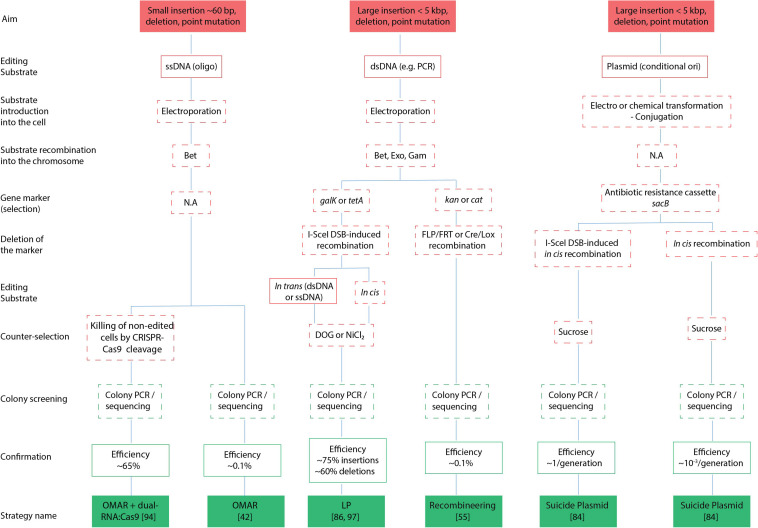
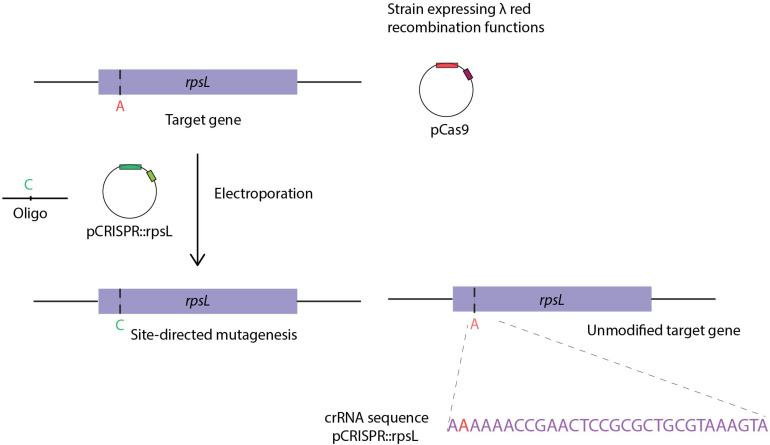
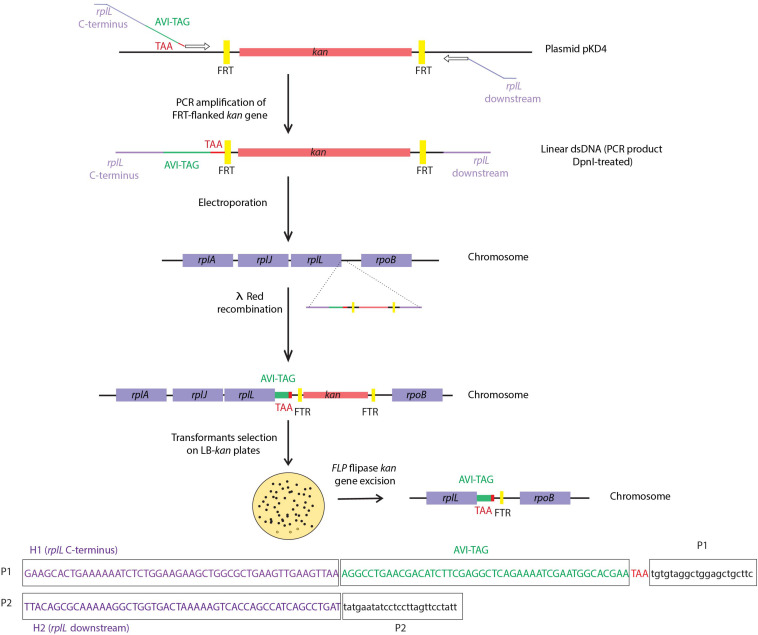
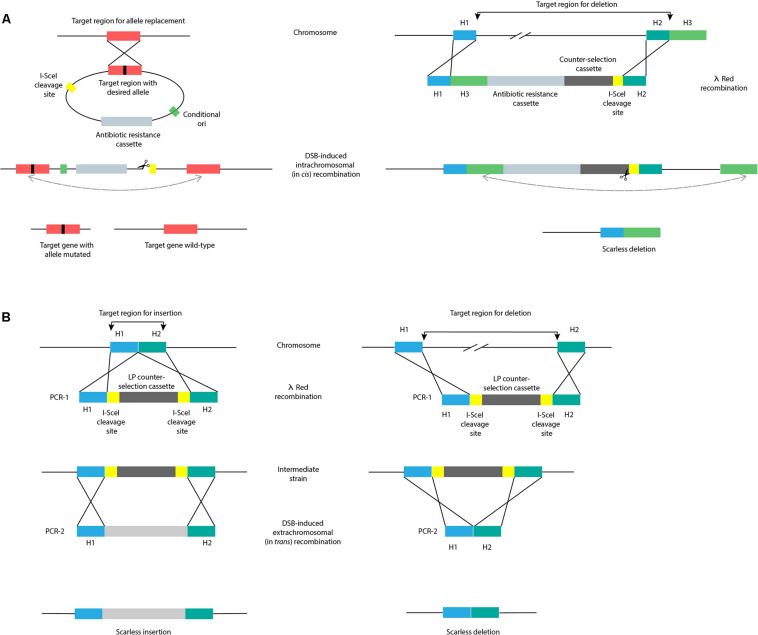
Serving a robust platform for reverse genetics enabling the study of gene functions primarily in enterobacteriaceae, recombineering -or recombination-mediated genetic engineering-represents a powerful and relative straightforward genetic engineering tool. Catalyzed by components of bacteriophage-encoded homologous recombination systems and only requiring short ∼40-50 base homologies, the targeted and precise introduction of modifications (e.g., deletions, knockouts, insertions and point mutations) into the chromosome and other episomal replicons is empowered. Furthermore, by its ability to make use of both double- and single-stranded linear DNA editing substrates (e.g., PCR products or oligonucleotides, respectively), lengthy subcloning of specific DNA sequences is circumvented. Further, the more recent implementation of CRISPR-associated endonucleases has allowed for more efficient screening of successful recombinants by the selective purging of non-edited cells, as well as the creation of markerless and scarless mutants. In this review we discuss various recombineering strategies to promote different types of gene modifications, how they are best applied, and their possible pitfalls.
重组工程——或重组介导的基因工程——为反向遗传学提供了一个强大的平台,主要用于研究肠杆菌科中的基因功能,它是一种强大且相对简单的基因工程工具。在噬菌体编码的同源重组系统组件的催化下,仅需约40 - 50个碱基的短同源序列,就能实现对染色体和其他附加体质粒进行靶向且精确的修饰(如缺失、敲除、插入和点突变)。此外,由于它能够利用双链和单链线性DNA编辑底物(分别如PCR产物或寡核苷酸),从而避免了特定DNA序列的冗长亚克隆。此外,最近CRISPR相关核酸内切酶的应用使得通过选择性清除未编辑细胞更有效地筛选成功的重组体成为可能,同时也能够创建无标记和无疤痕的突变体。在这篇综述中,我们讨论了各种重组工程策略,以促进不同类型的基因修饰、它们的最佳应用方式以及可能存在的陷阱。