Department of Biochemistry and Molecular Biology II, School of Pharmacy, University of Granada, 18071 Granada, Spain;.
Institute of Nutrition and Food Technology "José Mataix", Center of Biomedical Research,University of Granada, 18016 Armilla, Granada, Spain.
Nutrients. 2019 Feb 5;11(2):337. doi: 10.3390/nu11020337.
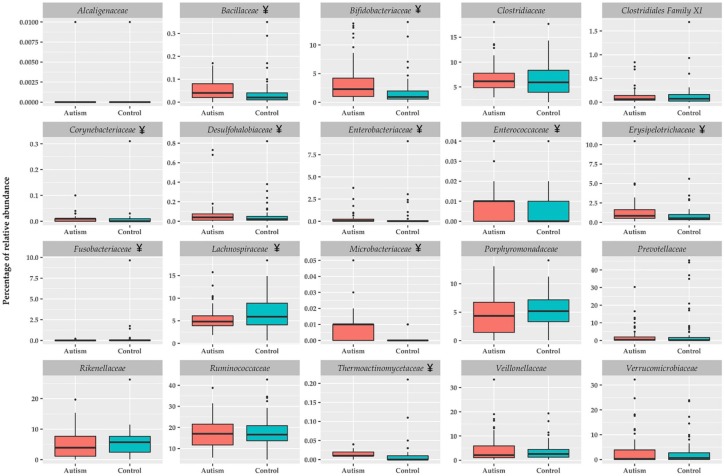
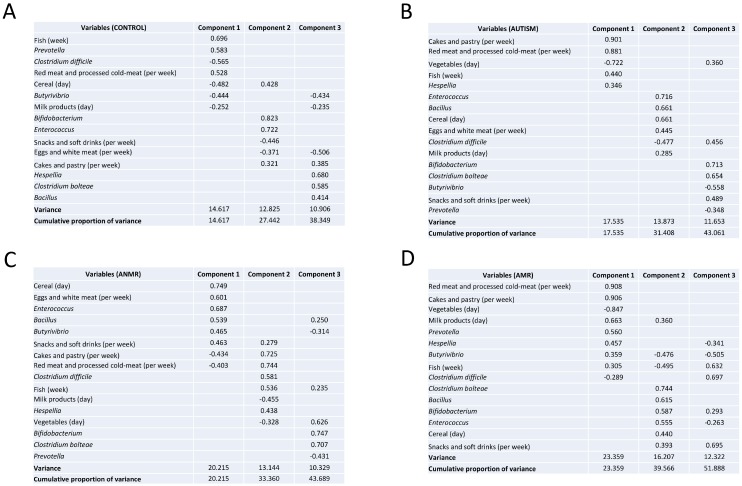
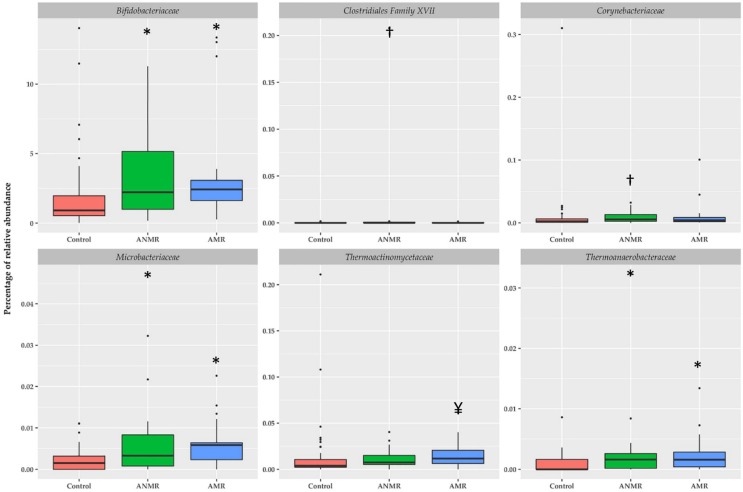
New microbiome sequencing technologies provide novel information about the potential interactions among intestinal microorganisms and the host in some neuropathologies as autism spectrum disorders (ASD). The microbiota⁻gut⁻brain axis is an emerging aspect in the generation of autistic behaviors; evidence from animal models suggests that intestinal microbial shifts may produce changes fitting the clinical picture of autism. The aim of the present study was to evaluate the fecal metagenomic profiles in children with ASD and compare them with healthy participants. This comparison allows us to ascertain how mental regression (an important variable in ASD) could influence the intestinal microbiota profile. For this reason, a subclassification in children with ASD by mental regression (AMR) and no mental regression (ANMR) phenotype was performed. The present report was a descriptive observational study. Forty-eight children aged 2⁻6 years with ASD were included: 30 with ANMR and 18 with AMR. In addition, a control group of 57 normally developing children was selected and matched to the ASD group by sex and age. Fecal samples were analyzed with a metagenomic approach using a next-generation sequencing platform. Several differences between children with ASD, compared with the healthy group, were detected. Namely, and at phylum level, as well as, , , and at class level were found at higher proportions in children with ASD. Additionally, levels showed to be augmented exclusively in AMR children. Preliminary results, using a principal component analysis, showed differential patterns in children with ASD, ANMR and AMR, compared to healthy group, both for intestinal microbiota and food patterns. In this study, we report, higher levels of , and , aside from , and in children with ASD compared to healthy group. Furthermore, AMR children exhibited higher levels of . Further analysis using these preliminary results and mixing metagenomic and other "omic" technologies are needed in larger cohorts of children with ASD to confirm these intestinal microbiota changes.
新的微生物组测序技术为一些神经病理学(如自闭症谱系障碍)中肠道微生物与宿主之间的潜在相互作用提供了新的信息。肠道微生物群⁻肠道⁻大脑轴是产生自闭症行为的一个新兴方面;动物模型的证据表明,肠道微生物群的变化可能产生符合自闭症临床特征的变化。本研究的目的是评估自闭症儿童的粪便宏基因组谱,并将其与健康参与者进行比较。这种比较使我们能够确定精神衰退(自闭症的一个重要变量)如何影响肠道微生物群的特征。为此,对自闭症儿童进行了精神衰退(AMR)和无精神衰退(ANMR)表型的亚分类。本报告是一项描述性观察研究。共纳入 48 名 2⁻6 岁自闭症儿童:30 名 ANMR 和 18 名 AMR。此外,选择了一个对照组,共 57 名正常发育儿童,按性别和年龄与 ASD 组匹配。使用下一代测序平台的宏基因组方法分析粪便样本。与健康组相比,在 ASD 儿童中检测到几种差异。即在门水平上的 和 ,以及在纲水平上的 、 、 和 ,在 ASD 儿童中发现比例更高。此外,仅在 AMR 儿童中发现 水平增加。使用主成分分析的初步结果显示,与健康组相比,ASD 儿童、ANMR 和 AMR 儿童的肠道微生物群和饮食模式存在差异。在这项研究中,我们报告了 ASD 儿童的 、 、 和 水平高于健康组,除了 之外,还有 。此外,AMR 儿童表现出更高水平的 。需要使用这些初步结果进行更大样本量的 ASD 儿童的进一步分析,并结合宏基因组和其他“组学”技术,以确认这些肠道微生物群的变化。