Ginwala Rashida, Bhavsar Raina, Chigbu DeGaulle I, Jain Pooja, Khan Zafar K
Department of Microbiology and Immunology, and Center for Molecular Virology and Neuroimmunology, Center for Cancer Biology, Institute for Molecular Medicine and Infectious Disease, Drexel University College of Medicine, Philadelphia, PA 19129, USA.
Antioxidants (Basel). 2019 Feb 5;8(2):35. doi: 10.3390/antiox8020035.
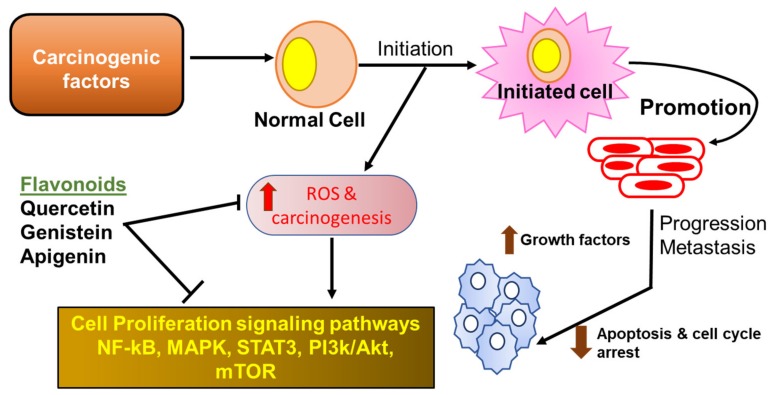
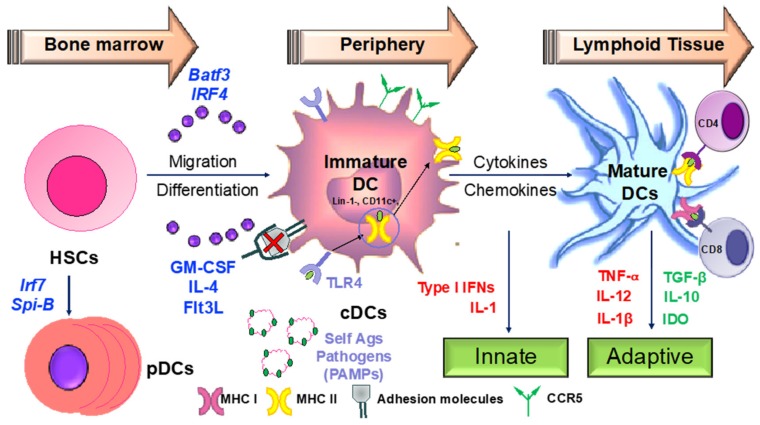
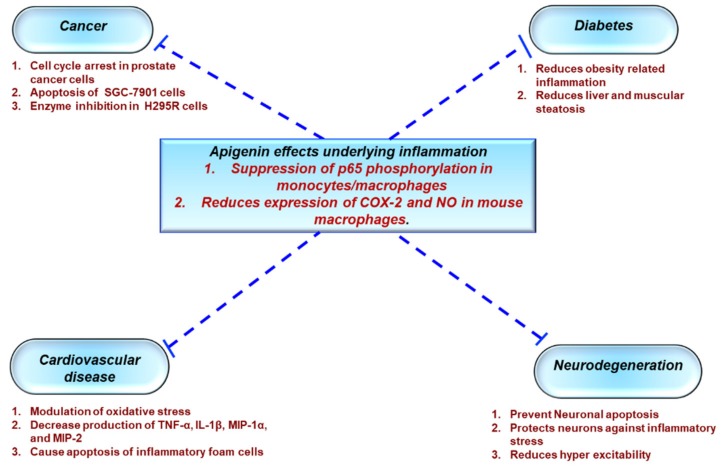
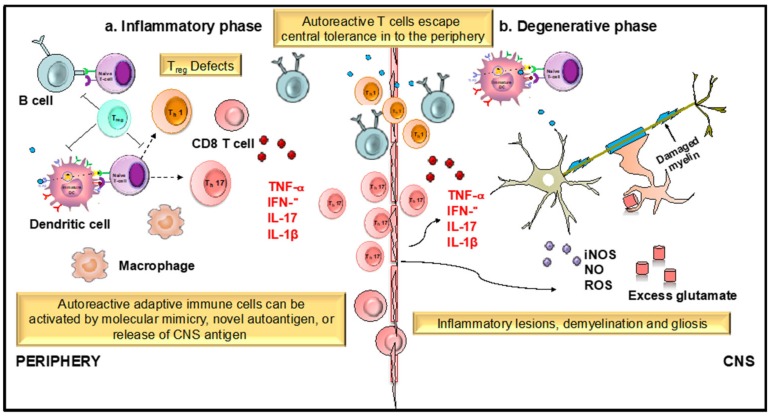
Inflammation has been reported to be intimately linked to the development or worsening of several non-infectious diseases. A number of chronic conditions such as cancer, diabetes, cardiovascular disorders, autoimmune diseases, and neurodegenerative disorders emerge as a result of tissue injury and genomic changes induced by constant low-grade inflammation in and around the affected tissue or organ. The existing therapies for most of these chronic conditions sometimes leave more debilitating effects than the disease itself, warranting the advent of safer, less toxic, and more cost-effective therapeutic alternatives for the patients. For centuries, flavonoids and their preparations have been used to treat various human illnesses, and their continual use has persevered throughout the ages. This review focuses on the anti-inflammatory actions of flavonoids against chronic illnesses such as cancer, diabetes, cardiovascular diseases, and neuroinflammation with a special focus on apigenin, a relatively less toxic and non-mutagenic flavonoid with remarkable pharmacodynamics. Additionally, inflammation in the central nervous system (CNS) due to diseases such as multiple sclerosis (MS) gives ready access to circulating lymphocytes, monocytes/macrophages, and dendritic cells (DCs), causing edema, further inflammation, and demyelination. As the dearth of safe anti-inflammatory therapies is dire in the case of CNS-related disorders, we reviewed the neuroprotective actions of apigenin and other flavonoids. Existing epidemiological and pre-clinical studies present considerable evidence in favor of developing apigenin as a natural alternative therapy against chronic inflammatory conditions.
据报道,炎症与几种非感染性疾病的发生或恶化密切相关。许多慢性疾病,如癌症、糖尿病、心血管疾病、自身免疫性疾病和神经退行性疾病,是由受影响组织或器官内外持续的低度炎症引起的组织损伤和基因组变化所致。针对这些慢性疾病的现有疗法有时会产生比疾病本身更使人衰弱的影响,因此需要为患者开发更安全、毒性更小且更具成本效益的治疗选择。几个世纪以来,黄酮类化合物及其制剂一直被用于治疗各种人类疾病,并且它们一直在持续使用。本综述重点关注黄酮类化合物对癌症、糖尿病、心血管疾病和神经炎症等慢性疾病的抗炎作用,特别关注芹菜素,一种毒性相对较小且无致突变性、具有显著药效学的黄酮类化合物。此外,由于多发性硬化症(MS)等疾病导致的中枢神经系统(CNS)炎症会使循环淋巴细胞、单核细胞/巨噬细胞和树突状细胞(DCs)易于进入,从而导致水肿、进一步炎症和脱髓鞘。由于中枢神经系统相关疾病严重缺乏安全的抗炎疗法,我们综述了芹菜素和其他黄酮类化合物的神经保护作用。现有的流行病学和临床前研究提供了大量证据,支持将芹菜素开发为一种针对慢性炎症性疾病的天然替代疗法。