Developmental Biology Program, Sloan Kettering Institute, 1275 York Avenue, Box 511, New York, NY, 10065, USA.
Biochemistry, Cell and Molecular Biology Program, Weill Cornell Graduate School of Medical Sciences, New York, NY, 10065, USA.
Neural Dev. 2019 Feb 14;14(1):4. doi: 10.1186/s13064-019-0128-y.
The cerebellum is a foliated posterior brain structure involved in coordination of motor movements and cognition. The cerebellum undergoes rapid growth postnataly due to Sonic Hedgehog (SHH) signaling-dependent proliferation of ATOH1+ granule cell precursors (GCPs) in the external granule cell layer (EGL), a key step for generating cerebellar foliation and the correct number of granule cells. Due to its late development, the cerebellum is particularly vulnerable to injury from preterm birth and stress around birth. We recently uncovered an intrinsic capacity of the developing cerebellum to replenish ablated GCPs via adaptive reprogramming of Nestin-expressing progenitors (NEPs). However, whether this compensation mechanism occurs in mouse mutants affecting the developing cerebellum and could lead to mis-interpretation of phenotypes was not known.
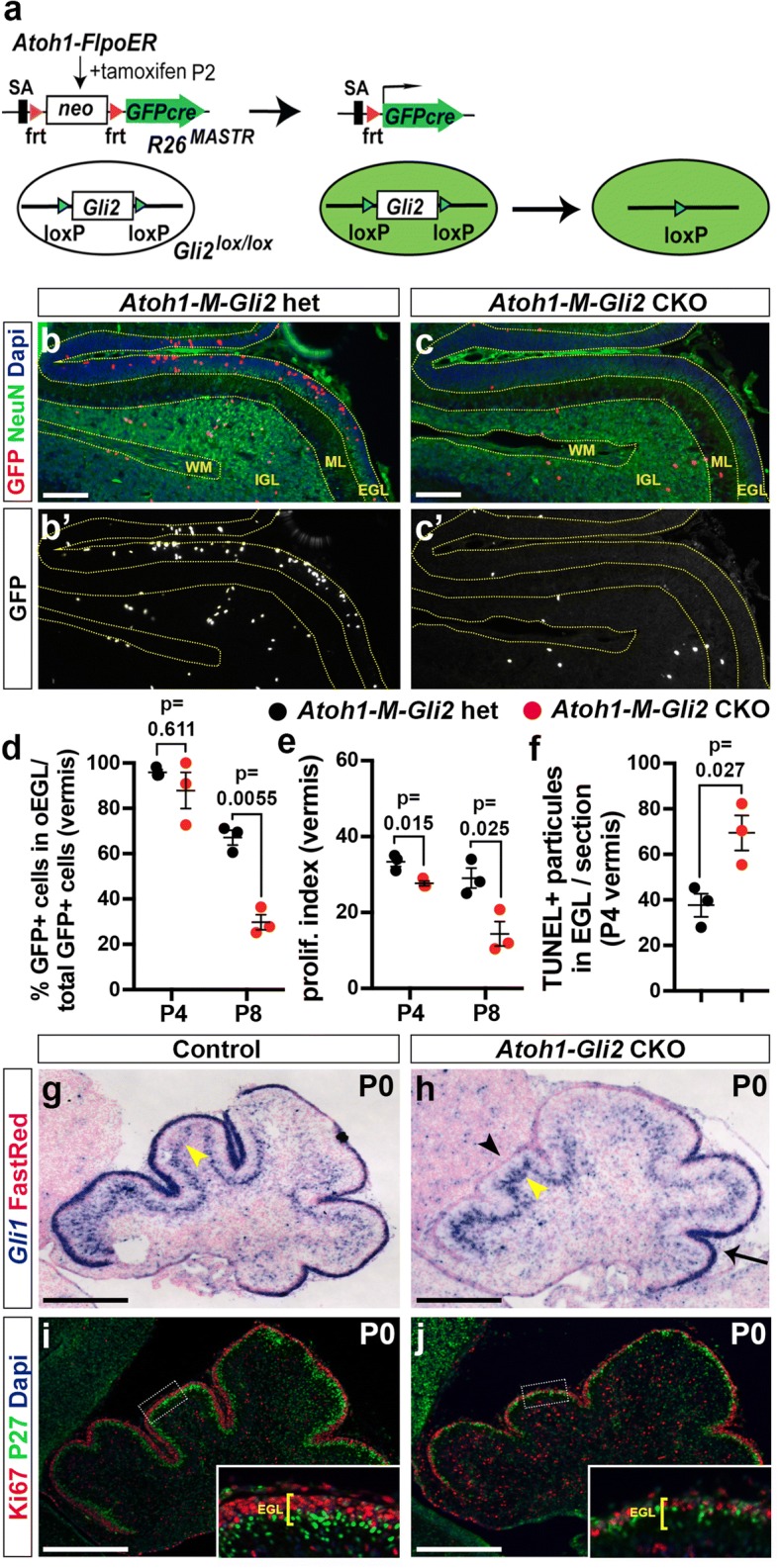
We used two different approaches to remove the main SHH signaling activator GLI2 in GCPs: 1) Our mosaic mutant analysis with spatial and temporal control of recombination (MASTR) technique to delete Gli2 in a small subset of GCPs; 2) An Atoh1-Cre transgene to delete Gli2 in most of the EGL. Genetic Inducible Fate Mapping (GIFM) and live imaging were used to analyze the behavior of NEPs after Gli2 deletion.
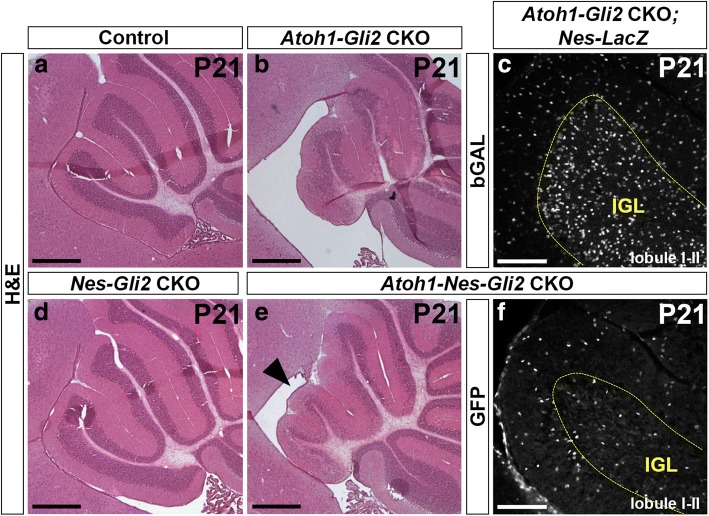
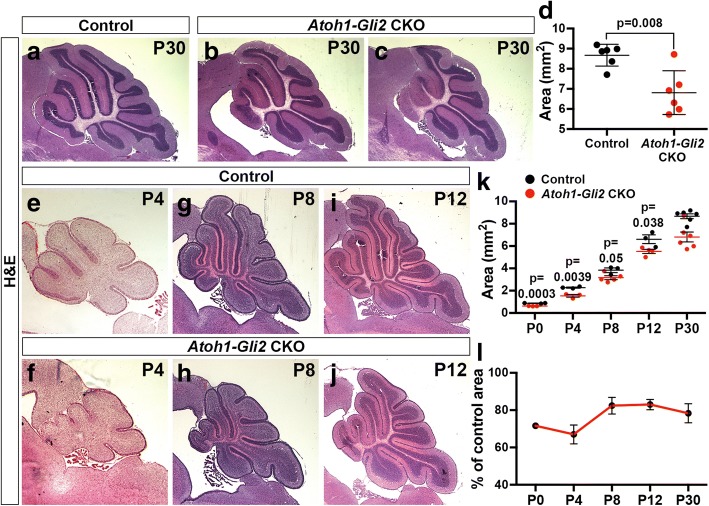
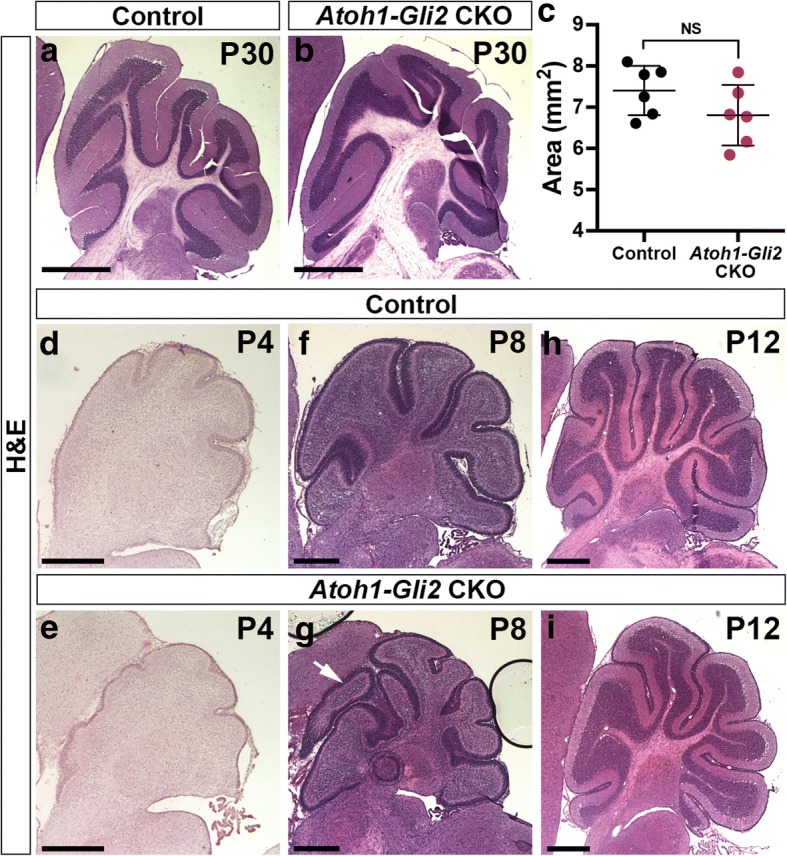
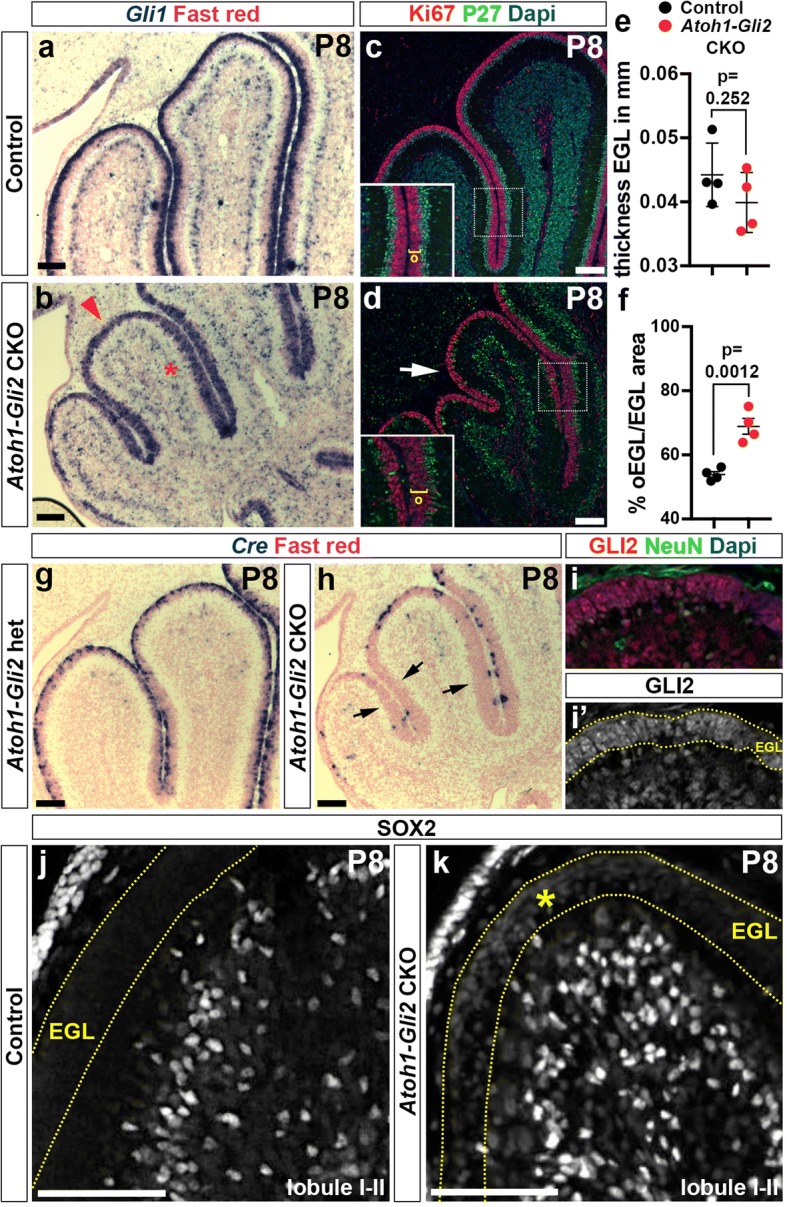
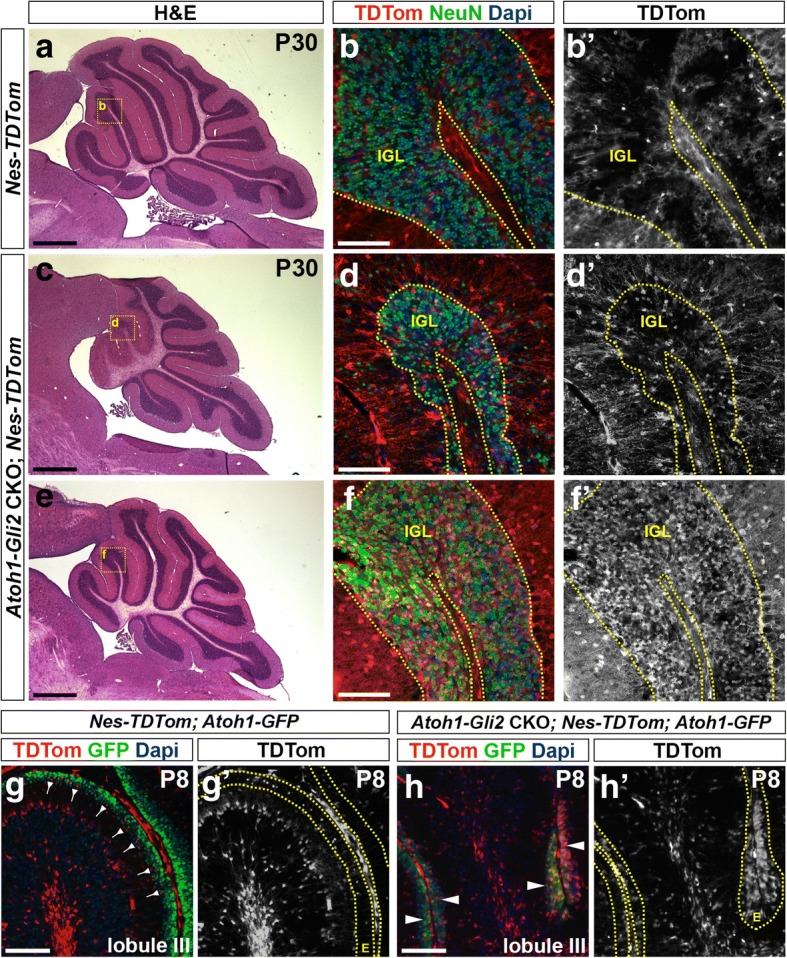
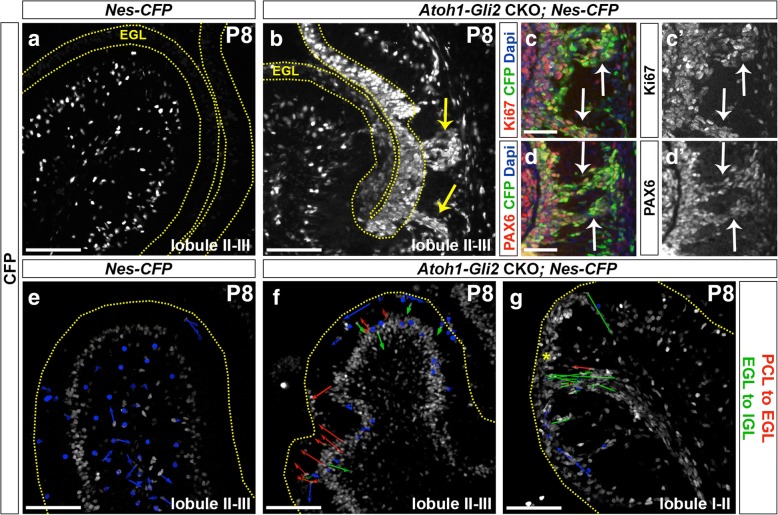
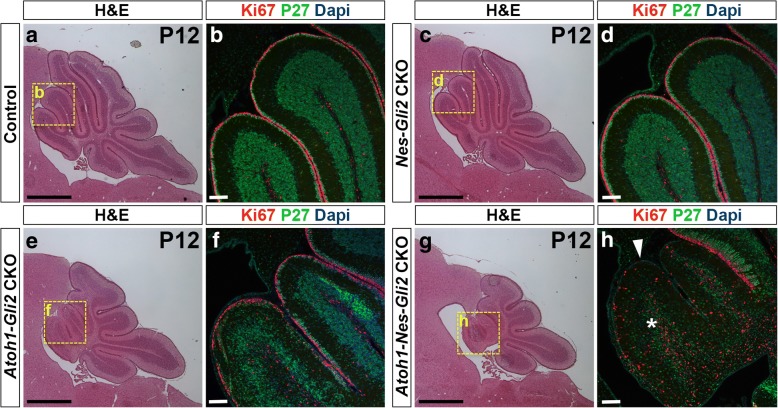
Mosaic analysis demonstrated that SHH-GLI2 signaling is critical for generating the correct pool of granule cells by maintaining GCPs in an undifferentiated proliferative state and promoting their survival. Despite this, inactivation of GLI2 in a large proportion of GCPs in the embryo did not lead to the expected dramatic reduction in the size of the adult cerebellum. GIFM uncovered that NEPs do indeed replenish GCPs in Gli2 conditional mutants, and then expand and partially restore the production of granule cells. Furthermore, the SHH signaling-dependent NEP compensation requires Gli2, demonstrating that the activator side of the pathway is involved.
We demonstrate that a mouse conditional mutation that results in loss of SHH signaling in GCPs is not sufficient to induce long term severe cerebellum hypoplasia. The ability of the neonatal cerebellum to regenerate after loss of cells via a response by NEPs must therefore be considered when interpreting the phenotypes of Atoh1-Cre conditional mutants affecting GCPs.
小脑是一个叶片状的后脑结构,参与运动协调和认知。由于 Sonic Hedgehog (SHH) 信号依赖性 ATOH1+颗粒细胞前体 (GCP) 在外部颗粒细胞层 (EGL) 中的增殖,小脑在出生后迅速生长,这是产生小脑叶片和正确数量的颗粒细胞的关键步骤。由于其发育较晚,小脑特别容易受到早产和出生前后压力的伤害。我们最近发现,发育中的小脑具有通过 Nestin 表达祖细胞 (NEP) 的适应性重编程来补充被消融的 GCP 的内在能力。然而,这种补偿机制是否发生在影响发育中小脑的小鼠突变体中,并可能导致表型的错误解释尚不清楚。
我们使用两种不同的方法来去除 GCP 中的主要 SHH 信号激活剂 GLI2:1) 我们使用空间和时间控制重组的镶嵌突变体分析 (MASTR) 技术来删除一小部分 GCP 中的 Gli2;2) Atoh1-Cre 转基因在大多数 EGL 中删除 Gli2。遗传诱导命运映射 (GIFM) 和活体成像用于分析 Gli2 缺失后 NEP 的行为。
镶嵌分析表明,SHH-GLI2 信号通过维持 GCP 处于未分化增殖状态并促进其存活,对于产生正确的颗粒细胞池至关重要。尽管如此,胚胎中大部分 GCP 中的 GLI2 失活并没有导致成年小脑大小的预期显著减少。GIFM 揭示了 NEPs 确实在 Gli2 条件性突变体中补充 GCP,并随后扩增并部分恢复颗粒细胞的产生。此外,依赖 SHH 信号的 NEP 补偿需要 Gli2,表明该途径的激活剂侧参与其中。
我们证明,导致 GCP 中 SHH 信号丢失的小鼠条件性突变不足以诱导长期严重的小脑发育不良。因此,在解释影响 GCP 的 Atoh1-Cre 条件性突变体的表型时,必须考虑到通过 NEPs 对细胞丢失做出反应后,新生小脑再生的能力。