Group of Genetics, Breeding and Biochemistry of Brassicas, Misión Biológica de Galicia (MBG-CSIC), Pontevedra, Spain.
University of Santiago de Compostela, A Coruña, Spain.
Sci Rep. 2019 Feb 14;9(1):2015. doi: 10.1038/s41598-019-38527-5.
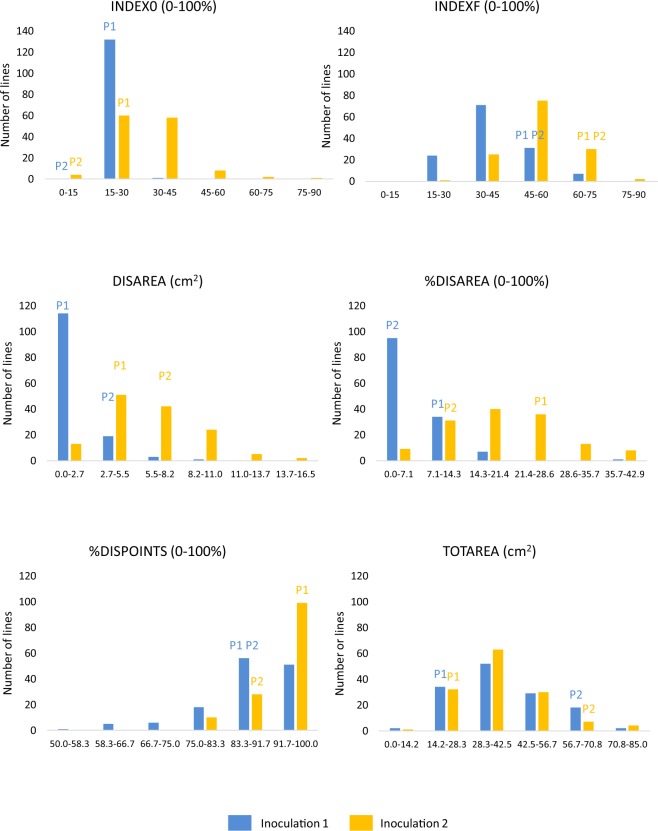
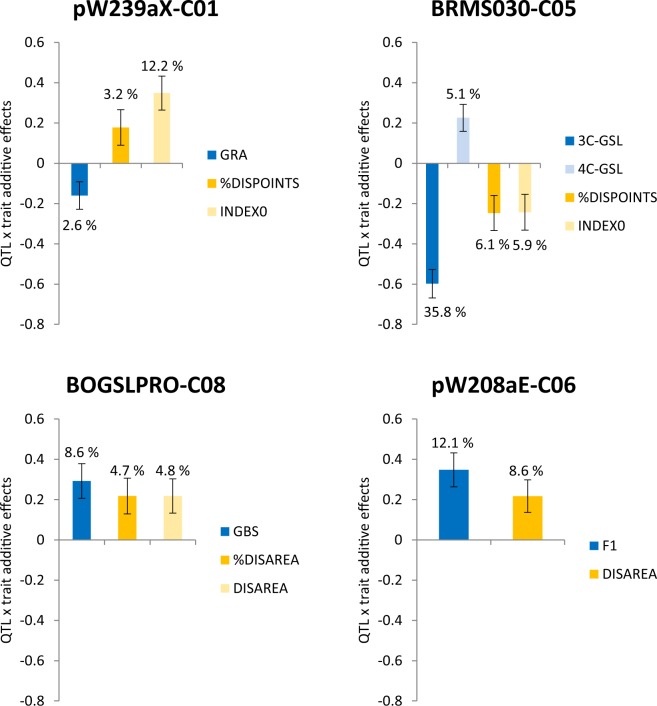
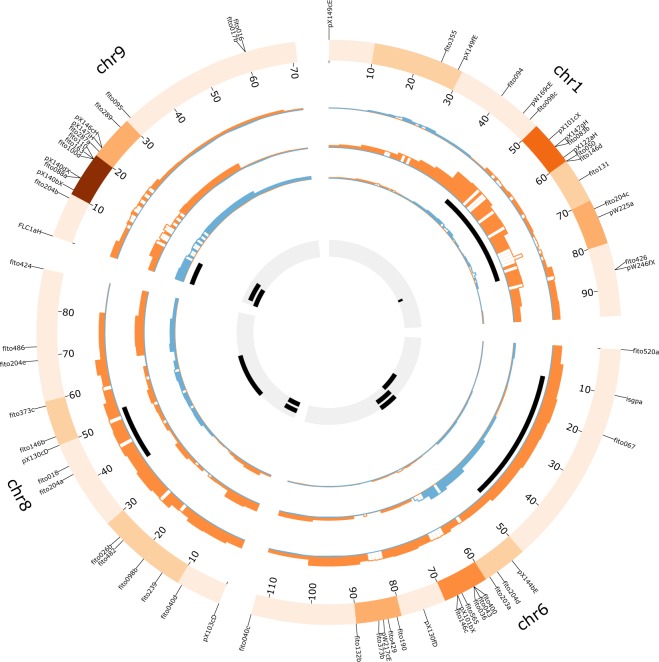
Black rot, caused by the bacterium Xanthomonas campestris pv. campestris (Xcc), produces important economic losses in crops of Brassica oleracea worldwide. Resistance to race 1, the most virulent and widespread in B. oleracea, is under quantitative control. Knowledge about the genetics of this resistance would help in designing strategies to control initial stages of invasion and development of the disease. QTL analysis of the resistance in the BolTBDH mapping population was performed. Resistance was measured with five traits related to initial stages of the invasion, success of infection and spread of the pathogen. Four single-trait QTLs of resistance were found, from which one represent novel variation. After performing multi-trait QTL, we concluded that spread of Xcc is related to the size of the leaf. Individuals from the mapping population follow two different strategies to cope with the spread of the disease: reducing lesion size or maintain more area of the leaf photosynthetically active, being more tolerant to Xcc invasion. Mechanisms underlying variation for resistance may be related to different aspects of plant immunity, including the synthesis of glucosinolates and phenolics.
黑腐病由芸薹黄单胞菌野油菜致病变种(Xcc)引起,给世界范围内的芸薹属作物造成了重大的经济损失。对芸薹属作物中最具毒性和最广泛的 1 号菌系的抗性是由数量控制的。对这种抗性的遗传基础的了解将有助于设计控制疾病入侵和发展初期的策略。在 BolTBDH 作图群体中对该抗性进行了 QTL 分析。用与入侵初期、侵染成功和病原菌传播相关的五个性状来衡量抗性。发现了 4 个抗性单性状 QTL,其中一个代表新的变异。进行多性状 QTL 分析后,我们得出结论,Xcc 的传播与叶片大小有关。来自作图群体的个体遵循两种不同的策略来应对疾病的传播:减少病变大小或保持更多的叶片光合活性区,对 Xcc 的侵染更具耐受性。抗性变异的机制可能与植物免疫的不同方面有关,包括硫代葡萄糖苷和酚类的合成。