Germplasm Innovation in Northwest China, Ministry of Agriculture, College of Horticulture, Northwest A&F University, Yangling 712100, Shanxi, China.
Institute of Vegetables and Flowers, Chinese Academy of Agricultural Sciences, Key Laboratory of Biology and Genetic Improvement of Horticultural Crops, Ministry of Agriculture, Beijing 100081, China.
Genes (Basel). 2020 Jan 24;11(2):127. doi: 10.3390/genes11020127.
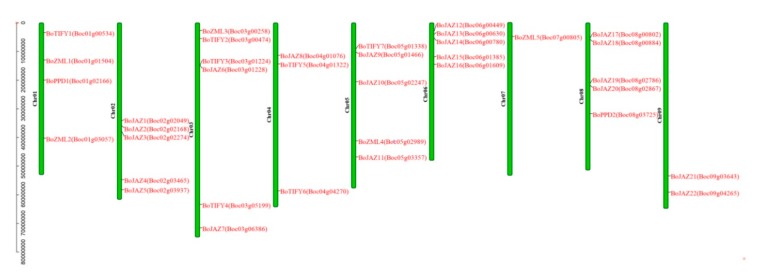
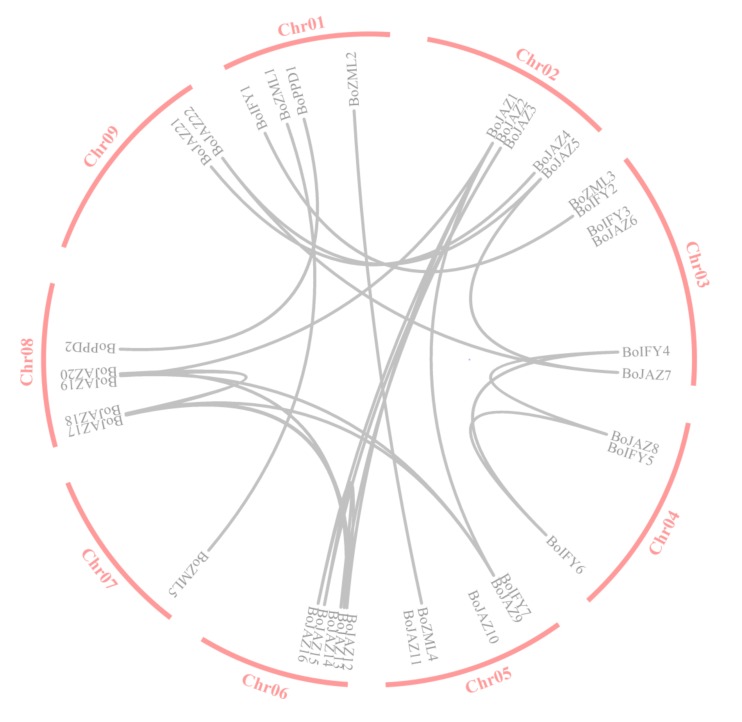
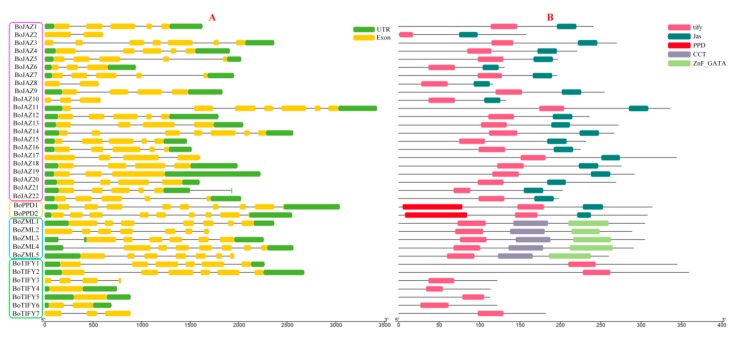
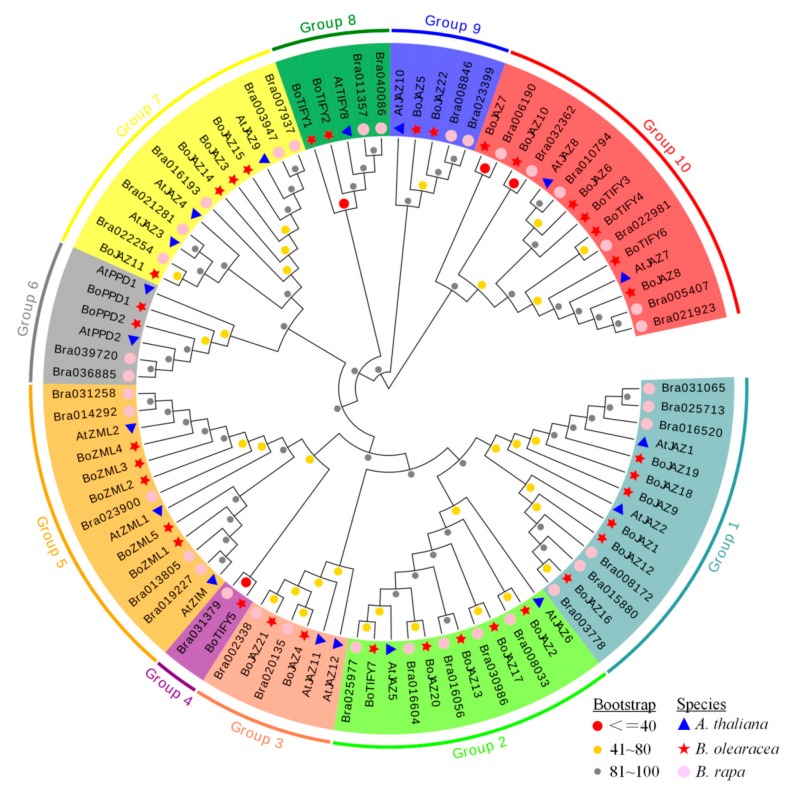
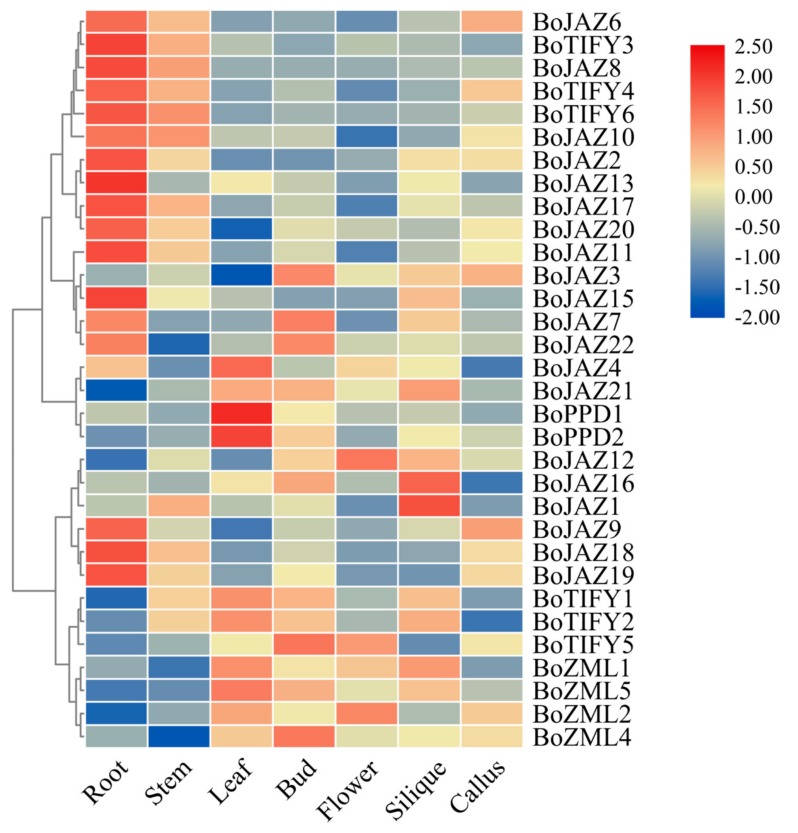
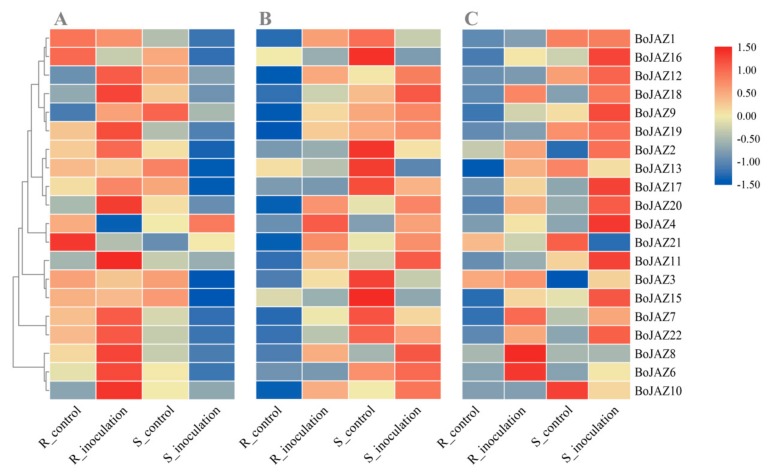
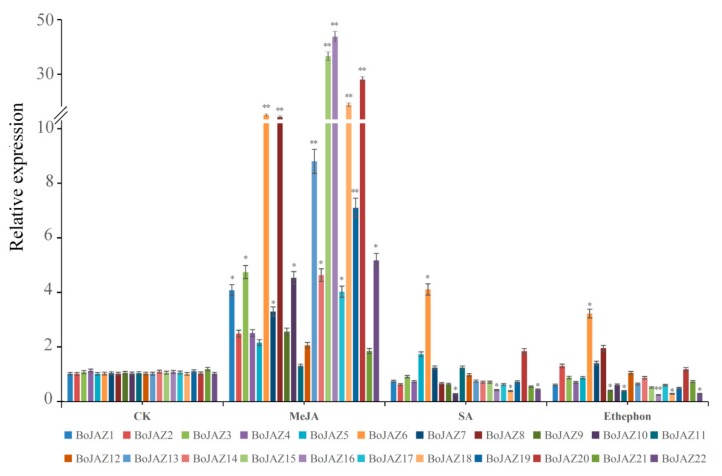
TIFY, a plant-specific gene family with the conserved motif TIF[F/Y]XG, plays important roles in various plant biological processes. Here, a total of 36 TIFY genes were identified in the genome and classified into JAZ (22 genes), TIFY (7 genes), ZML (5 genes), and PPD (2 genes) subfamilies based on their conserved motifs, which were distributed unevenly across nine chromosomes with different lengths (339-1077 bp) and exon numbers (1-8). Following phylogenetic analysis with and TIFY proteins, ten clades were obtained. The expression of these TIFY genes was organ-specific, with thirteen JAZ genes and two PPD genes showing the highest expression in roots and leaves, respectively. More importantly, the JAZs showed divergent responses to various pathogen infections and different phytohormone treatments. Compared with the susceptible line, most JAZs were activated after infection, while there were both induced and inhibited JAZs after or infection in the resistance line, indicating their probably distinct roles in disease resistance or susceptibility. Further, the JAZs were all upregulated after MeJA treatment, but were mostly downregulated after SA/ET treatment. In summary, these results contribute to our understanding of the TIFY gene family, revealing that JAZs may play crucial and divergent roles in phytohormone crosstalk and plant defense.
TIFY 是一个具有保守基序 TIF[F/Y]XG 的植物特异性基因家族,在各种植物生物学过程中发挥重要作用。在这里,总共在 基因组中鉴定出 36 个 TIFY 基因,并根据其保守基序将其分为 JAZ(22 个基因)、TIFY(7 个基因)、ZML(5 个基因)和 PPD(2 个基因)亚家族,它们不均匀地分布在九条染色体上,具有不同的长度(339-1077bp)和外显子数(1-8)。通过与 和 TIFY 蛋白的系统发育分析,得到了十个分支。这些 TIFY 基因的表达具有组织特异性,其中 13 个 JAZ 基因和 2 个 PPD 基因在根和叶中表达量最高。更重要的是,JAZ 对各种病原体感染和不同植物激素处理表现出不同的反应。与感病系相比,大多数 JAZ 在 感染后被激活,而在抗性系中, 或 感染后既有诱导的 JAZ 也有抑制的 JAZ,表明它们在抗病性或感病性中可能具有不同的作用。此外,JAZ 在 MeJA 处理后均上调,但在 SA/ET 处理后大多下调。总之,这些结果有助于我们理解 TIFY 基因家族,表明 JAZ 在植物激素交叉对话和植物防御中可能发挥关键且不同的作用。