Kunze Tim, Haueisen Jens, Knösche Thomas R
Max Planck Institute for Human Cognitive and Brain Sciences, Leipzig, Germany.
Institute of Biomedical Engineering and Informatics, Ilmenau University of Technology, Ilmenau, Germany.
Biol Cybern. 2019 Jun;113(3):273-291. doi: 10.1007/s00422-019-00792-y. Epub 2019 Feb 14.
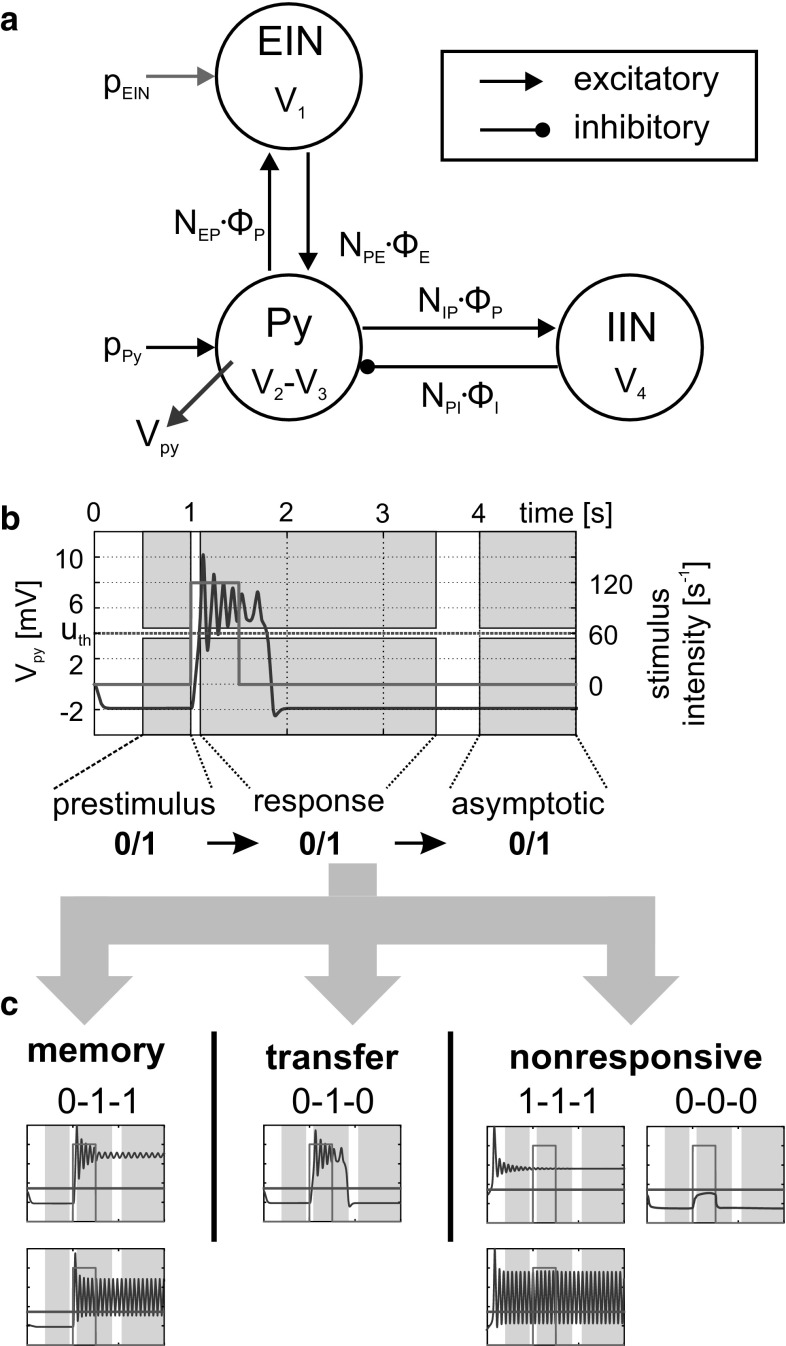
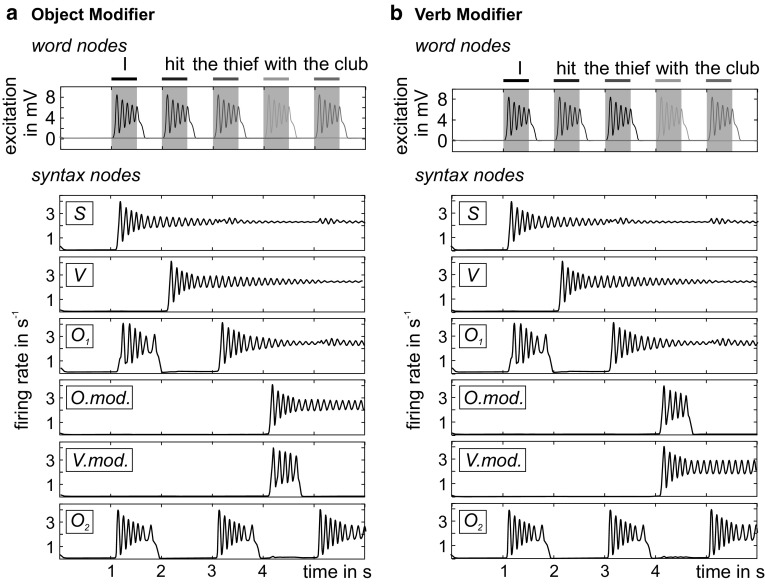
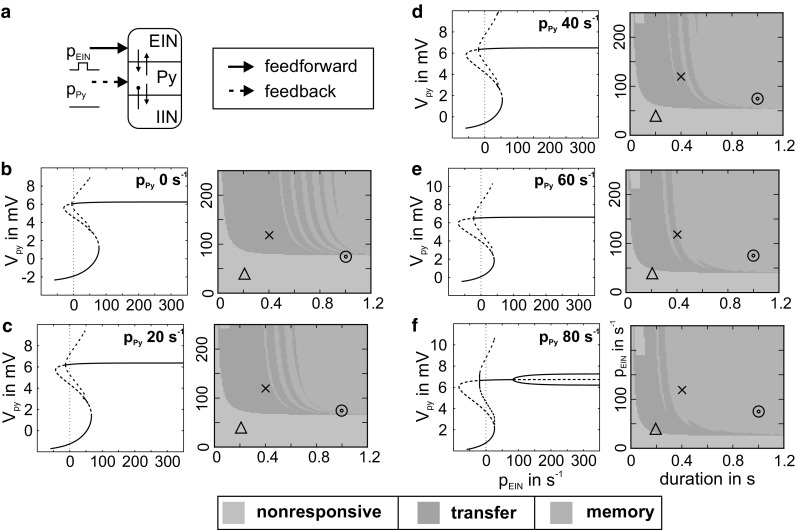
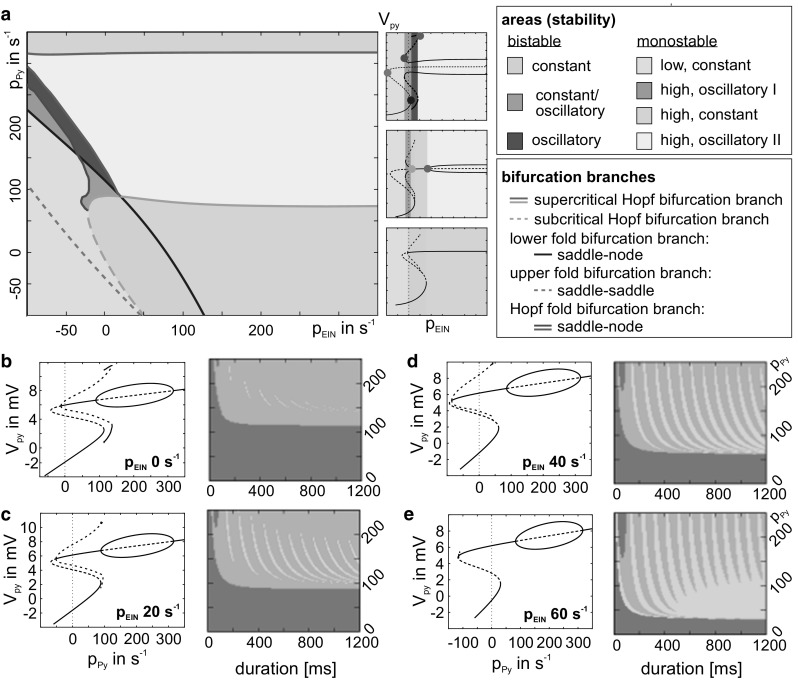
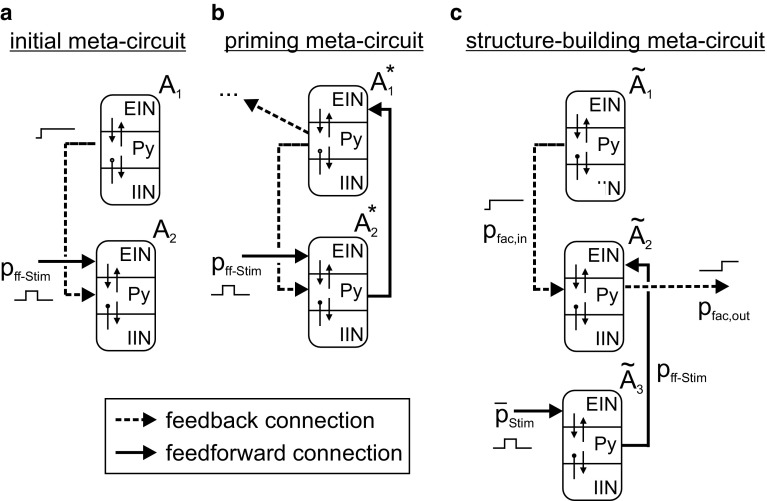
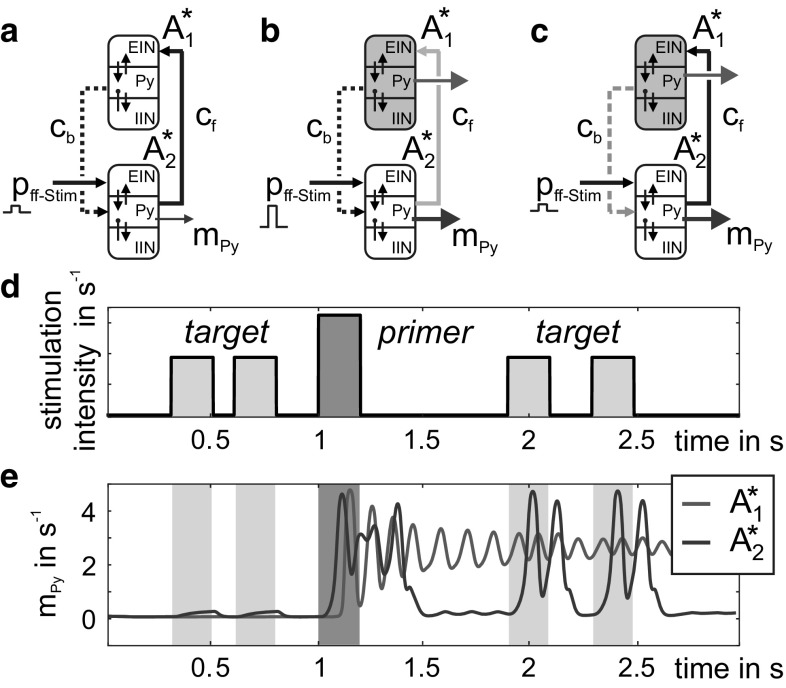
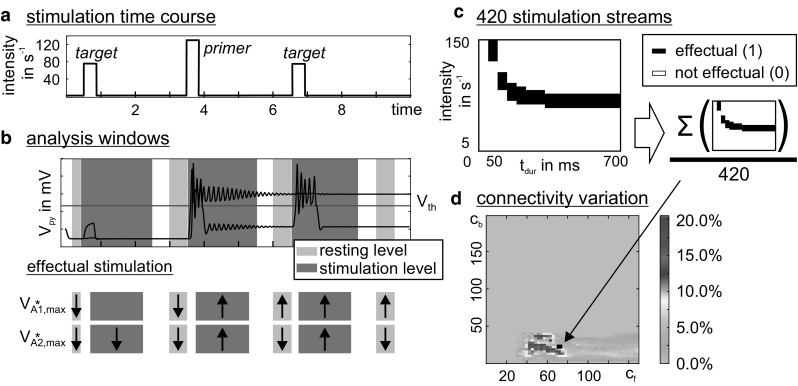
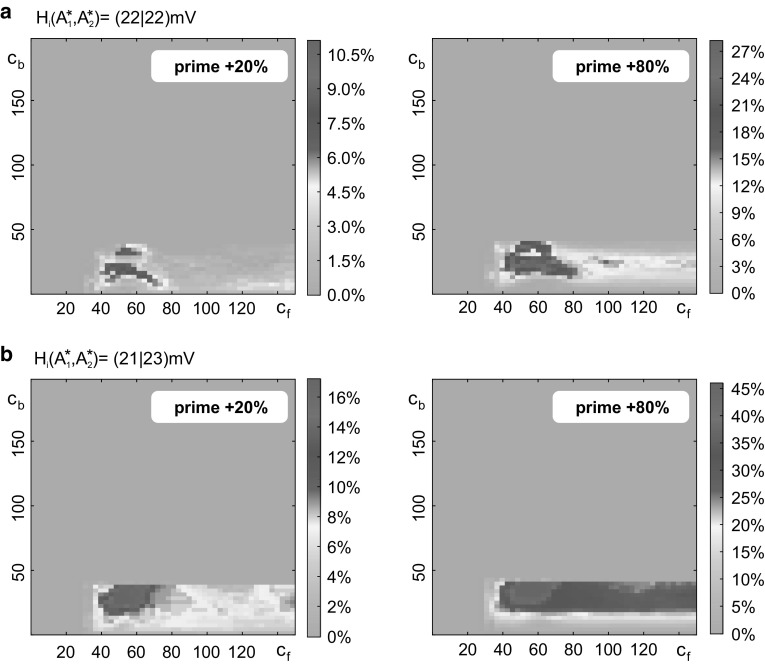
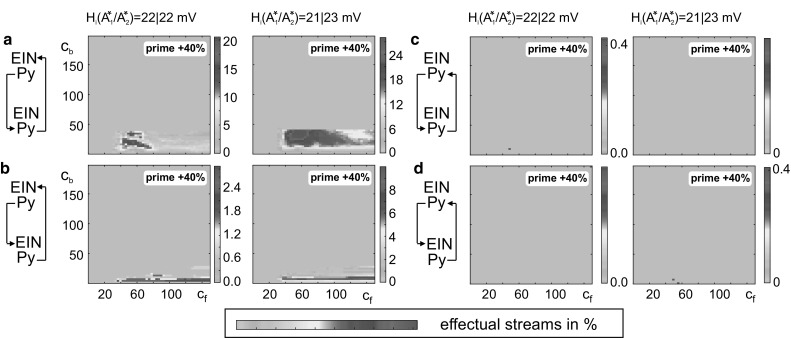
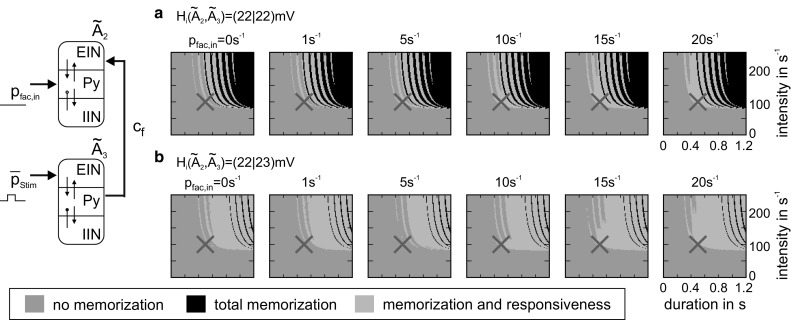
The concept of connectionism states that higher cognitive functions emerge from the interaction of many simple elements. Accordingly, research on canonical microcircuits conceptualizes findings on fundamental neuroanatomical circuits as well as recurrent organizational principles of the cerebral cortex and examines the link between architectures and their associated functionality. In this study, we establish minimal canonical microcircuit models as elements of hierarchical processing networks. Based on a combination of descriptive time simulations and explanatory state-space mappings, we show that minimal canonical microcircuits effectively segregate feedforward and feedback information flows and that feedback information conditions basic processing operations in minimal canonical microcircuits. Further, we derive and examine two prototypical meta-circuits of cooperating minimal canonical microcircuits for the neurocognitive problems of priming and structure building. Through the application of these findings to a language network of syntax parsing, this study embodies neurocognitive research on hierarchical communication in light of canonical microcircuits, cell assembly theory, and predictive coding.
联结主义的概念认为,更高层次的认知功能源自许多简单元素的相互作用。相应地,对典型微电路的研究将关于基本神经解剖电路以及大脑皮层的循环组织原则的研究结果概念化,并考察架构与其相关功能之间的联系。在本研究中,我们建立了最小典型微电路模型作为分层处理网络的元素。基于描述性时间模拟和解释性状态空间映射的结合,我们表明最小典型微电路有效地分离了前馈和反馈信息流,并且反馈信息调节最小典型微电路中的基本处理操作。此外,我们推导并研究了用于启动和结构构建的神经认知问题的两个合作最小典型微电路的原型元电路。通过将这些发现应用于句法分析的语言网络,本研究体现了根据典型微电路、细胞集合理论和预测编码对分层通信的神经认知研究。