Department of Clinical Sciences Lund, Section of Oncology and Pathology, Lund University, Barngatan 4, SE-221 85, Lund, Sweden.
Cancer Metastasis Rev. 2019 Jun;38(1-2):79-92. doi: 10.1007/s10555-019-09786-5.
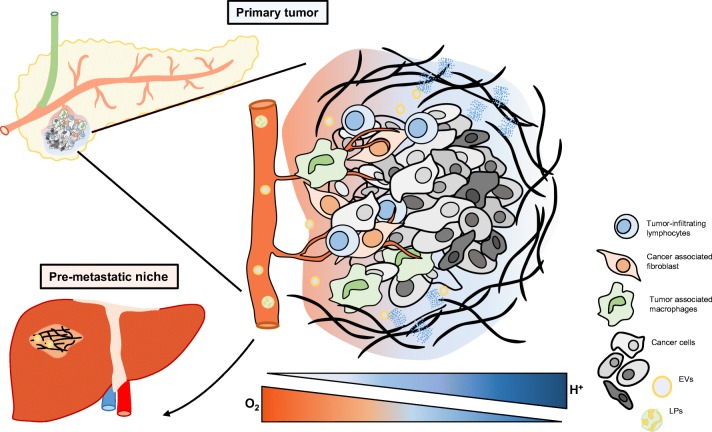
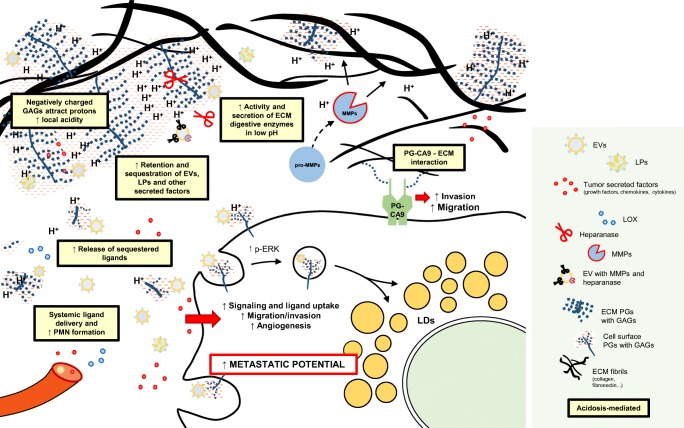
Although the overall mortality in cancer is steadily decreasing, major groups of patients still respond poorly to available treatments. The key clinical challenge discussed here relates to the inherent capacity of cancer cells to metabolically adapt to hypoxic and acidic stress, resulting in treatment resistance and a pro-metastatic behavior. Hence, a detailed understanding of stress adaptive responses is critical for the design of more rational therapeutic strategies for cancer. We will focus on the emerging role of extracellular vesicles (EVs) and lipoprotein particles in cancer cell metabolic stress adaptation and how these pathways may constitute potential Achilles' heels of the cancer cell machinery and alternative treatment targets of metastasis. In this context, common extracellular lipid uptake mechanisms, involving specific cell-surface receptors and endocytic pathways, may operate during remodeling of acidic atherosclerotic plaques as well as the tumor microenvironment. The role of endocytosis in regulating the cellular response to hypoxic and acidic stress through spatial coordination of receptor proteins may be exploited for therapeutic purposes. As a consequence, molecular mechanisms of endocytosis have attracted increasing attention as potential targets for tumor specific delivery of therapeutic substances, such as antibody-drug conjugates. The identification of internalizing surface proteins specific to the acidic tumor niche remains an unmet need of high clinical relevance. Among the currently explored, acidosis-related, internalizing target proteins, we will focus on the cell-surface proteoglycan carbonic anhydrase 9.
尽管癌症的总体死亡率在稳步下降,但仍有大量患者对现有治疗方法反应不佳。这里讨论的关键临床挑战涉及癌细胞在代谢上适应缺氧和酸性应激的固有能力,导致治疗耐药性和促进转移的行为。因此,详细了解应激适应性反应对于设计更合理的癌症治疗策略至关重要。我们将重点关注细胞外囊泡 (EVs) 和脂蛋白颗粒在癌细胞代谢应激适应中的新作用,以及这些途径如何构成癌细胞机制的潜在弱点和转移的替代治疗靶点。在这种情况下,涉及特定细胞表面受体和内吞途径的常见细胞外脂质摄取机制可能在酸性动脉粥样硬化斑块以及肿瘤微环境的重塑过程中起作用。内吞作用通过受体蛋白的空间协调调节细胞对缺氧和酸性应激的反应的作用可能被用于治疗目的。因此,内吞作用的分子机制作为治疗物质(如抗体药物偶联物)的肿瘤特异性递送的潜在靶点引起了越来越多的关注。确定特定于酸性肿瘤微环境的内化表面蛋白仍然是一个具有高度临床相关性的未满足需求。在目前探索的与酸中毒相关的内化靶蛋白中,我们将重点关注细胞表面糖蛋白碳酸酐酶 9。