Institute of Virology, University of Veterinary Medicine Vienna, Vienna, Austria.
PLoS Pathog. 2019 Feb 15;15(2):e1007533. doi: 10.1371/journal.ppat.1007533. eCollection 2019 Feb.
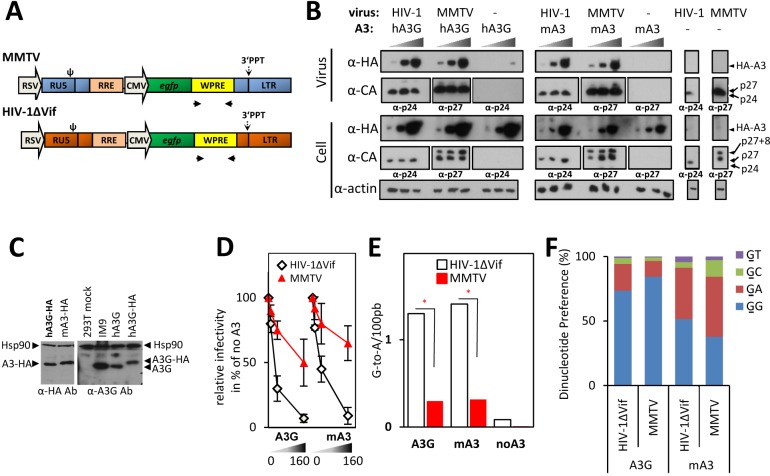
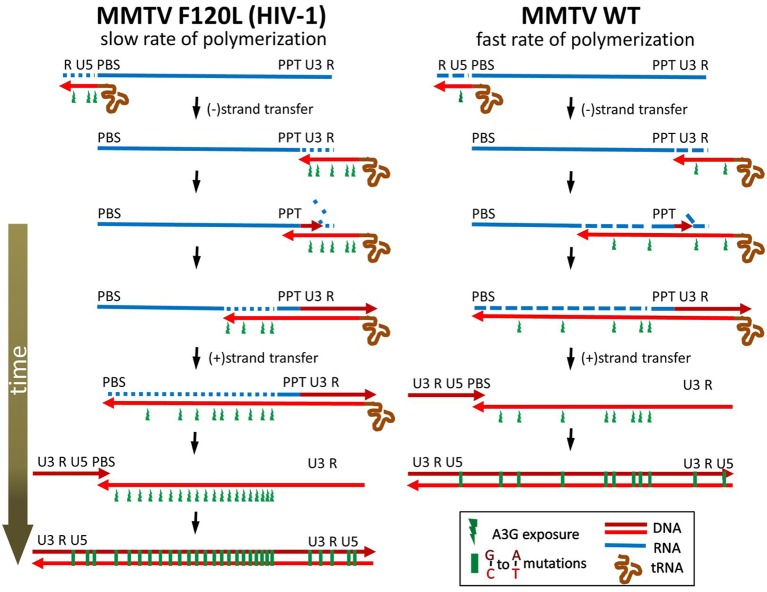
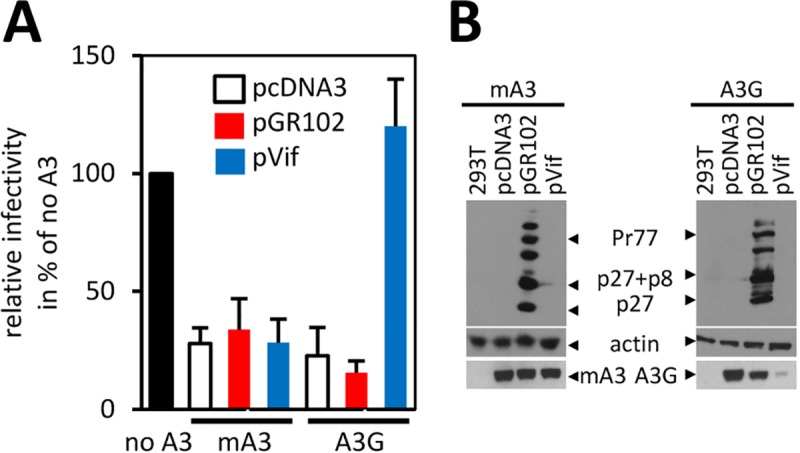
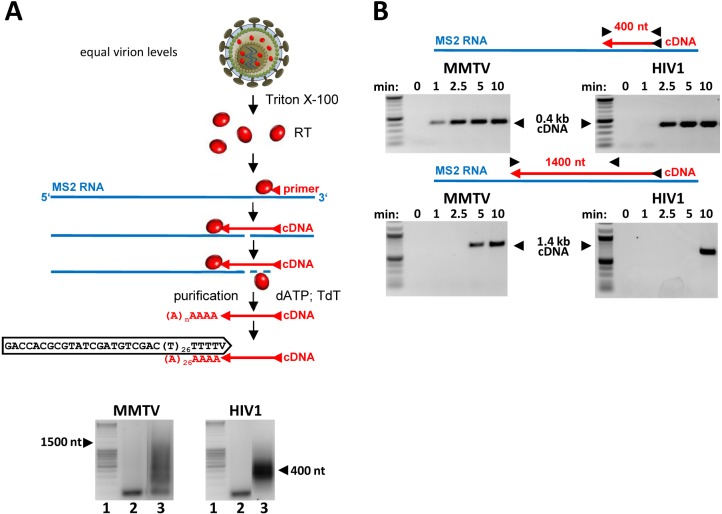
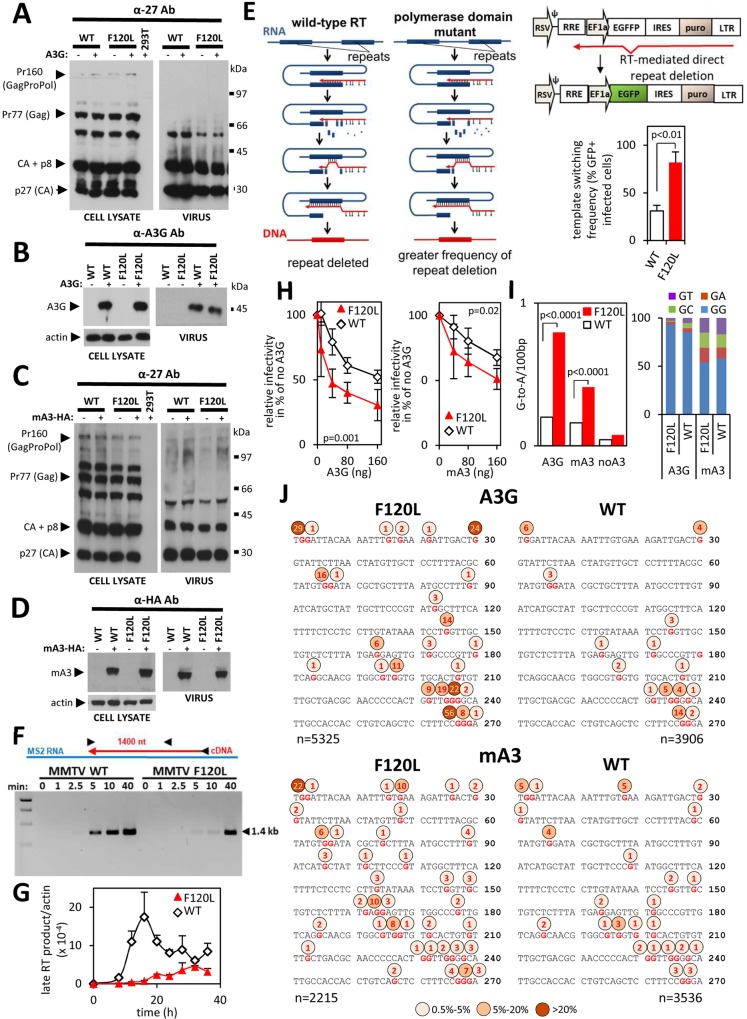
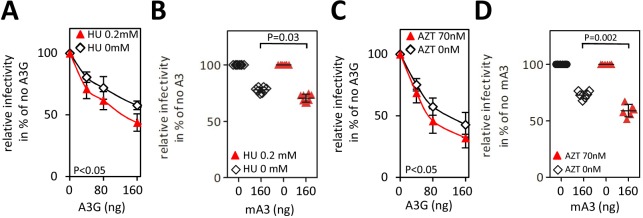
Retroviruses have evolved multiple means to counteract host restriction factors such as single-stranded DNA-specific deoxycytidine deaminases (APOBEC3s, A3s). These include exclusion of A3s from virions by an A3-unreactive nucleocapsid or expression of an A3-neutralizing protein (Vif, Bet). However, a number of retroviruses package A3s and do not encode apparent vif- or bet-like genes, yet they replicate in the presence of A3s. The mode by which they overcome deleterious restriction remains largely unknown. Here we show that the prototypic betaretrovirus, mouse mammary tumor virus (MMTV), packages similar amounts of A3s as HIV-1ΔVif, yet its proviruses carry a significantly lower level of A3-mediated deamination events than the lentivirus. The G-to-A mutation rate increases when the kinetics of reverse transcription is reduced by introducing a mutation (F120L) to the DNA polymerase domain of the MMTV reverse transcriptase (RT). A similar A3-sensitizing effect was observed when the exposure time of single-stranded DNA intermediates to A3s during reverse transcription was lengthened by reducing the dNTP concentration or by adding suboptimal concentrations of an RT inhibitor to infected cells. Thus, the MMTV RT has evolved to impede access of A3s to transiently exposed minus DNA strands during reverse transcription, thereby alleviating inhibition by A3 family members. A similar mechanism may be used by other retroviruses and retrotransposons to reduce deleterious effects of A3 proteins.
逆转录病毒进化出多种方法来对抗宿主限制因子,如单链 DNA 特异性脱氧胞嘧啶脱氨酶(APOBEC3s,A3s)。这些方法包括通过对 A3 无反应的核衣壳将 A3 排除在病毒粒子之外,或表达 A3 中和蛋白(Vif、Bet)。然而,有许多逆转录病毒包装 A3 而不编码明显的 vif 或 bet 样基因,但它们在 A3 存在的情况下复制。它们克服有害限制的模式在很大程度上仍然未知。在这里,我们表明,原型β逆转录病毒,鼠乳腺肿瘤病毒(MMTV),包装的 A3s 与 HIV-1ΔVif 相似,但它的前病毒携带的 A3 介导的脱氨酶事件水平明显低于慢病毒。当通过引入突变(F120L)到 MMTV 逆转录酶(RT)的 DNA 聚合酶结构域来降低逆转录的动力学时,G 到 A 的突变率增加。当通过降低 dNTP 浓度或向感染细胞添加非最佳浓度的 RT 抑制剂来延长单链 DNA 中间体在逆转录过程中暴露于 A3s 的时间时,观察到类似的 A3 敏化作用。因此,MMTV RT 已经进化到在逆转录过程中阻碍 A3s 对瞬时暴露的负链 DNA 的进入,从而减轻 A3 家族成员的抑制作用。类似的机制可能被其他逆转录病毒和 retrotransposons 用于降低 A3 蛋白的有害影响。