Dept. of Molecular Biosciences, LaMontagne Center for Infectious Disease, and Institute for Cellular and Molecular Biology, The University of Texas at Austin, Austin, Texas, USA.
Computational Biology and Bioinformatics and Center for Biomedical Research Support, The University of Texas at Austin, Austin, Texas, USA.
mBio. 2019 Aug 13;10(4):e01678-19. doi: 10.1128/mBio.01678-19.
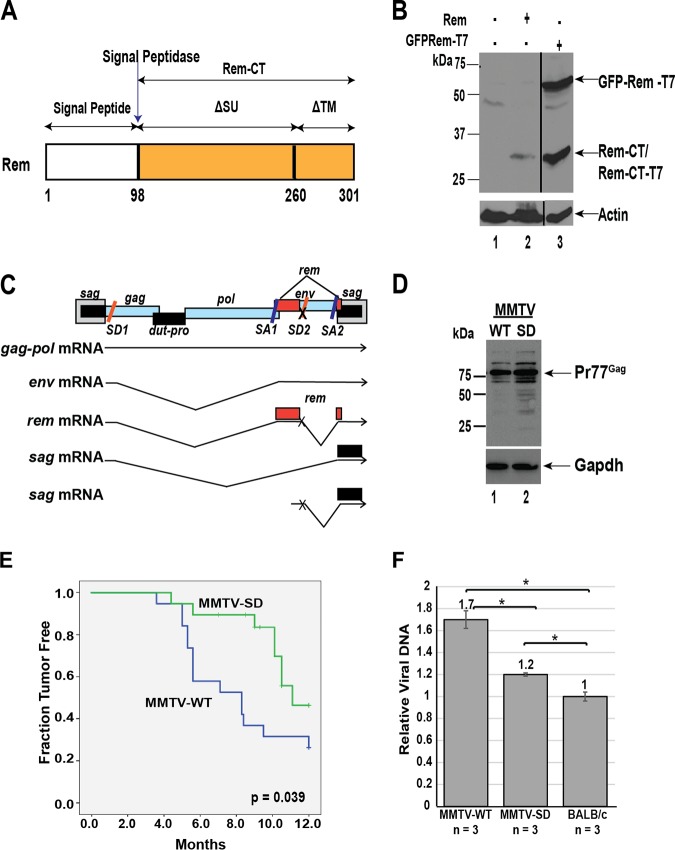
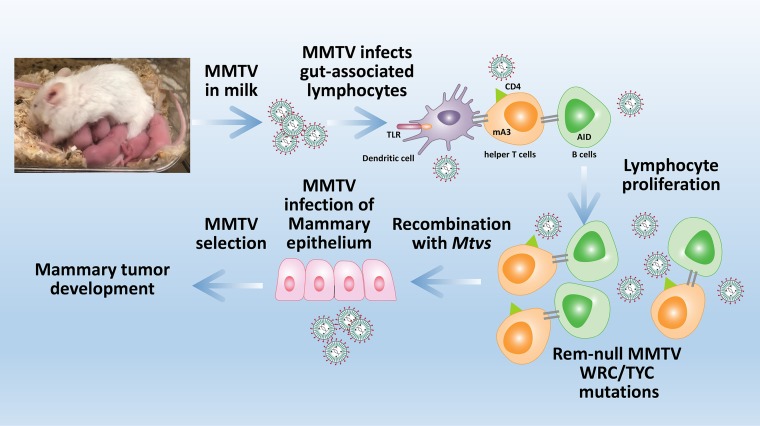
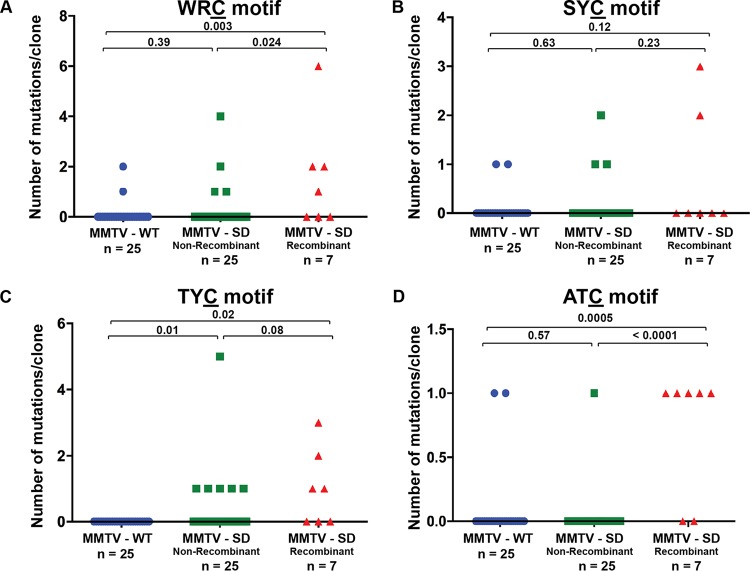
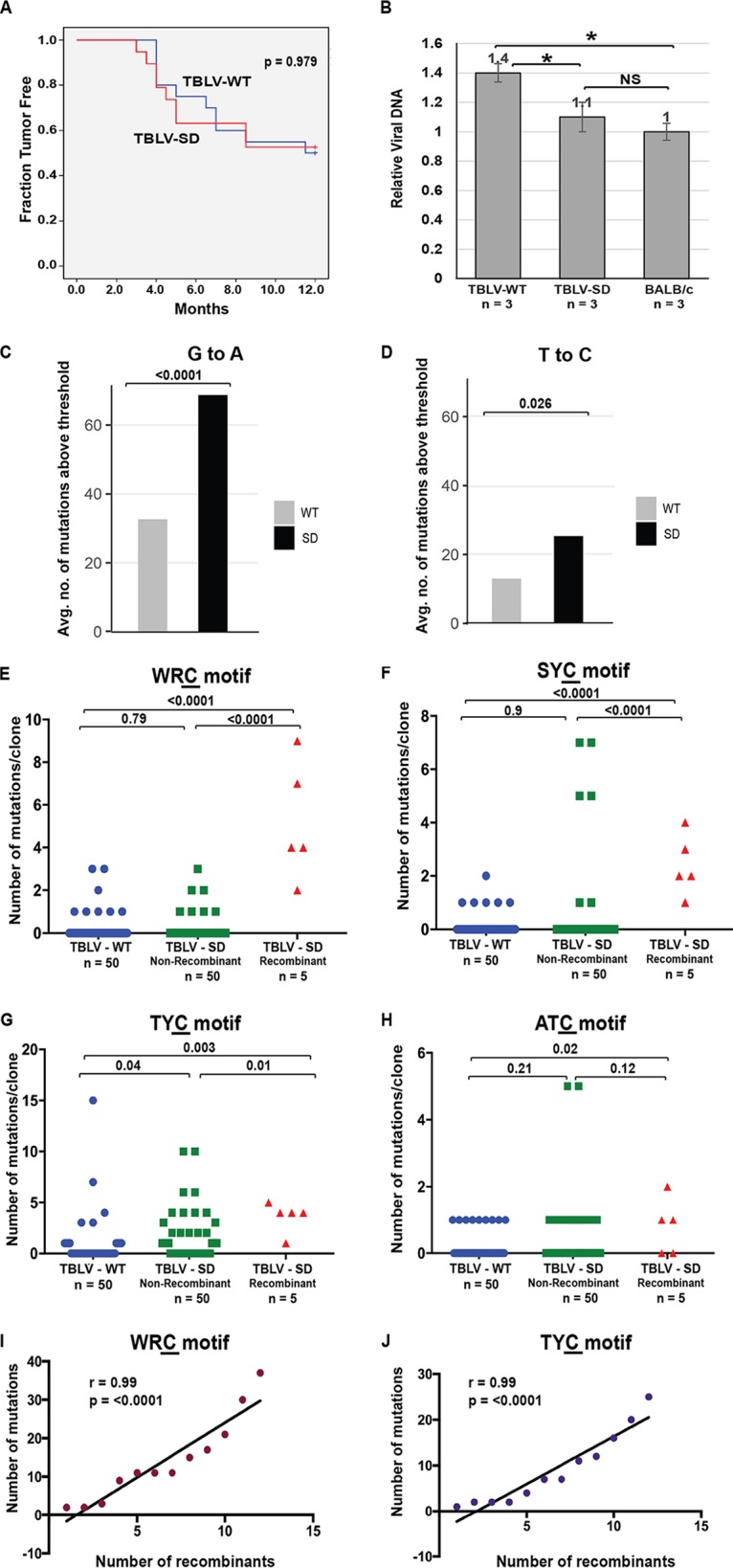
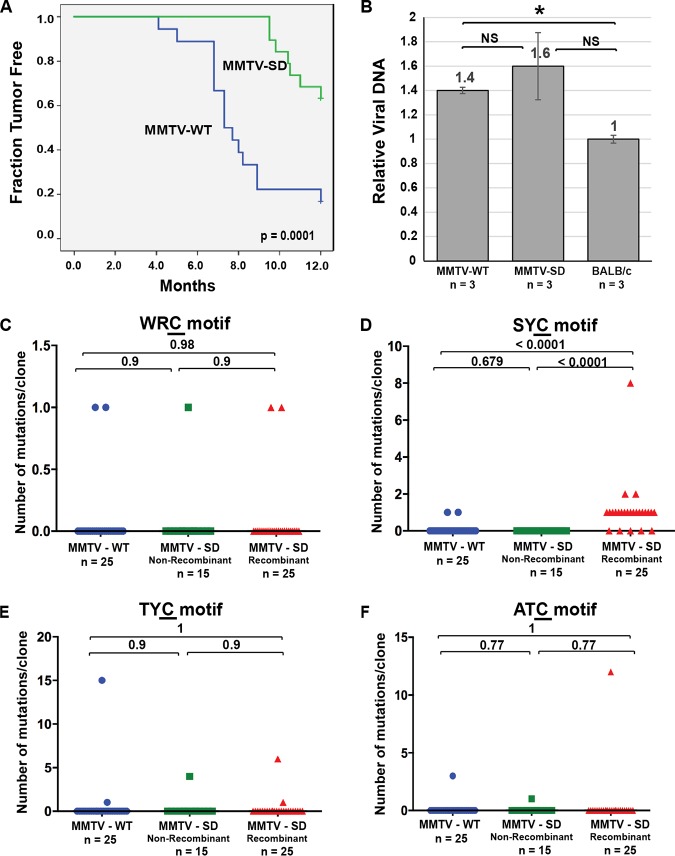
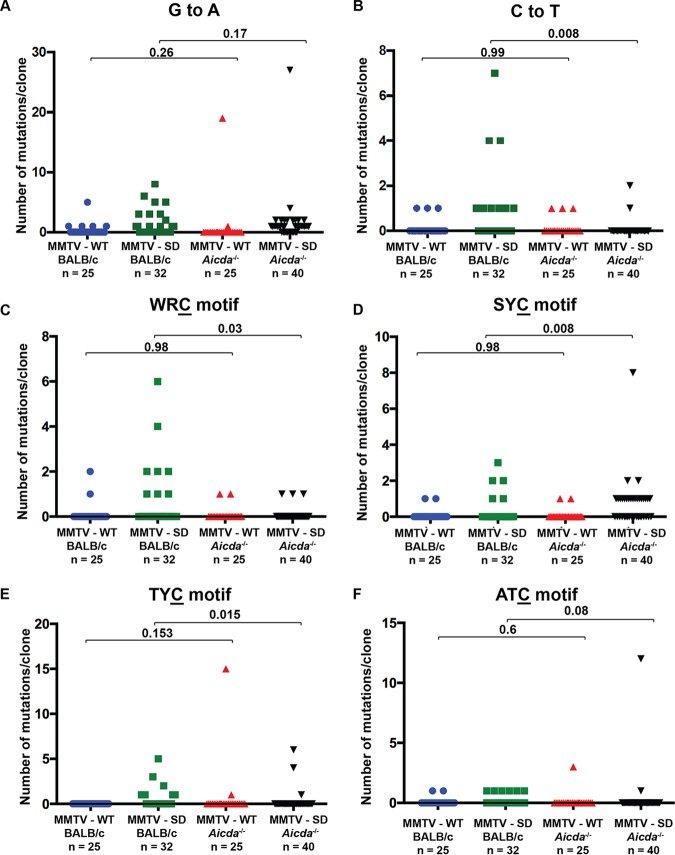
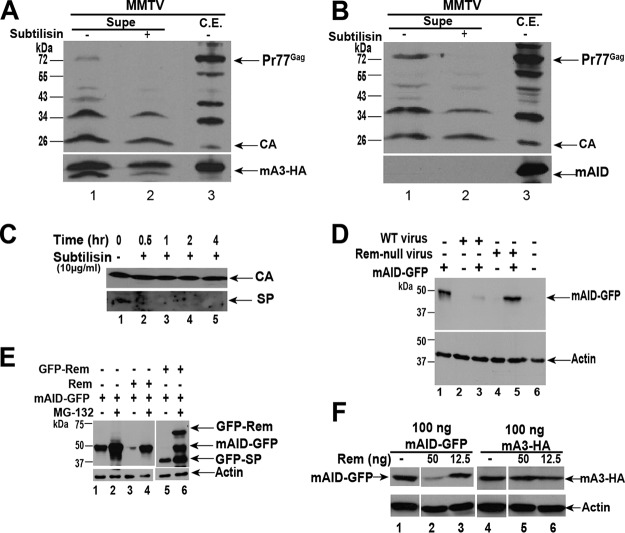
Complex human-pathogenic retroviruses cause high morbidity and mortality worldwide, but resist antiviral drugs and vaccine development due to evasion of the immune response. A complex retrovirus, mouse mammary tumor virus (MMTV), requires replication in B and T lymphocytes for mammary gland transmission and is antagonized by the innate immune restriction factor murine Apobec3 (mA3). To determine whether the regulatory/accessory protein Rem affects innate responses to MMTV, a splice-donor mutant (MMTV-SD) lacking Rem expression was injected into BALB/c mice. Mammary tumors induced by MMTV-SD had a lower proviral load, lower incidence, and longer latency than mammary tumors induced by wild-type MMTV (MMTV-WT). MMTV-SD proviruses had many G-to-A mutations on the proviral plus strand, but also C-to-T transitions within WRC motifs. Similarly, a lymphomagenic MMTV variant lacking Rem expression showed decreased proviral loads and increased WRC motif mutations relative to those in wild-type-virus-induced tumors, consistent with activation-induced cytidine deaminase (AID) mutagenesis in lymphoid cells. These mutations are typical of the Apobec family member AID, a B-cell-specific mutagenic protein involved in antibody variable region hypermutation. In contrast, mutations in WRC motifs and proviral loads were similar in MMTV-WT and MMTV-SD proviruses from tumors in AID-insufficient mice. AID was not packaged in MMTV virions. Rem coexpression in transfection experiments led to AID proteasomal degradation. Our data suggest that specifies a human-pathogenic immunodeficiency virus type 1 (HIV-1) Vif-like protein that inhibits AID and antagonizes innate immunity during MMTV replication in lymphocytes. Complex retroviruses, such as human-pathogenic immunodeficiency virus type 1 (HIV-1), cause many human deaths. These retroviruses produce lifelong infections through viral proteins that interfere with host immunity. The complex retrovirus mouse mammary tumor virus (MMTV) allows for studies of host-pathogen interactions not possible in humans. A mutation preventing expression of the MMTV Rem protein in two different MMTV strains decreased proviral loads in tumors and increased viral genome mutations typical of an evolutionarily ancient enzyme, AID. Although the presence of AID generally improves antibody-based immunity, it may contribute to human cancer progression. We observed that coexpression of MMTV Rem and AID led to AID destruction. Our results suggest that Rem is the first known protein inhibitor of AID and that further experiments could lead to new disease treatments.
复杂的人类致病性逆转录病毒在全球范围内导致高发病率和死亡率,但由于逃避免疫反应,它们对抗病毒药物和疫苗的开发具有抵抗力。一种复杂的逆转录病毒,即小鼠乳腺肿瘤病毒(MMTV),需要在 B 和 T 淋巴细胞中复制才能在乳腺中传播,并且受到先天免疫限制因子鼠 Apobec3(mA3)的拮抗。为了确定调节/辅助蛋白 Rem 是否会影响对 MMTV 的先天反应,一种缺乏 Rem 表达的剪接供体突变体(MMTV-SD)被注射到 BALB/c 小鼠中。与野生型 MMTV(MMTV-WT)诱导的乳腺肿瘤相比,MMTV-SD 诱导的乳腺肿瘤具有更低的前病毒载量、更低的发病率和更长的潜伏期。MMTV-SD 前病毒在正链上具有许多 G 到 A 的突变,但也在 WRC 基序内具有 C 到 T 的转换。同样,一种缺乏 Rem 表达的淋巴母细胞性 MMTV 变体与野生型病毒诱导的肿瘤相比,其前病毒载量降低且 WRC 基序突变增加,这与淋巴样细胞中的激活诱导胞嘧啶脱氨酶(AID)突变一致。这些突变是 Apobec 家族成员 AID 的典型特征,AID 是一种参与抗体可变区超突变的 B 细胞特异性致突变蛋白。相比之下,在 AID 不足的小鼠肿瘤中,MMTV-WT 和 MMTV-SD 前病毒的 WRC 基序突变和前病毒载量相似。AID 未包装在 MMTV 病毒粒子中。在转染实验中,Rem 的共表达导致 AID 蛋白酶体降解。我们的数据表明,Rem 特异性指定了一种人类致病性免疫缺陷病毒 1(HIV-1)Vif 样蛋白,该蛋白在 MMTV 在淋巴细胞中的复制过程中抑制 AID 并拮抗先天免疫。复杂的逆转录病毒,如人类致病性免疫缺陷病毒 1(HIV-1),导致许多人类死亡。这些逆转录病毒通过干扰宿主免疫的病毒蛋白产生终身感染。复杂的逆转录病毒小鼠乳腺肿瘤病毒(MMTV)允许在人类不可能进行的宿主-病原体相互作用研究。阻止两种不同 MMTV 株表达 MMTV Rem 蛋白的突变降低了肿瘤中的前病毒载量,并增加了类似于一种进化古老酶 AID 的病毒基因组突变。尽管 AID 的存在通常会改善基于抗体的免疫,但它可能会促进人类癌症的发展。我们观察到,MMTV Rem 和 AID 的共表达导致 AID 破坏。我们的结果表明,Rem 是已知的第一个 AID 抑制剂蛋白,进一步的实验可能会导致新的疾病治疗方法。