Department of Gynecologic Oncology and Central Laboratory, Fourth Affiliated Hospital of Jiangsu University, 20 Zhengdong Road, Zhenjiang, Jiangsu, 212001, People's Republic of China.
Reproductive Sciences Institute, Jiangsu University, Zhenjiang, 212001, Jiangsu, China.
J Exp Clin Cancer Res. 2019 Feb 15;38(1):81. doi: 10.1186/s13046-019-1095-1.
How exosomal microRNAs (miRNAs) derived from macrophages contribute to the development of drug resistance in the context of the hypoxic tumor microenvironment in epithelial ovarian cancer (EOC) remains poorly understood.
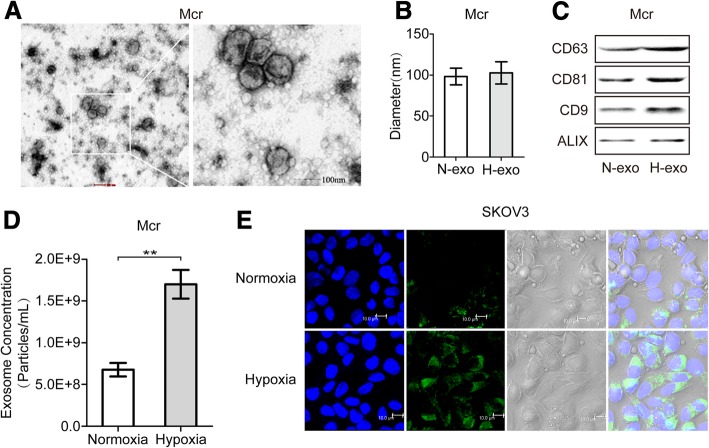
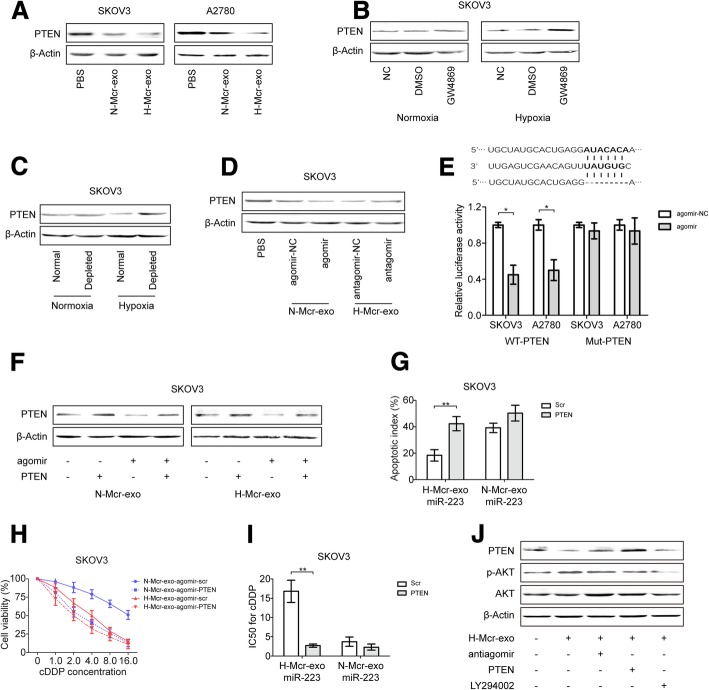
The miRNA levels were detected by qRT-PCR. Protein levels of HIF-1α, CD163 and PTEN-PI3K/AKT pathway were assessed by Western blot (WB) and Immunohistochemistry (IHC). Exosomes were isolated, and then confirmed by Transmission electron microscopy (TEM), Nanoparticle Tracking Analysis (NTA) and WB. Internalization of macrophages-secreted exosomes in EOC cells was detected by Confocal microscope. Subsequently, Dual-luciferase reporter assay verified PTEN was the target of miR-223. Gain- and loss-of-function experiments, rescue experiments, and SKOV3 xenograft models were performed to uncover the underlying mechanisms of miR-223 and PTEN-PI3K/AKT pathway, as well as the exosomal miR-223 in inducing multidrug resistance in vitro and in vivo.
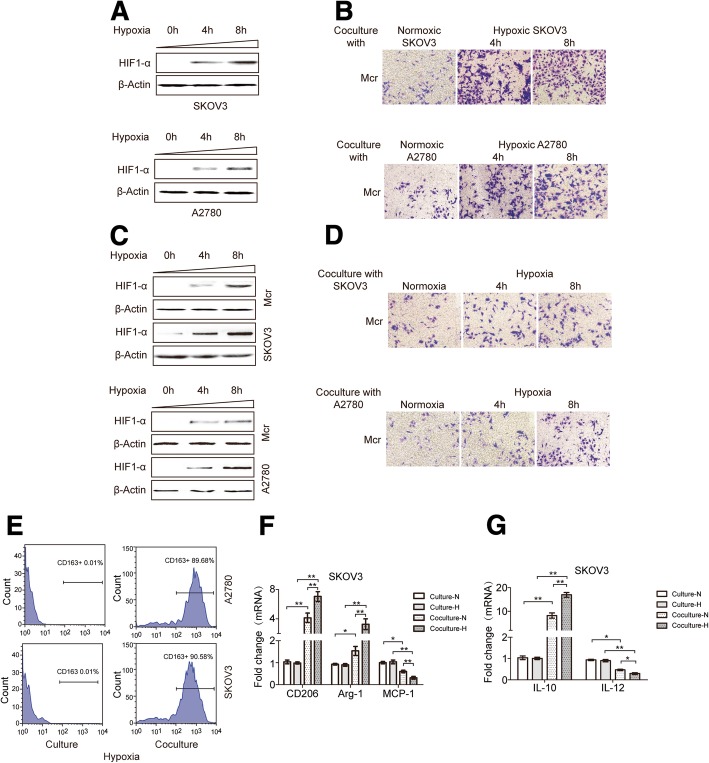
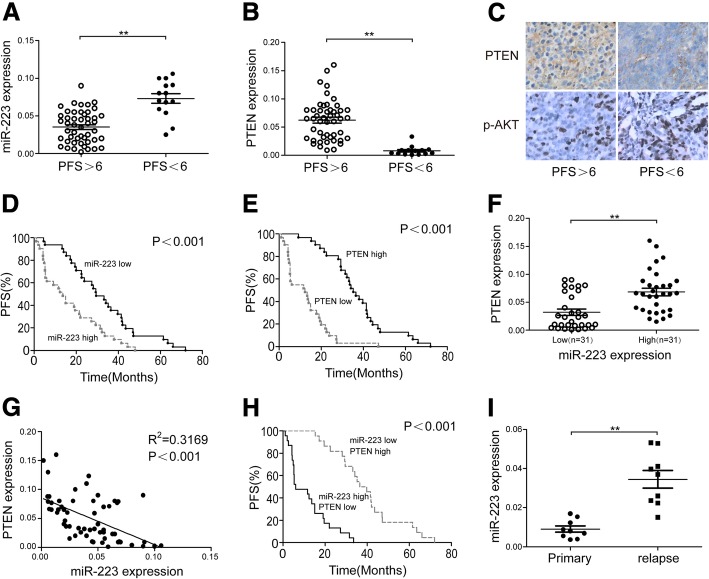
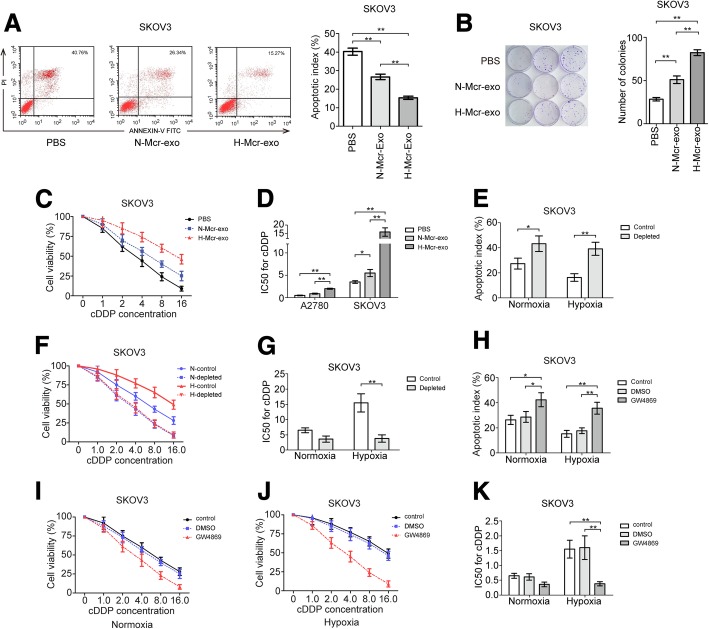
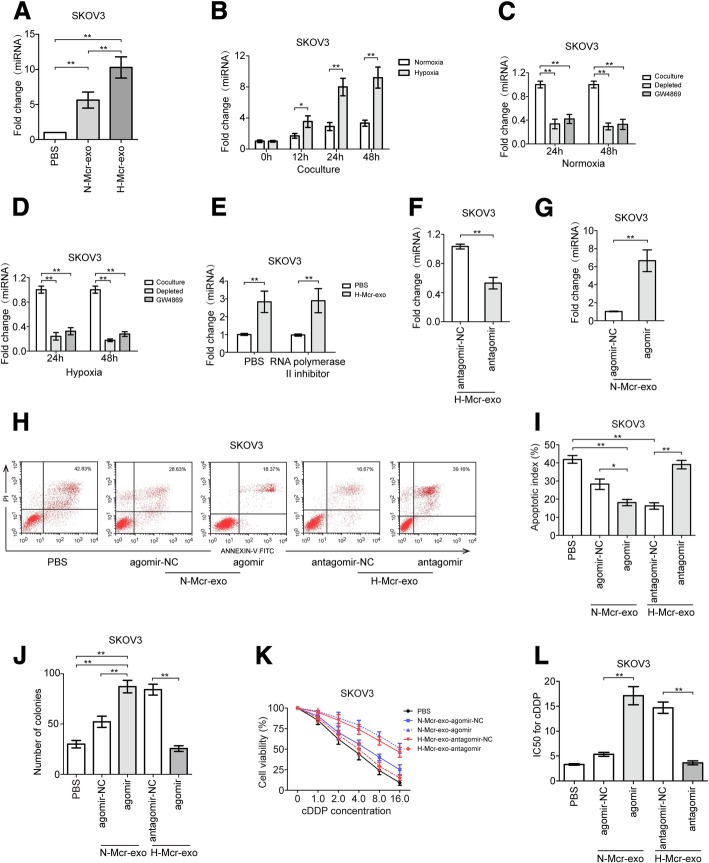
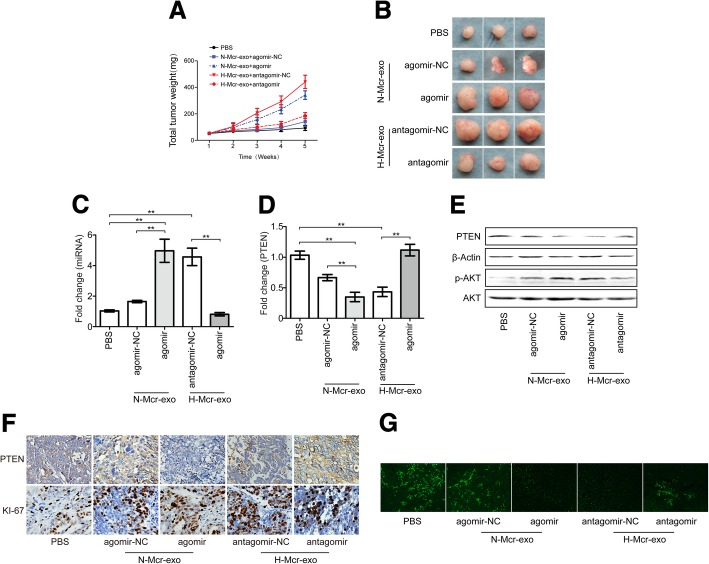
Here, we showed hypoxic EOC cells triggered macrophages recruitment and induced macrophages into a tumor-associated macrophage (TAM)-like phenotype; exosomes derived from hypoxic macrophages enhanced the malignant phenotype of EOC cells, miR-223 was enriched in exosomes released from macrophages under hypoxia, which could be transferred to the co-cultivated EOC cells, accompanied by enhanced drug resistant of EOC cells. Besides, results from a functional assay revealed that exosomal miR-223 derived from macrophages promoted the drug resistance of EOC cells via the PTEN-PI3K/AKT pathway both in vivo and in vitro. Furthermore, patients with high HIF-1a expression had statistically higher CD163+ cell infiltration and intertumoral levels of miR-223. Finally, circulating exosomal miR-223 levels were closely related to the recurrence of EOC.
These data indicate a unique role of exosomal miR-223 in the cross-talk between macrophages and EOC cells in chemotherapy resistance, through a novel exosomal miR-223/PTEN-PI3K/AKT signaling pathway.
在缺氧的卵巢癌细胞(EOC)肿瘤微环境中,巨噬细胞来源的外泌体 miRNA(miRNA)如何导致耐药性的发展尚不清楚。
通过 qRT-PCR 检测 miRNA 水平。通过 Western blot(WB)和免疫组织化学(IHC)评估 HIF-1α、CD163 和 PTEN-PI3K/AKT 通路的蛋白水平。分离外泌体,然后通过透射电子显微镜(TEM)、纳米颗粒跟踪分析(NTA)和 WB 进行确认。通过共聚焦显微镜检测巨噬细胞分泌的外泌体在 EOC 细胞中的内化。随后,双荧光素酶报告基因实验验证 PTEN 是 miR-223 的靶基因。进行 gain-和 loss-of-function 实验、挽救实验和 SKOV3 异种移植模型,以揭示 miR-223 和 PTEN-PI3K/AKT 通路以及外泌体 miR-223 在体外和体内诱导多药耐药的潜在机制。
在这里,我们表明缺氧的 EOC 细胞触发巨噬细胞募集并诱导巨噬细胞向肿瘤相关巨噬细胞(TAM)样表型;来自缺氧巨噬细胞的外泌体增强了 EOC 细胞的恶性表型,miR-223 在缺氧条件下从巨噬细胞释放的外泌体中富集,可转移到共培养的 EOC 细胞中,同时增强 EOC 细胞的耐药性。此外,功能测定结果表明,来自巨噬细胞的外泌体 miR-223 通过 PTEN-PI3K/AKT 通路在体内和体外均促进了 EOC 细胞的耐药性。此外,HIF-1a 表达水平高的患者具有统计学上更高的 CD163+细胞浸润和肿瘤间 miR-223 水平。最后,循环外泌体 miR-223 水平与 EOC 的复发密切相关。
这些数据表明外泌体 miR-223 在巨噬细胞和 EOC 细胞之间的化疗耐药性相互作用中具有独特的作用,通过一种新的外泌体 miR-223/PTEN-PI3K/AKT 信号通路。