Department of Medical Biotechnology, Faculty of Biochemistry, Biophysics and Biotechnology, Jagiellonian University, Gronostajowa 7, 30-387, Kraków, Poland.
Cell Mol Life Sci. 2019 Apr;76(8):1507-1528. doi: 10.1007/s00018-019-03006-7. Epub 2019 Feb 15.
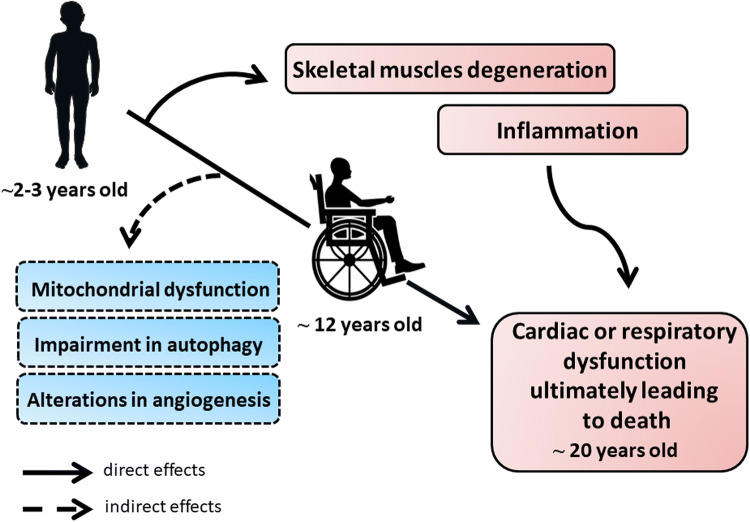
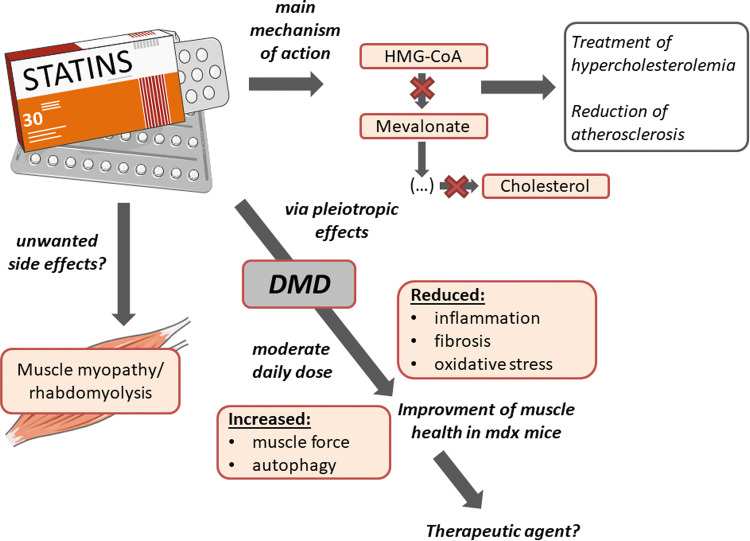
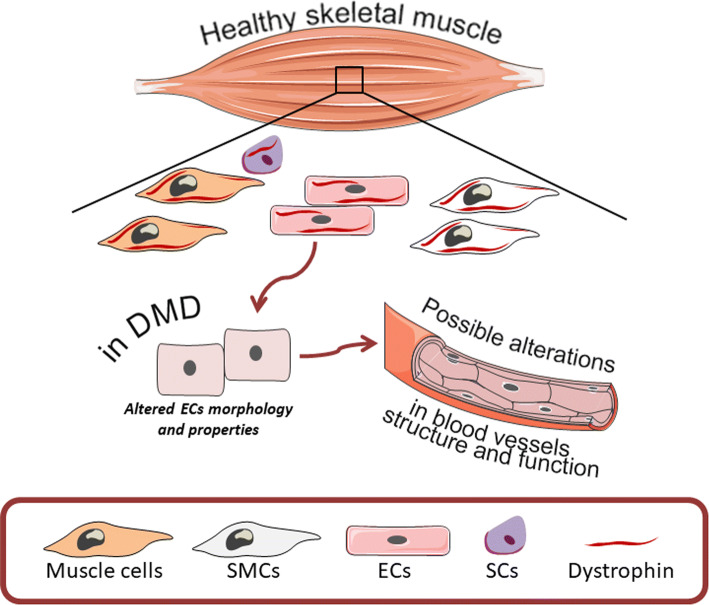
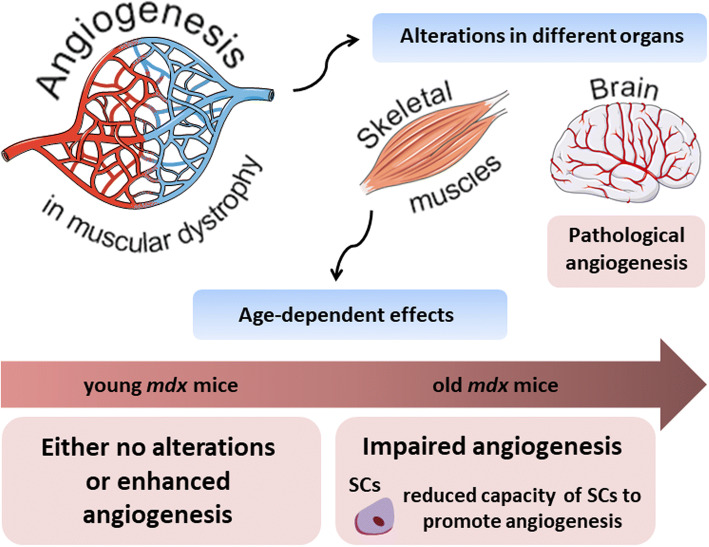
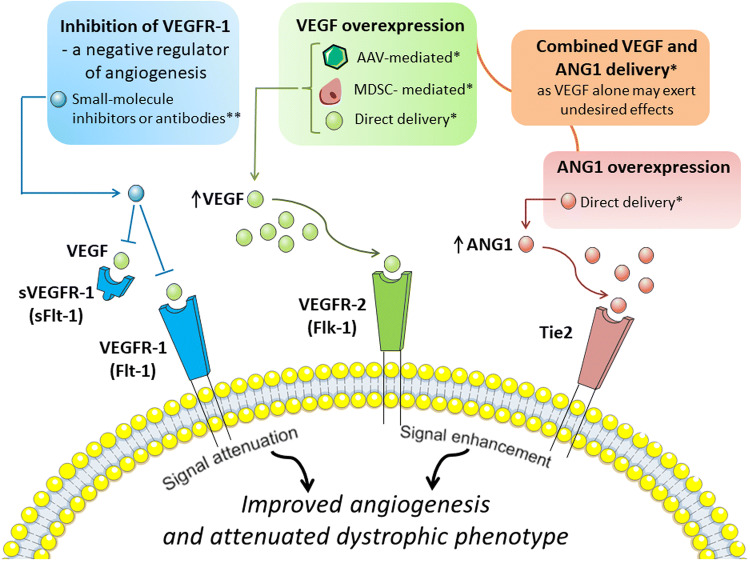
Duchenne muscular dystrophy (DMD) represents one of the most devastating types of muscular dystrophies which affect boys already at early childhood. Despite the fact that the primary cause of the disease, namely the lack of functional dystrophin is known already for more than 30 years, DMD still remains an incurable disease. Thus, an enormous effort has been made during recent years to reveal novel mechanisms that could provide therapeutic targets for DMD, especially because glucocorticoids treatment acts mostly symptomatic and exerts many side effects, whereas the effectiveness of genetic approaches aiming at the restoration of functional dystrophin is under the constant debate. Taking into account that dystrophin expression is not restricted to muscle cells, but is present also in, e.g., endothelial cells, alterations in angiogenesis process have been proposed to have a significant impact on DMD progression. Indeed, already before the discovery of dystrophin, several abnormalities in blood vessels structure and function have been revealed, suggesting that targeting angiogenesis could be beneficial in DMD. In this review, we will summarize current knowledge about the angiogenesis status both in animal models of DMD as well as in DMD patients, focusing on different organs as well as age- and sex-dependent effects. Moreover, we will critically discuss some approaches such as modulation of vascular endothelial growth factor or nitric oxide related pathways, to enhance angiogenesis and attenuate the dystrophic phenotype. Additionally, we will suggest the potential role of other mediators, such as heme oxygenase-1 or statins in those processes.
杜氏肌营养不良症(DMD)是最具破坏性的肌肉营养不良症之一,已经在儿童早期影响到男孩。尽管这种疾病的主要原因——缺乏功能性肌营养不良蛋白已经被人们了解了 30 多年,但 DMD 仍然是一种无法治愈的疾病。因此,近年来,人们做出了巨大的努力来揭示新的机制,这些机制可能为 DMD 提供治疗靶点,尤其是因为糖皮质激素治疗主要是对症治疗,并且会产生许多副作用,而旨在恢复功能性肌营养不良蛋白的基因治疗方法的有效性仍存在争议。考虑到肌营养不良蛋白的表达不仅限于肌肉细胞,也存在于例如内皮细胞中,因此,血管生成过程的改变被认为对 DMD 的进展有重大影响。事实上,早在肌营养不良蛋白被发现之前,就已经发现了血管结构和功能的几种异常,这表明靶向血管生成可能对 DMD 有益。在这篇综述中,我们将总结 DMD 动物模型和 DMD 患者中血管生成状态的最新知识,重点介绍不同器官以及年龄和性别依赖性的影响。此外,我们将批判性地讨论一些方法,如调节血管内皮生长因子或一氧化氮相关途径,以增强血管生成并减轻营养不良表型。此外,我们还将提出其他介质(如血红素加氧酶-1 或他汀类药物)在这些过程中的潜在作用。