Dressler Alex M, Gillman Andrea G, Wasan Ajay D
Department of Anesthesiology, University of Pittsburgh School of Medicine, Pittsburgh, PA, USA,
UPMC Pain Medicine, Pittsburgh, PA, USA,
J Pain Res. 2019 Jan 24;12:491-500. doi: 10.2147/JPR.S184023. eCollection 2019.
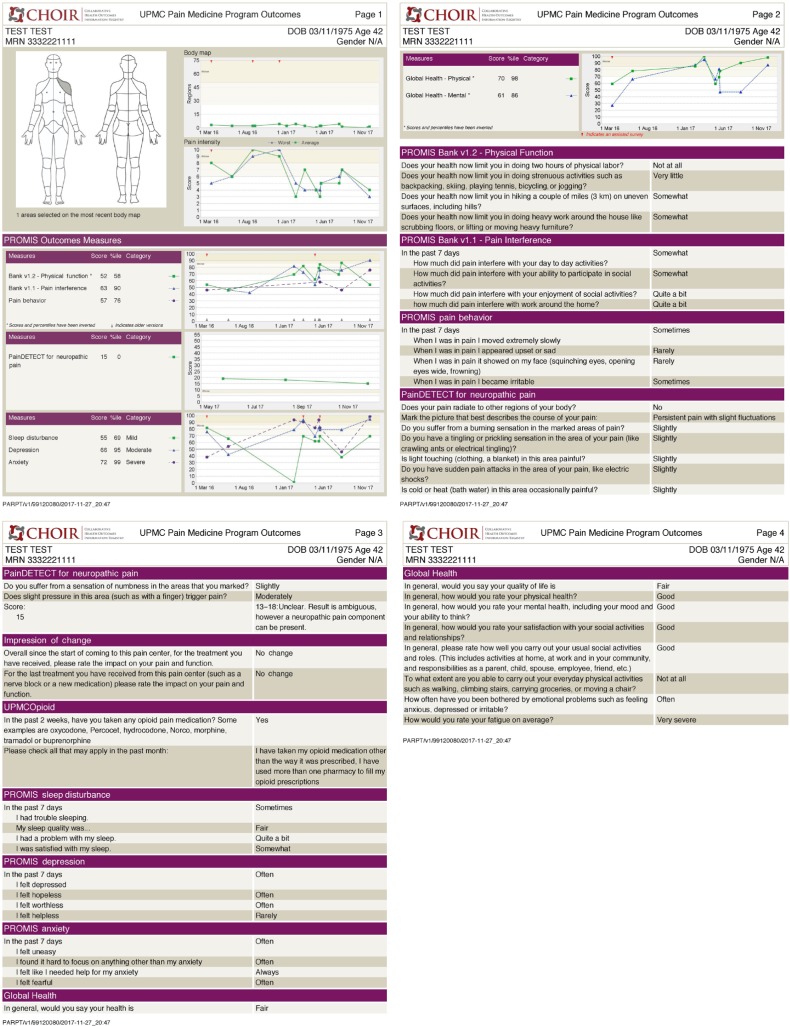
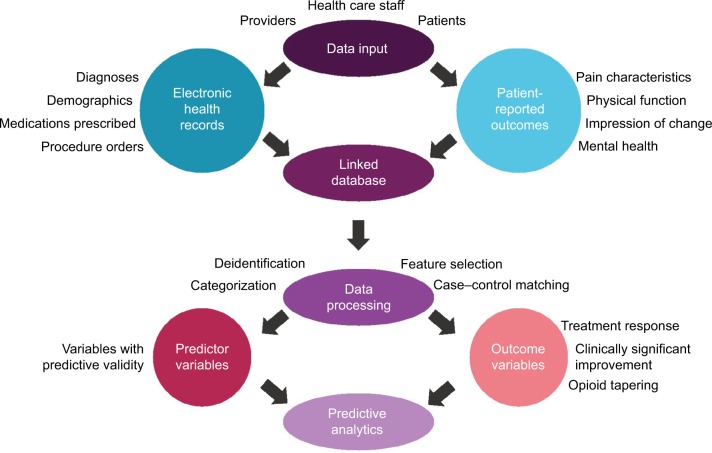
Chronic pain is a widespread and complex set of conditions that are often difficult and expensive to treat. Comparative effectiveness research (CER) is an evolving research method that is useful in determining which treatments are most effective for medical conditions such as chronic pain. An underutilized mechanism for conducting CER in pain medicine involves combining patient-reported outcomes (PROs) with electronic health records (EHRs). Patient-reported pain and mental and physical health outcomes are increasingly collected during clinic visits, and these data can be linked to EHR data that are relevant to the treatment of a patient's pain, such as diagnoses, medications ordered, and medical comorbidities. When aggregated, this information forms a data repository that can be used for high-quality CER. This review provides a blueprint for conducting CER using PROs combined with EHRs. As an example, the University of Pittsburgh's patient outcomes repository for treatment is described. This system includes PROs collected via the Collaborative Health Outcomes Information Registry software and cross-linked data from the University of Pittsburgh Medical Center EHR. The requirements, best practice guidelines, statistical considerations, and caveats for performing CER with this type of data repository are also discussed.
慢性疼痛是一组广泛且复杂的病症,其治疗往往困难且成本高昂。比较效果研究(CER)是一种不断发展的研究方法,有助于确定哪些治疗方法对慢性疼痛等病症最为有效。在疼痛医学中,一种未得到充分利用的进行CER的机制是将患者报告结局(PROs)与电子健康记录(EHRs)相结合。在门诊就诊期间,越来越多地收集患者报告的疼痛以及心理和身体健康结局,这些数据可以与与患者疼痛治疗相关的EHR数据相链接,例如诊断、所开药物和医疗合并症。汇总后,这些信息形成一个可用于高质量CER的数据存储库。本综述提供了使用PROs与EHRs相结合进行CER的蓝图。作为一个例子,描述了匹兹堡大学的治疗患者结局存储库。该系统包括通过协作健康结局信息注册软件收集的PROs以及来自匹兹堡大学医学中心EHR的交叉链接数据。还讨论了使用此类数据存储库进行CER的要求、最佳实践指南、统计考量和注意事项。