Kavala Ali Aycan, Turkyilmaz Saygin
Department of Cardiovascular Surgery, Bakirkoy Dr Sadi Konuk Training and Research Hospital, Istanbul, Turkey.
Arch Med Sci Atheroscler Dis. 2018 Dec 15;3:e156-e163. doi: 10.5114/amsad.2018.81000. eCollection 2018.
Venous leg ulcers (VLUs), which arise from chronic venous insufficiency in the lower limbs, are a major cause of morbidity and significantly negatively impact patients' health-related quality of life. Treatment of venous ulcers can be either conservative or surgical. Despite appropriate treatment, VLUs can be resistant to healing. Clinical results of treatment of venous foot ulcers with adipose-derived autologous stem cells, which did not improve despite the surgical treatment of the underlying venous pathology in the following case series, are reported.
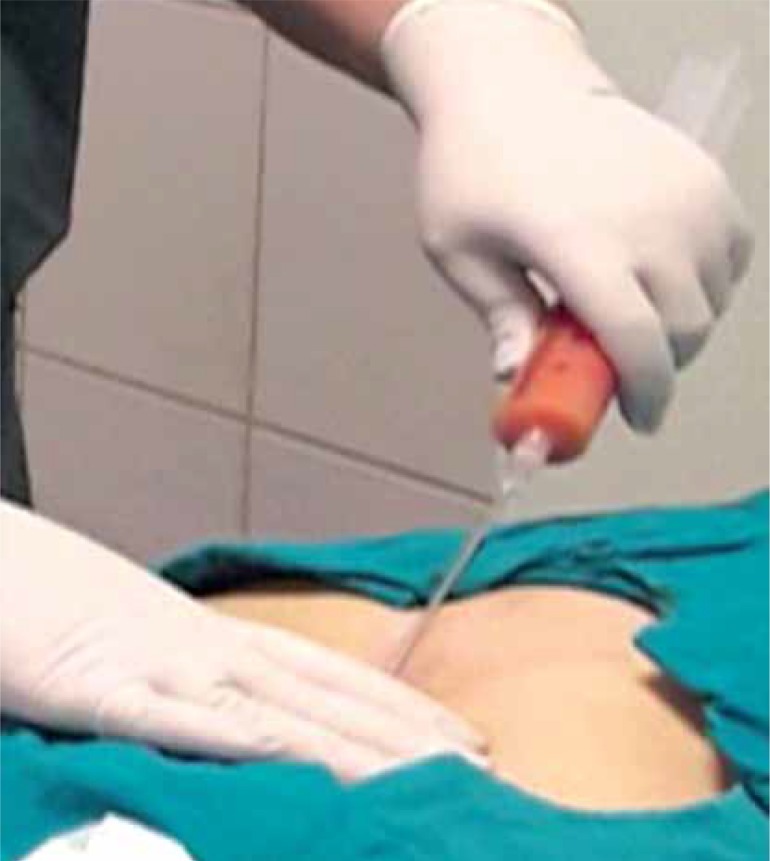
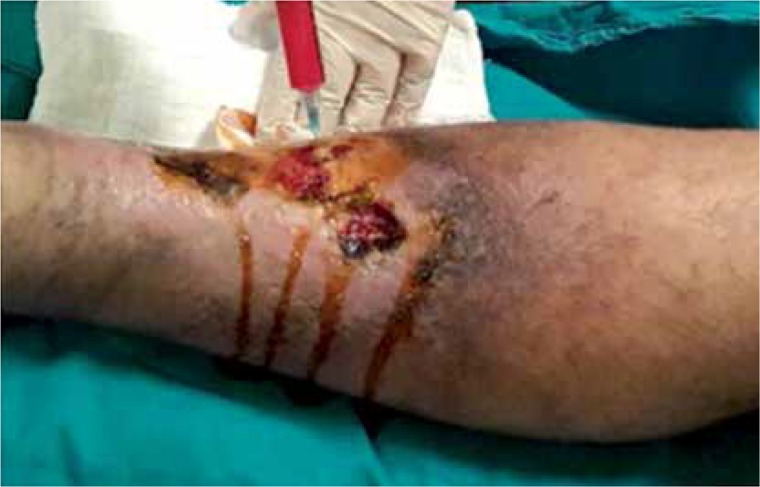
Between April 2015 and January 2016, a total of 31 patients who had undergone surgery for underlying venous pathology but the venous ulcer had not healed were included in the study. The mean venous ulcer size was 3.6-6.2 cm (range: 2 to 8 cm by 3 to 9 cm). All patients were treated with adipose-derived autologous stem cells prepared using the MyStem Regenerative Adipose-Derived Stem Cell Purification Kit (MyStem LLC, USA). The ulcer diameter was measured and recorded in the third, sixth and twelfth months. The follow-up time was 12 months after ulcer healing.
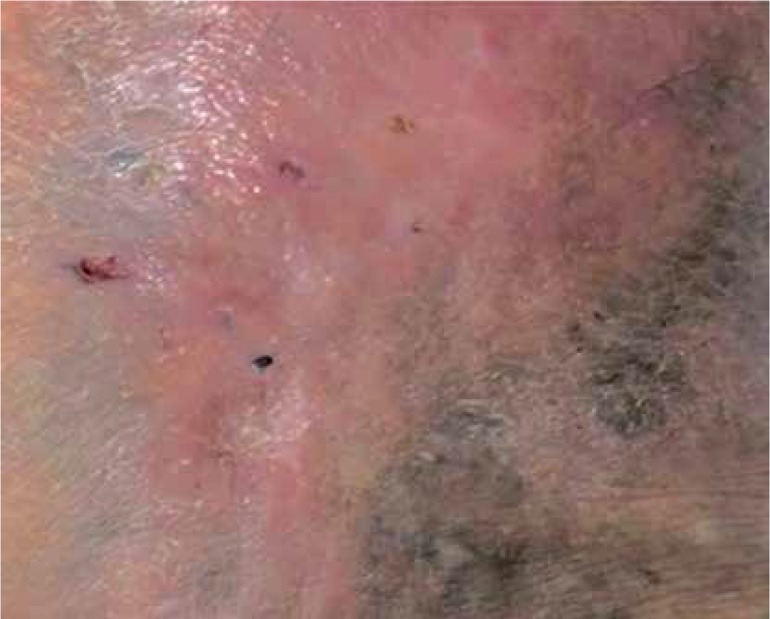
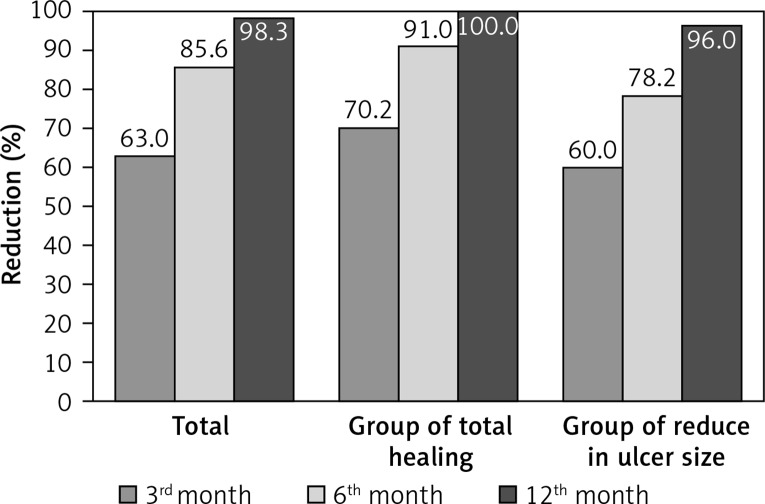
Eighteen ulcers demonstrated complete healing at the 12 month. Thirteen ulcers exhibited serious contraction and epithelialization even though the ulcer was not completely closed. At the 12 month, the ulcer size was reduced by 96.00 ±1.74% in these patients. The reduction in the ulcer area based on the month analyzed was significant ( = 0.001; < 0.01). After the ulcers healed, the patients were followed for recurrence for one year. Recurrent ulcers were observed at the treated sites in 3 of 31 patients (9%). No adverse events, such as infection, inflammation, or tissue reactions, were observed.
Application of cell therapy in venous leg ulcer is currently used exclusively in patients not responding to the standard treatment. Autogenously derived regenerative cell therapy for VLUs can be considered as an additional treatment to primary surgical therapy.
下肢慢性静脉功能不全引发的静脉性腿部溃疡(VLU)是发病的主要原因,对患者的健康相关生活质量产生重大负面影响。静脉溃疡的治疗可以是保守治疗或手术治疗。尽管进行了适当的治疗,但VLU可能难以愈合。本文报道了在以下病例系列中,尽管对潜在的静脉病变进行了手术治疗,但脂肪源性自体干细胞治疗静脉足部溃疡的临床结果并未改善。
2015年4月至2016年1月,共有31例因潜在静脉病变接受手术但静脉溃疡未愈合的患者纳入研究。静脉溃疡的平均大小为3.6 - 6.2厘米(范围:长2至8厘米,宽3至9厘米)。所有患者均接受使用MyStem再生脂肪源性干细胞纯化试剂盒(美国MyStem有限责任公司)制备的脂肪源性自体干细胞治疗。在第3、6和12个月测量并记录溃疡直径。随访时间为溃疡愈合后12个月。
18个溃疡在12个月时完全愈合。13个溃疡虽未完全闭合,但出现严重收缩和上皮化。在12个月时,这些患者的溃疡大小减少了96.00±1.74%。根据分析月份,溃疡面积的减少具有显著性(=0.001;<0.01)。溃疡愈合后,对患者进行了一年的复发随访。31例患者中有3例(9%)在治疗部位观察到复发性溃疡。未观察到感染、炎症或组织反应等不良事件。
目前,细胞疗法在静脉性腿部溃疡中的应用仅用于对标准治疗无反应的患者。VLU的自体再生细胞疗法可被视为原发性手术治疗的一种补充治疗。