Pain Management Center, Shanghai Jiao Tong University Affiliated Shanghai Sixth People's Hospital, Shanghai, 200233, China.
Center for Translational Pain Medicine, Department of Anesthesiology, Duke University School of Medicine, Durham, NC, USA.
Cell Death Dis. 2019 Feb 18;10(3):165. doi: 10.1038/s41419-019-1425-4.
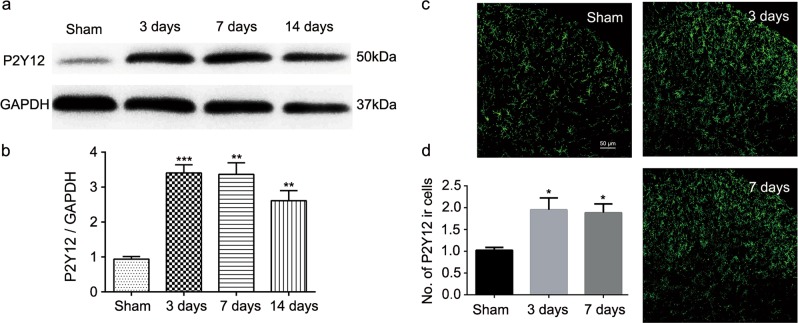
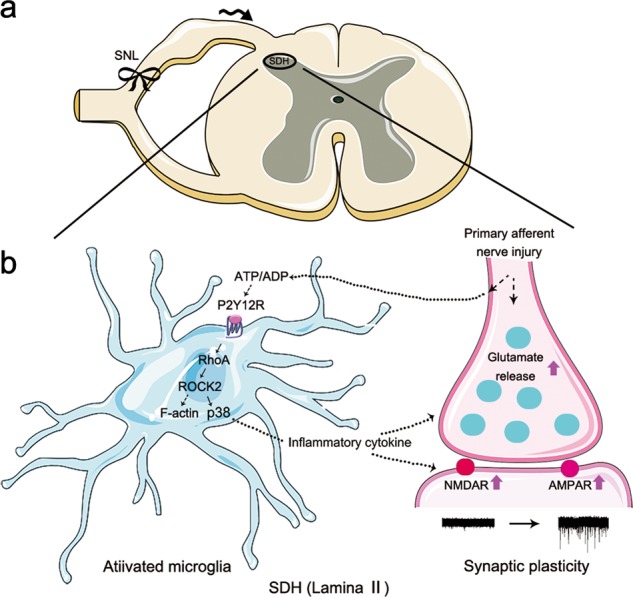
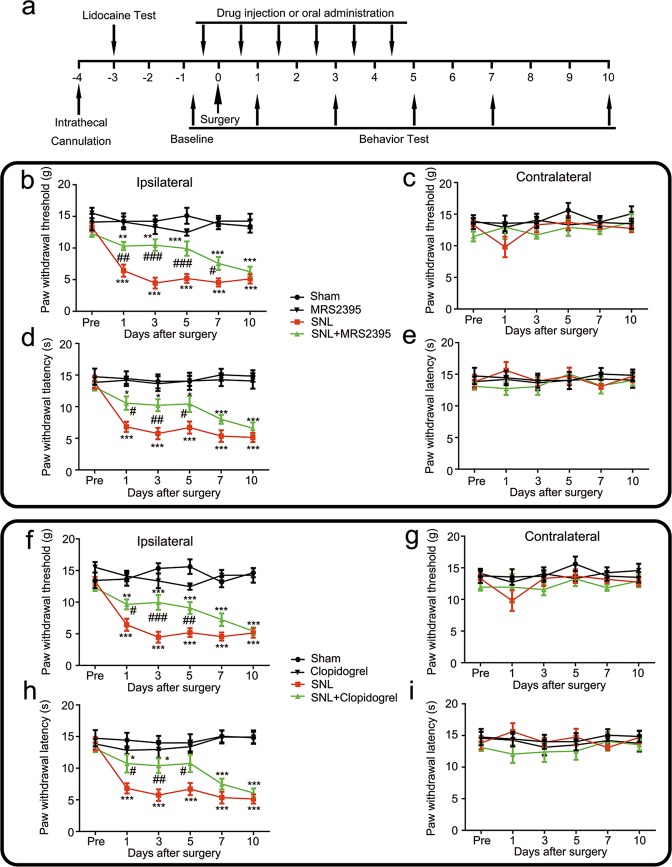
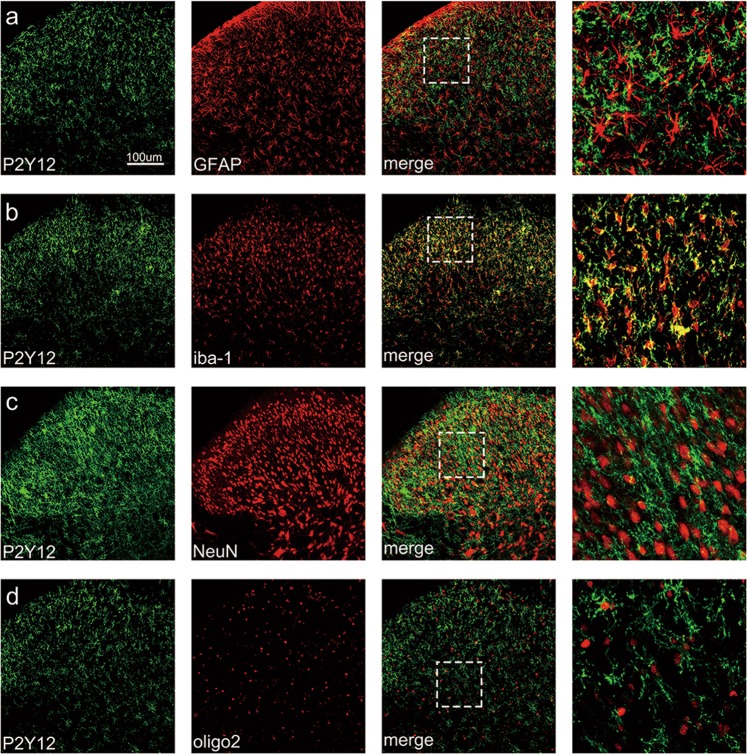
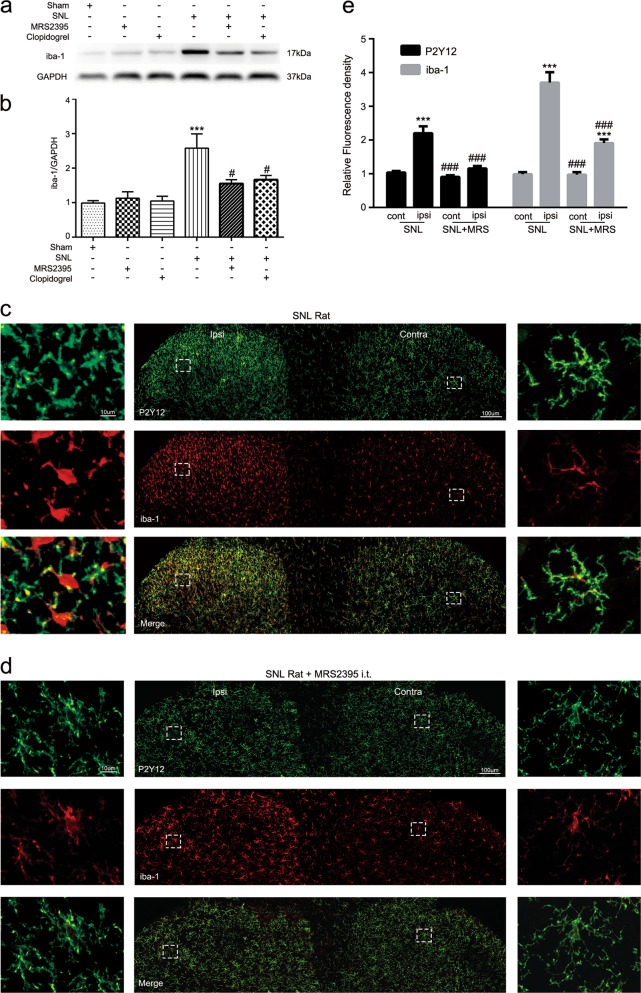
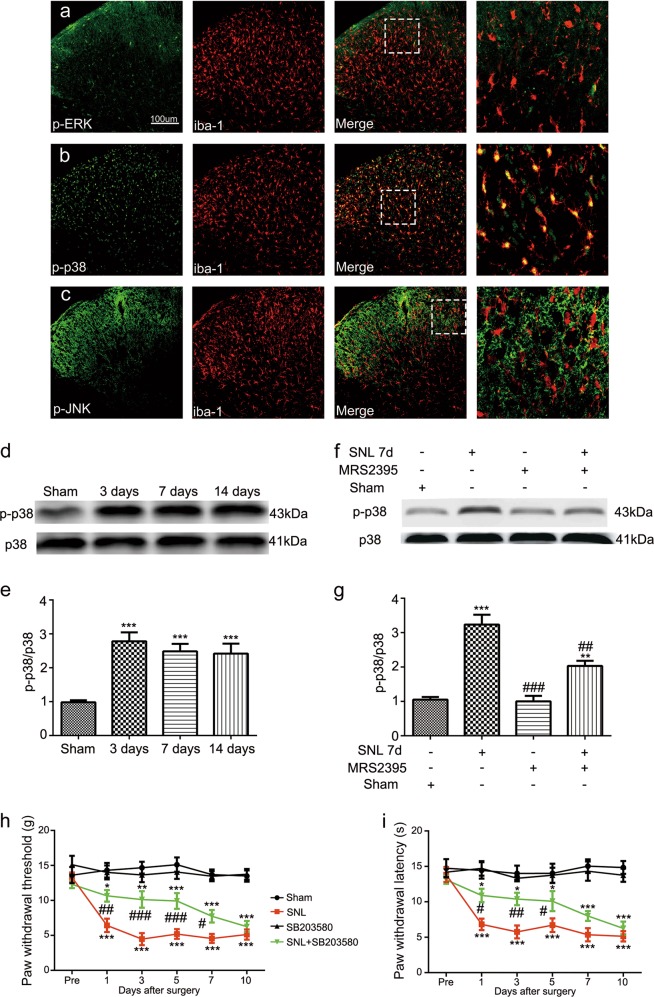
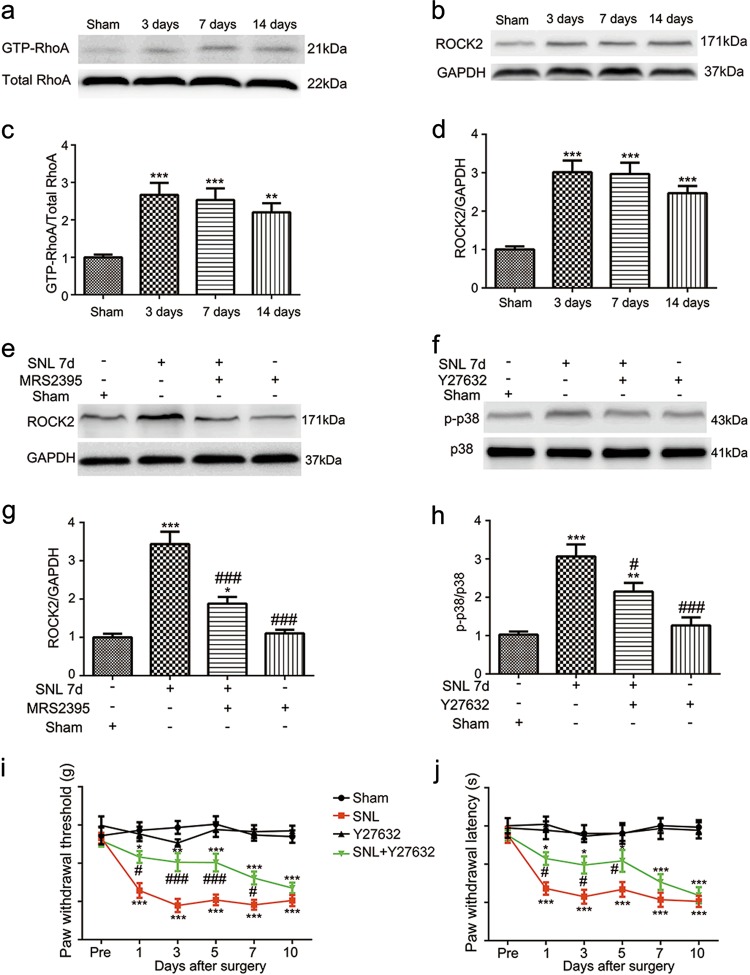
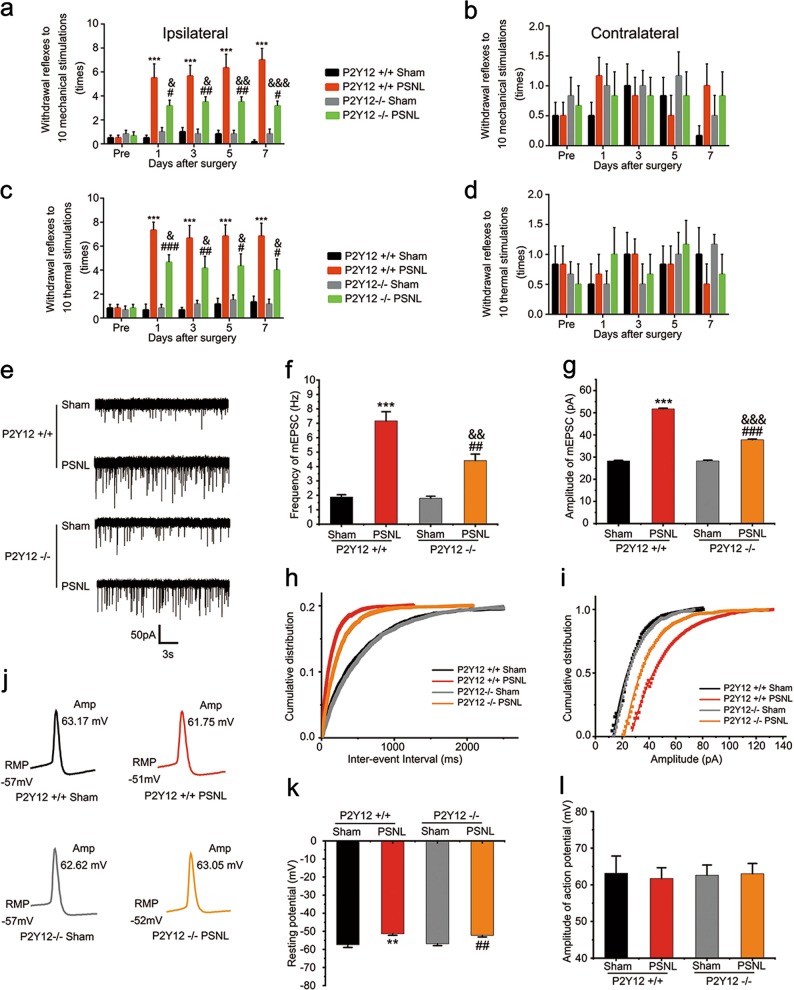
Peripheral nerve injury causes neuropathic pain and microglia activation. P2Y12 receptors on microglia are thought to be a key player in the surveillance of the local environment, but whether or how these receptors are engaged in the cross-talk between microglia and neurons of the dorsal horn remain ambiguous. Using a rodent model of nerve injury-induced pain, we investigated the roles of P2Y12 in microglia activation, excitatory synaptic transmission, and nociceptive allodynia. We found that spinal nerve ligation (SNL) significantly increased the level of P2Y12 receptors specifically in the microglia of the ipsilateral dorsal horn. Injections of P2Y12 antagonists (MRS2395 or clopidogrel) attenuated microglia activation and increased the paw withdrawal latency in response to thermal stimuli on the ipsilateral side without affecting the basal threshold on the contralateral side. These effects on pain behaviors were replicated in P2Y12 knockout mice. Patch-clamp recordings further revealed that partial sciatic nerve ligation (PSNL)-induced excessive miniature excitatory postsynaptic currents (mEPSCs) were significantly attenuated in P2Y12 knockout mice. Moreover, we found that SNL activates the GTP-RhoA/ROCK2 signaling pathway and elevates the level of phosphorylated p38 mitogen-activated protein kinase (MAPK), which was inhibited by the P2Y12 antagonist. The phosphorylation of p38 MAPK was inhibited by a ROCK inhibitor, but not vice versa, suggesting that p38 MAPK is downstream of ROCK activation. Our findings suggest that nerve injury engages the P2Y12 receptor-dependent GTP-RhoA/ROCK2 signaling pathway to upregulate excitatory synaptic transmission in the dorsal horn. This cross-talk ultimately participates in the manifestation of nociceptive allodynia, implicating P2Y12 receptor as a potential target for alleviating neuropathic pain.
周围神经损伤导致神经病理性疼痛和小胶质细胞激活。小胶质细胞上的 P2Y12 受体被认为是监视局部环境的关键因素,但这些受体如何参与小胶质细胞与背角神经元之间的串扰尚不清楚。使用神经损伤诱导疼痛的啮齿动物模型,我们研究了 P2Y12 在小胶质细胞激活、兴奋性突触传递和伤害性感觉过敏中的作用。我们发现,脊神经结扎(SNL)显著增加了 P2Y12 受体在同侧背角小胶质细胞中的水平。P2Y12 拮抗剂(MRS2395 或氯吡格雷)的注射减弱了小胶质细胞的激活,并增加了对同侧热刺激的足底退缩潜伏期,而不影响对侧的基础阈值。这些对疼痛行为的影响在 P2Y12 敲除小鼠中得到了复制。膜片钳记录进一步表明,部分坐骨神经结扎(PSNL)诱导的过度微小兴奋性突触后电流(mEPSCs)在 P2Y12 敲除小鼠中显著减弱。此外,我们发现 SNL 激活了 GTP-RhoA/ROCK2 信号通路,并升高了磷酸化 p38 丝裂原活化蛋白激酶(MAPK)的水平,该水平被 P2Y12 拮抗剂抑制。ROCK 抑制剂抑制了 p38 MAPK 的磷酸化,但反之则不然,表明 p38 MAPK 是 ROCK 激活的下游。我们的研究结果表明,神经损伤涉及 P2Y12 受体依赖性 GTP-RhoA/ROCK2 信号通路,以上调背角中的兴奋性突触传递。这种串扰最终参与了伤害性感觉过敏的表现,表明 P2Y12 受体是缓解神经病理性疼痛的潜在靶点。