Huang Yujing, Wang Liping, Mao Ying, Nan Guangxian
Department of Neurology, China-Japan Union Hospital of Jilin University, Changchun, China.
Front Neurol. 2019 Feb 4;10:32. doi: 10.3389/fneur.2019.00032. eCollection 2019.
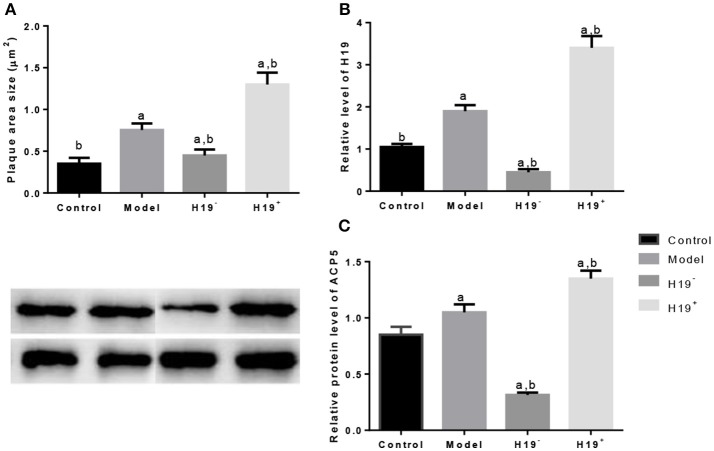
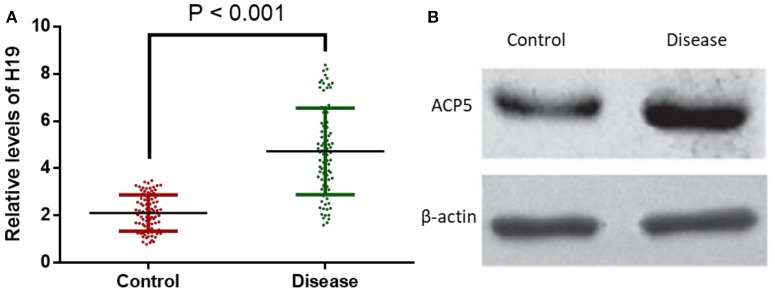
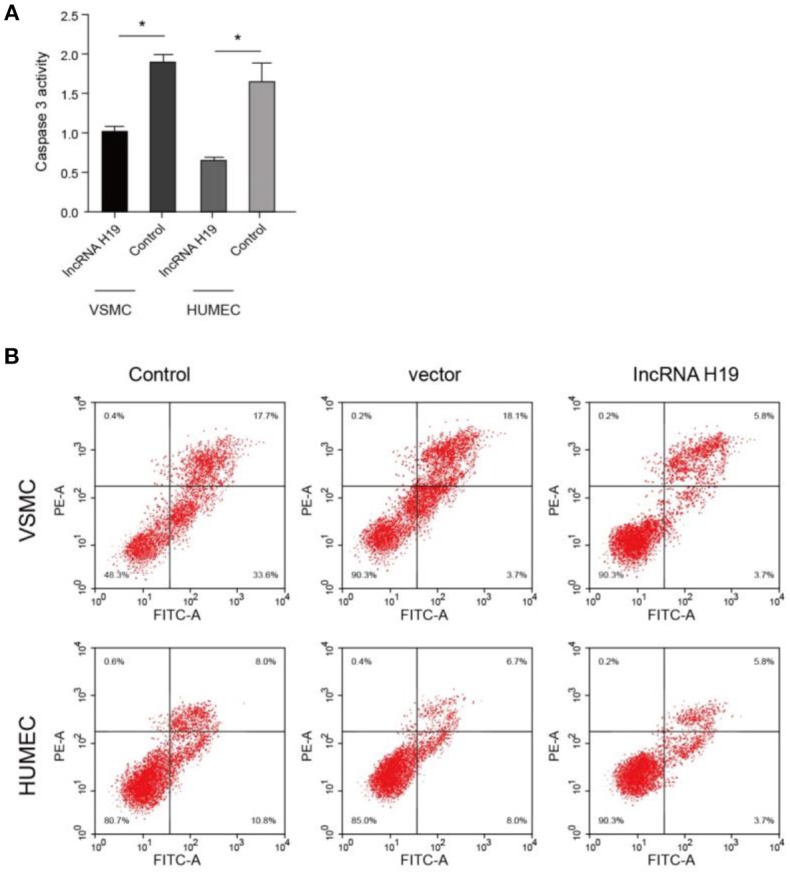
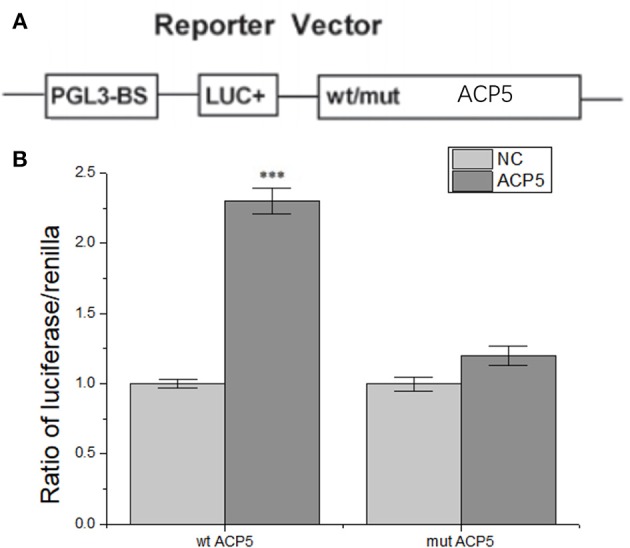
Atherosclerosis is closely associated with ischemic stroke, and long noncoding RNA-H19 (lncRNA-H19) might be a potential target for treating atherosclerosis. The present study aimed to investigate the function of lncRNA-H19 in atherosclerosis and to explore a novel therapeutic strategy for ischemic stroke. Differentially expressed genes (DEGs) in atherosclerosis were screened by searching public database. In combination with the lncRNA-H19-knockout database, potential lncRNA-H19-mediated gene was retrieved and their relationship was identified. In order to assess the detailed regulatory mechanism of lncRNA-H19, we used a lentivirus packaging system to upregulate Acp5 (Acid phosphatase 5) expression in vascular smooth muscle cells (VSMC) and human umbilical vein endothelial cells (HUVECs). The expression of ACP5 was determined by Western Blot, and evaluations of cell proliferation and apoptosis were detected. An ischemic stroke mouse model was established. Atherosclerosis was measured by using plaque area size. The effects H19 on the expression of ACP5 were explored by the overexpression or silence of H19. H19 and ACP5 were associated with Acute Stroke Treatment (TOAST) subtypes of atherosclerotic patients. The target prediction program and dual-luciferase reporter confirmed ACP5 as a direct target of H19. Lentivirus-mediated H19-forced expression upregulated ACP5 protein levels, promoted cell proliferation and suppressed the apoptosis. The plaque area size was larger in ischemic models than controls. The overexpression or silence of H19 increased or reduced the plaque size. The overexpression or silence of H19 resulted in the expression or inhibition of ACP5. IncRNA-H19 promoting ACP5 protein expression contributed to atherosclerosis and increased the risk of ischemic stroke.
动脉粥样硬化与缺血性中风密切相关,长链非编码RNA-H19(lncRNA-H19)可能是治疗动脉粥样硬化的潜在靶点。本研究旨在探讨lncRNA-H19在动脉粥样硬化中的作用,并探索一种新的缺血性中风治疗策略。通过搜索公共数据库筛选动脉粥样硬化中的差异表达基因(DEGs)。结合lncRNA-H19敲除数据库,检索潜在的lncRNA-H19介导的基因并确定它们之间的关系。为了评估lncRNA-H19的详细调控机制,我们使用慢病毒包装系统上调血管平滑肌细胞(VSMC)和人脐静脉内皮细胞(HUVECs)中Acp5(酸性磷酸酶5)的表达。通过蛋白质免疫印迹法测定ACP5的表达,并检测细胞增殖和凋亡情况。建立缺血性中风小鼠模型。通过测量斑块面积大小来评估动脉粥样硬化情况。通过过表达或沉默H19来探讨H19对ACP5表达的影响。H19和ACP5与动脉粥样硬化患者的急性中风治疗(TOAST)亚型相关。靶标预测程序和双荧光素酶报告基因证实ACP5是H19的直接靶标。慢病毒介导的H19强制表达上调了ACP5蛋白水平,促进细胞增殖并抑制细胞凋亡。缺血模型中的斑块面积大小比对照组大。H19的过表达或沉默增加或减小了斑块大小。H19的过表达或沉默导致了ACP5的表达或抑制。lncRNA-H19促进ACP5蛋白表达促进了动脉粥样硬化并增加了缺血性中风的风险。