Ito Taeko, Inui Hiroshi, Miyasaka Toshiteru, Shiozaki Tomoyuki, Matsuyama Shohei, Yamanaka Toshiaki, Kichikawa Kimihiko, Takeda Noriaki, Kitahara Tadashi
Department of Otolaryngology- Head and Neck Surgery, Nara Medical University, Kashihara, Japan.
Inui ENT Clinic, Sakurai, Japan.
Front Neurol. 2019 Feb 4;10:46. doi: 10.3389/fneur.2019.00046. eCollection 2019.
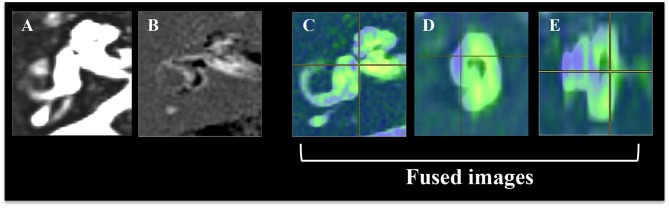
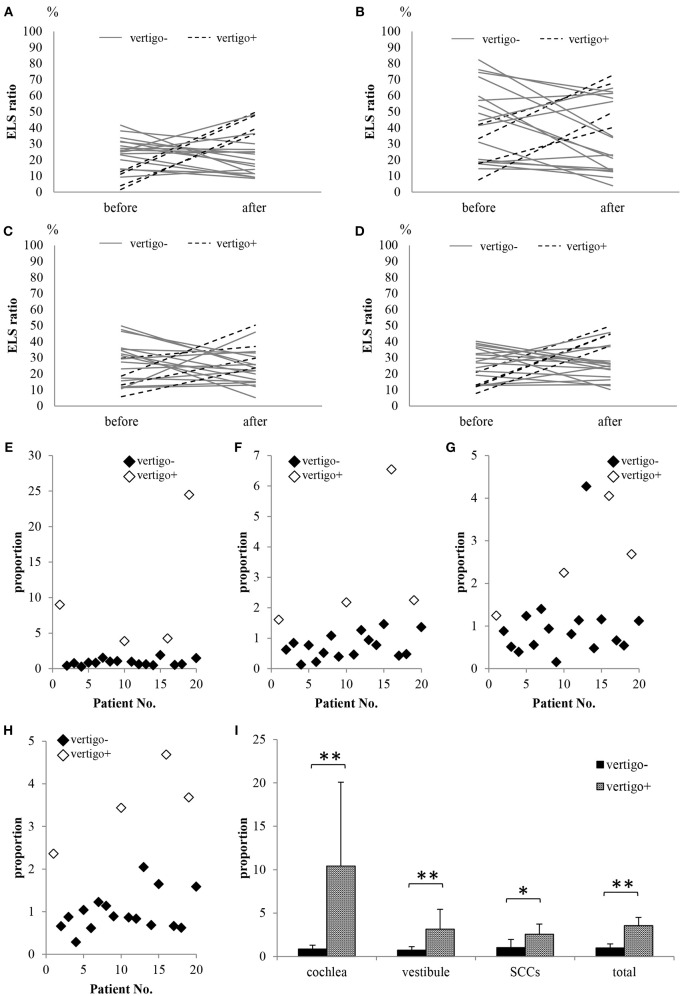
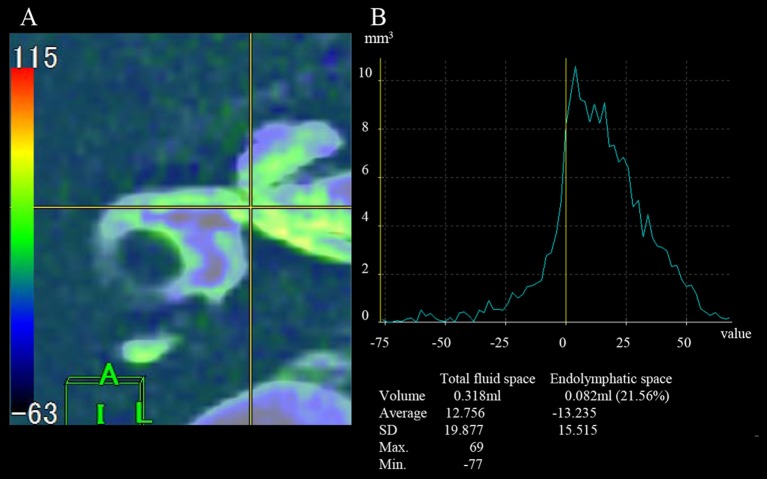
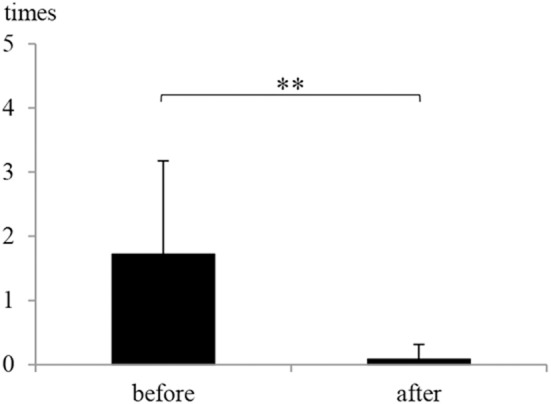
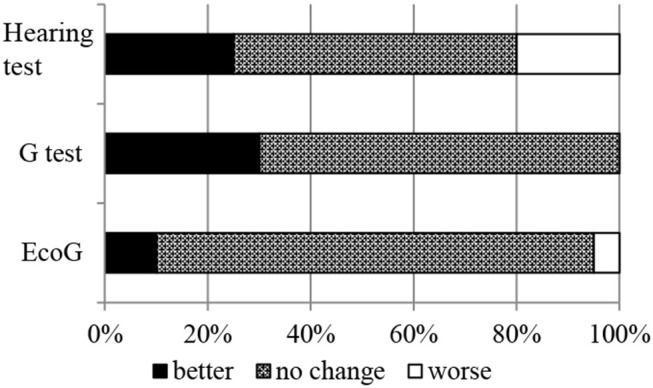
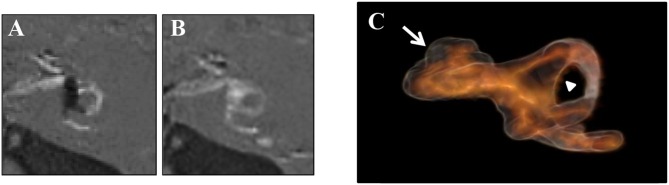
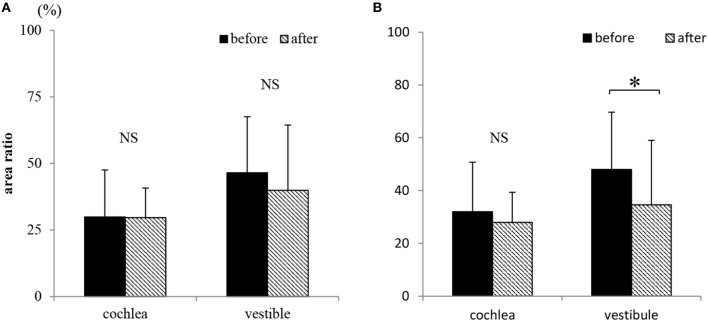
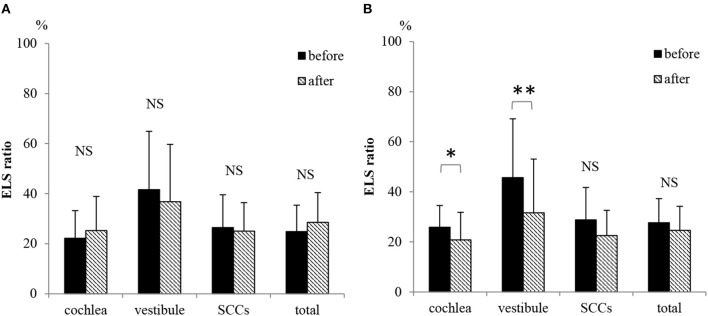
Meniere's disease is a common disease, that presents with recurrent vertigo and cochlear symptoms. The pathology of Meniere's disease was first reported to involve endolymphatic hydrops in 1938. The endolymphatic sac is thought to have a role to keep the hydrostatic pressure and endolymph homeostasis for the inner ear. As a surgery for intractable Meniere's disease, endolymphatic sac drainage with intraendolymphatic sac application of large doses of steroids is performed to control the endolymphatic hydrops and preserve or improve inner ear function. In the present study, to observe the effect of this surgery, we calculated the endolymphatic space size using 3-Tesla magnetic resonance imaging (MRI) 4 h after intravenous injection of gadolinium enhancement at two time points: just before surgery and 2 years after. To reveal the condition of the endolymphatic space, we constructed three-dimensional MR images semi-automatically and fused the three-dimensional images of the total fluid space of inner ear and the endolymphatic space. After fusing the images, we calculated the volume of the total fluid space and endolymphatic space. Two years after surgery, 16 of 20 patients (80.0%) showed relief from vertigo/dizziness and reductions in the ratio of the volume of the endolymphatic size to the total fluid space of inner ear. Endolymphatic sac drainage with intraendolymphatic sac application of large doses of steroids could control vertigo/dizziness and decrease the endolymphatic hydrops. These results indicate that endolymphatic sac drainage is a good treatment option for patients with intractable Meniere's disease. In addition, volumetric measurement of inner ear volume could be useful for confirming the effect of treatments on Meniere's disease.
梅尼埃病是一种常见疾病,表现为反复发作的眩晕和耳蜗症状。梅尼埃病的病理学在1938年首次被报道涉及内淋巴积水。内淋巴囊被认为在维持内耳的静水压力和内淋巴稳态方面发挥作用。作为治疗顽固性梅尼埃病的一种手术,进行内淋巴囊引流并在内淋巴囊内应用大剂量类固醇以控制内淋巴积水并保留或改善内耳功能。在本研究中,为了观察该手术的效果,我们在静脉注射钆增强剂后4小时,于两个时间点使用3特斯拉磁共振成像(MRI)计算内淋巴间隙大小:手术前和术后2年。为了揭示内淋巴间隙的情况,我们半自动构建三维MR图像,并将内耳总液腔和内淋巴间隙的三维图像融合。融合图像后,我们计算总液腔和内淋巴间隙的体积。术后2年,20例患者中有16例(80.0%)眩晕/头晕症状缓解,内淋巴大小与内耳总液腔体积之比降低。内淋巴囊引流并在内淋巴囊内应用大剂量类固醇可控制眩晕/头晕并减少内淋巴积水。这些结果表明,内淋巴囊引流是顽固性梅尼埃病患者的一种良好治疗选择。此外,内耳体积的容积测量可能有助于确认对梅尼埃病治疗的效果。