University of Exeter Medical School, St Luke's Campus, 2.03 College House, College Road, Devon, Exeter, EX1 2LU, England.
Psychology Department, University of Exeter, Exeter, England.
Eur Child Adolesc Psychiatry. 2019 Sep;28(9):1253-1264. doi: 10.1007/s00787-019-01290-z. Epub 2019 Feb 18.
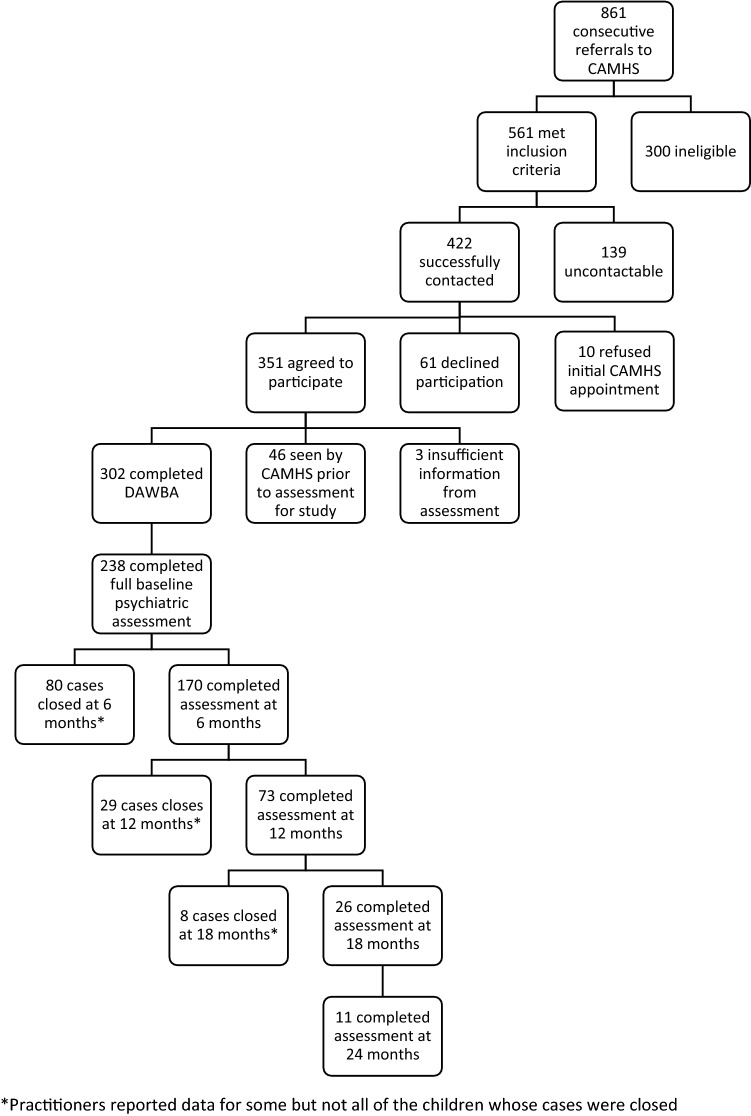
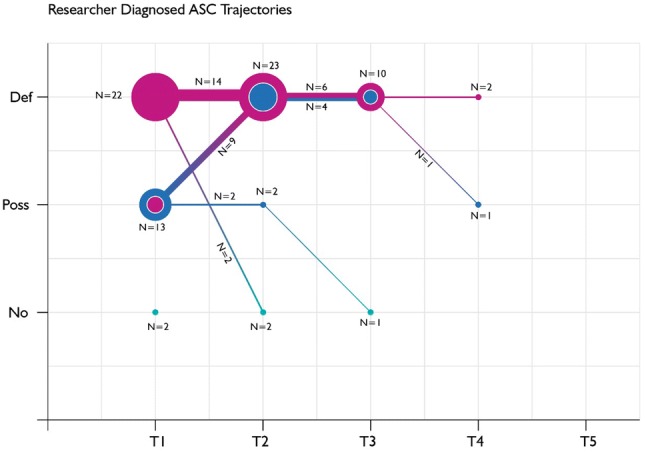
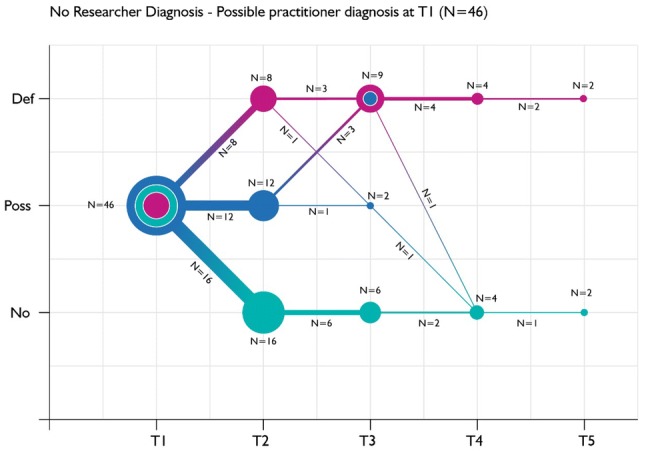
We aimed to explore the levels of agreement about the diagnoses of Autistic Spectrum Conditions between the referrer, CAMHS practitioner and a research diagnosis, as well as the stability of the practitioner's diagnosis over time in a secondary analysis of data from 302 children attending two Child and Adolescent Mental Health Services over two years. Kappa coefficient was used to assess the agreement between the referrer and research diagnosis. Kendall's tau b coefficient was used to assess the agreement between the practitioner and the research diagnosis assigned using the Development and Well-Being Assessment, as well as the agreement between the referrer's indication of presenting problems and the practitioner diagnosis. Diagnostic stability was explored in children with and without a research diagnosis of Autistic Spectrum Condition. There was a moderate level of agreement between the referrer and research diagnosis (Kappa = 0.51) and between practitioner's and research diagnosis (Kendall's tau = 0.60) at baseline, which reduced over the subsequent two years. Agreement between the referrer and practitioner's diagnosis at baseline was fair (Kendall's tau = 0.36).The greatest diagnostic instability occurred among children who practitioners considered to have possible Autistic Spectrum Conditions but who did not meet research diagnostic criteria. Further studies could explore the approaches used by practitioners to reach diagnoses and the impact these may have on diagnostic stability in Autistic Spectrum Conditions. Standardised assessment using a clinically rated diagnostic framework has a potential role as an adjunct to standard clinical care and might be particularly useful where practitioners are uncertain.
我们旨在探讨在二级分析中,在对来自两家儿童和青少年心理健康服务机构的 302 名儿童进行的数据分析中,转介者、儿童和青少年心理健康服务从业者与研究诊断之间对自闭症谱系障碍的诊断的一致性程度,以及从业者诊断的稳定性。Kappa 系数用于评估转介者和研究诊断之间的一致性。Kendall 的 tau b 系数用于评估从业者和使用发展和福利评估分配的研究诊断之间的一致性,以及转介者表示的当前问题和从业者诊断之间的一致性。在有和没有自闭症谱系障碍研究诊断的儿童中探讨了诊断的稳定性。在基线时,转介者和研究诊断之间(Kappa = 0.51)以及从业者和研究诊断之间(Kendall 的 tau = 0.60)具有中度一致性,这在随后的两年中降低了。基线时转介者和从业者诊断之间的一致性是公平的(Kendall 的 tau = 0.36)。在从业者认为可能患有自闭症谱系障碍但不符合研究诊断标准的儿童中,诊断的最大不稳定性发生。进一步的研究可以探讨从业者用于做出诊断的方法,以及这些方法对自闭症谱系障碍诊断稳定性的影响。使用临床评定诊断框架的标准化评估具有作为标准临床护理辅助手段的潜力,在从业者不确定的情况下可能特别有用。