Department of Microbilogy, University of Alabama at Birmingham, Birmingham.
Department of Health Care Organization and Policy, School of Public Health, University of Alabama at Birmingham, Birmingham, US.
Ann Glob Health. 2018 Nov 5;84(4):727-735. doi: 10.9204/aogh.2383.
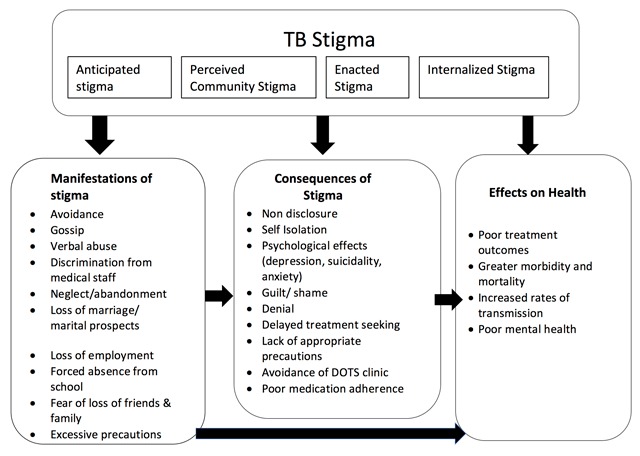
Stigma associated with tuberculosis (TB) is still common in many societies, contributing to delays in treatment seeking and treatment non-compliance. India has the highest burden of TB in the world with female TB patients bearing a considerable burden of TB-related stigma. Objectives: This study aimed to explore the manifestations and consequences of stigma experienced by female TB patients in an urban setting in India and their strategies to cope with the social stigma of TB.
Twenty qualitative interviews were conducted with female TB patients who were either currently on treatment or had undergone treatment at a TB clinic in Kolkata, India. Data were coded and analyzed with the NVivo qualitative software using a thematic approach.
Our results indicated that TB stigma mainly manifested through social isolation and avoidance due to fear of contagion, gossip and verbal abuse, failed marriage prospects, and neglect from family. Consequences of stigma described by the women included non-disclosure, feelings of guilt, and mental health issues including suicidal ideation. Positive coping strategies used by women to cope with the experiences of stigma included positive reframing, prayer, talking to other patients, focusing on school work, and relaxation activities. Negative coping activities included self-imposed social isolation and anger. In some cases, non-disclosure due to stigma had an impact on TB transmission and control behaviors. Conclusions: Stigma-reduction strategies, such as community awareness programs and formation of social support groups to dispel the myths and misconceptions associated with TB, may improve TB treatment seeking and adherence.Acknowledgement: Our deepest thanks to the Reverend, St. James' Church, Dr. Ali Akbar Chowdhury (Medical Officer), staff and participants at the Calcutta Diocesan Tuberculosis Relief Trust, without whom this study would not be possible. We also thank Sushmita Mukherjee for help with translations. Lastly, we thank the Sparkman Center for Global Health at the University of Alabama at Birmingham for providing travel funds for this study.
在许多社会中,与结核病(TB)相关的耻辱感仍然很普遍,这导致了治疗寻求和治疗依从性的延迟。印度是世界上结核病负担最重的国家,女性结核病患者承受着相当大的结核病相关耻辱感负担。目的:本研究旨在探讨印度城市环境中女性结核病患者所经历的耻辱感的表现和后果,以及她们应对结核病社会耻辱感的策略。
在印度加尔各答的一家结核病诊所,对 20 名正在接受治疗或已接受过治疗的女性结核病患者进行了 20 次定性访谈。使用 NVivo 定性软件对数据进行编码和分析,采用主题方法。
我们的结果表明,结核病耻辱感主要表现为由于对传染的恐惧、流言蜚语和言语虐待、婚姻前景不佳以及家庭忽视而导致的社会隔离和回避。女性描述的耻辱感后果包括隐瞒、内疚感以及包括自杀意念在内的心理健康问题。女性用来应对耻辱感经历的积极应对策略包括积极重新定义、祈祷、与其他患者交谈、专注于学业和放松活动。消极的应对活动包括自我强加的社会隔离和愤怒。在某些情况下,由于耻辱感而隐瞒病情会影响结核病的传播和控制行为。
减少耻辱感的策略,如社区宣传计划和形成社会支持小组,以消除与结核病相关的神话和误解,可能会改善结核病的治疗寻求和依从性。
我们衷心感谢圣詹姆斯教堂的牧师、阿里·阿克巴尔·乔杜里医生(医疗官)、加尔各答教区结核病救济信托的工作人员和参与者,没有他们,这项研究是不可能进行的。我们还要感谢 Sushmita Mukherjee 帮助翻译。最后,我们感谢阿拉巴马大学伯明翰分校的 Sparkman 全球健康中心为这项研究提供了旅行资金。