Department of Biology, University of Leuven (KU Leuven), Leuven, Belgium.
PLoS Genet. 2019 Feb 19;15(2):e1007945. doi: 10.1371/journal.pgen.1007945. eCollection 2019 Feb.
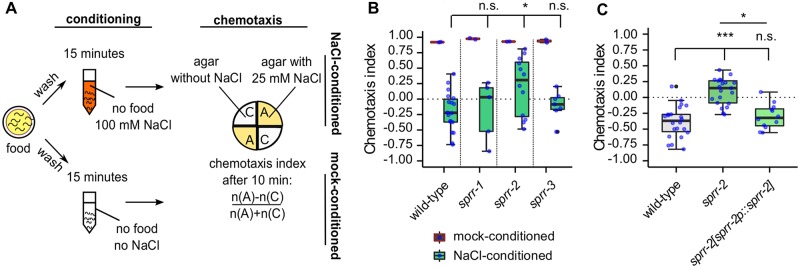
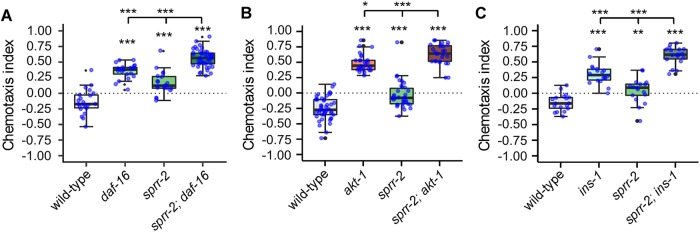
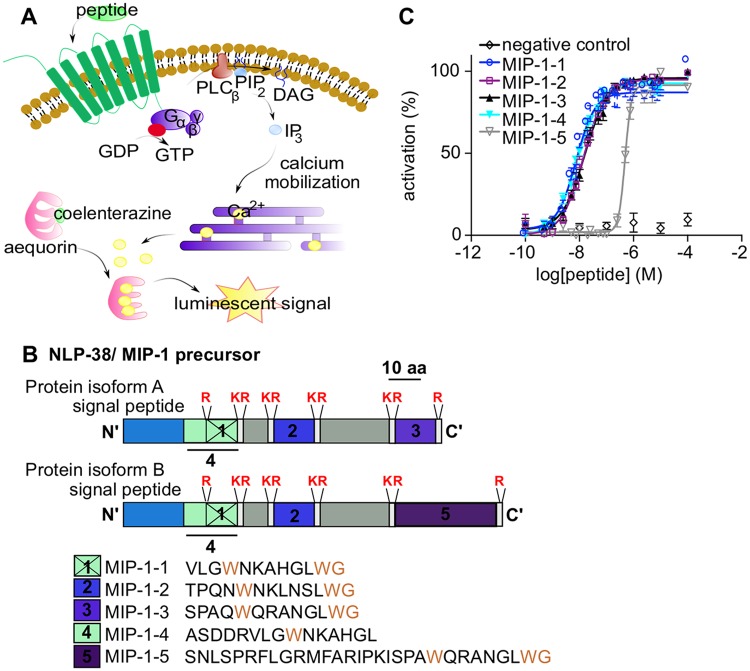
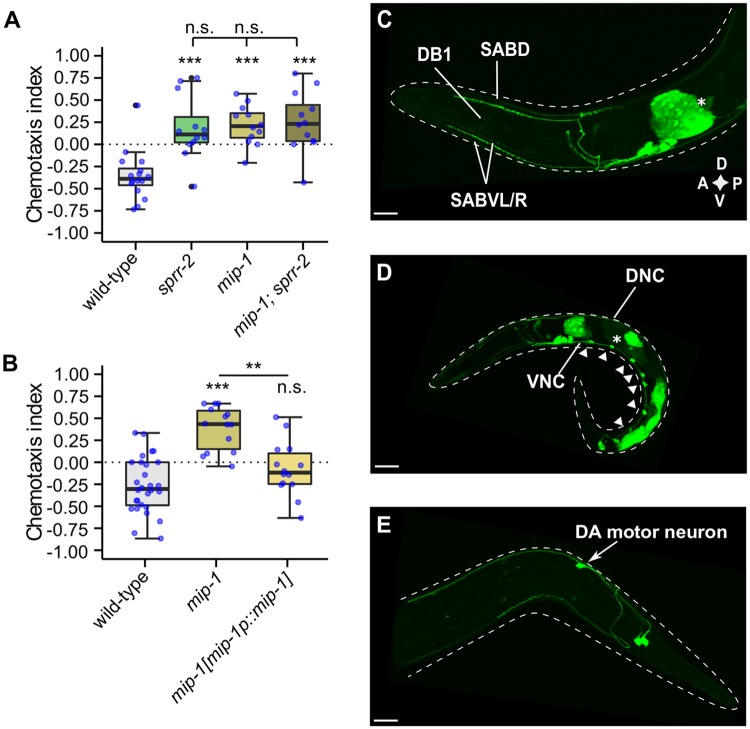
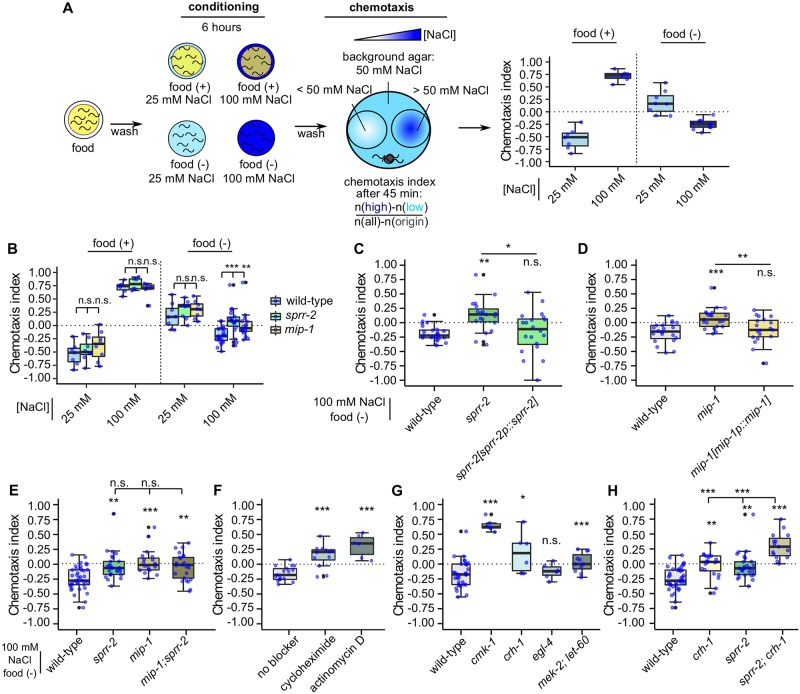
Aversive learning and memories are crucial for animals to avoid previously encountered stressful stimuli and thereby increase their chance of survival. Neuropeptides are essential signaling molecules in the brain and are emerging as important modulators of learned behaviors, but their precise role is not well understood. Here, we show that neuropeptides of the evolutionarily conserved MyoInhibitory Peptide (MIP)-family modify salt chemotaxis behavior in Caenorhabditis elegans according to previous experience. MIP signaling, through activation of the G protein-coupled receptor SPRR-2, is required for short-term gustatory plasticity. In addition, MIP/SPRR-2 neuropeptide-receptor signaling mediates another type of aversive gustatory learning called salt avoidance learning that depends on de novo transcription, translation and the CREB transcription factor, all hallmarks of long-term memory. MIP/SPRR-2 signaling mediates salt avoidance learning in parallel with insulin signaling. These findings lay a foundation to investigate the suggested orphan MIP receptor orthologs in deuterostomians, including human GPR139 and GPR142.
厌恶学习和记忆对于动物避免以前遇到的应激刺激至关重要,从而增加其生存机会。神经肽是大脑中重要的信号分子,它们作为学习行为的重要调节剂而出现,但它们的确切作用尚不清楚。在这里,我们表明,进化上保守的肌抑制肽 (MIP) 家族的神经肽根据以前的经验改变秀丽隐杆线虫的盐趋化行为。通过 G 蛋白偶联受体 SPRR-2 的激活,MIP 信号传导对于短期味觉可塑性是必需的。此外,MIP/SPRR-2 神经肽受体信号传导介导另一种称为盐回避学习的厌恶味觉学习,该学习依赖于新转录、翻译和 CREB 转录因子,所有这些都是长期记忆的标志。MIP/SPRR-2 信号传导与胰岛素信号传导平行介导盐回避学习。这些发现为研究后生动物中假定的孤儿 MIP 受体同源物奠定了基础,包括人类 GPR139 和 GPR142。