Department of Biology, KU Leuven, 3000, Leuven, Belgium.
Department of Biosystems, KU Leuven, 3000, Leuven, Belgium.
Nat Commun. 2020 Apr 29;11(1):2076. doi: 10.1038/s41467-020-15964-9.
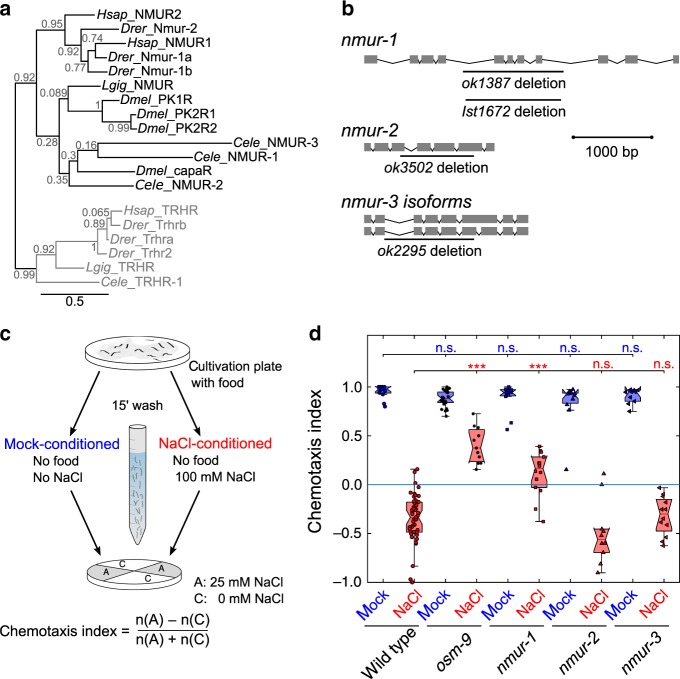
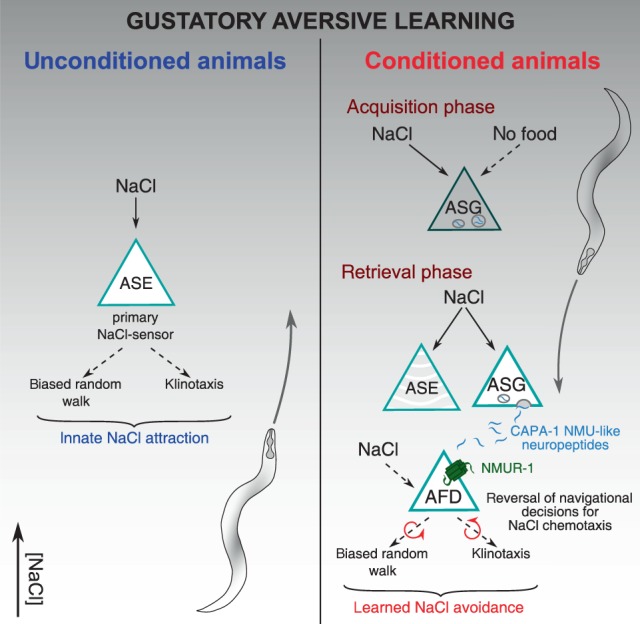
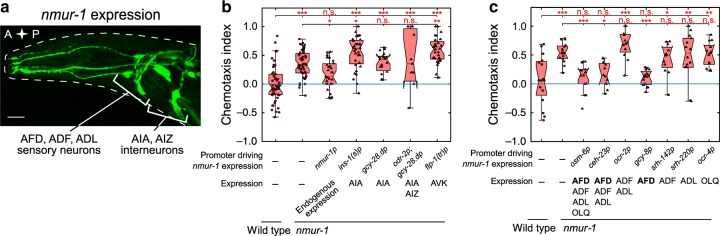
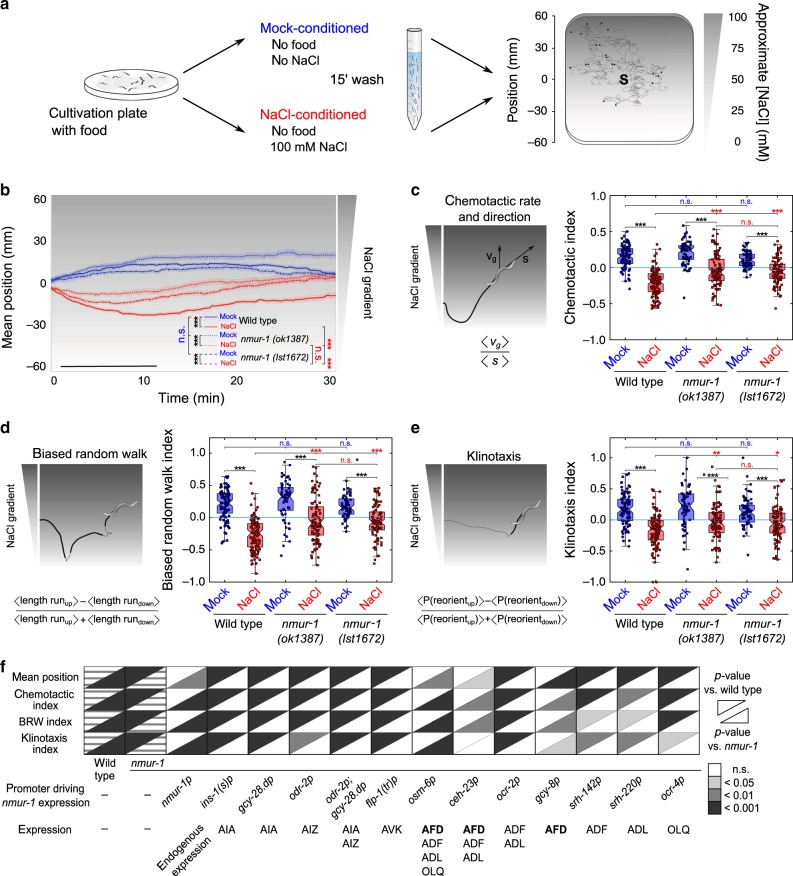
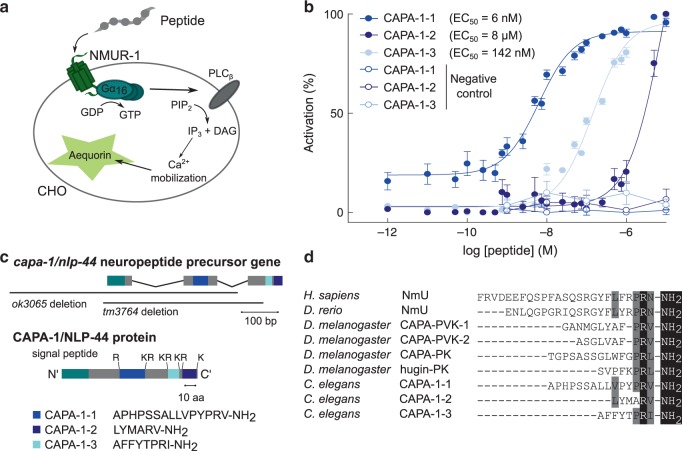
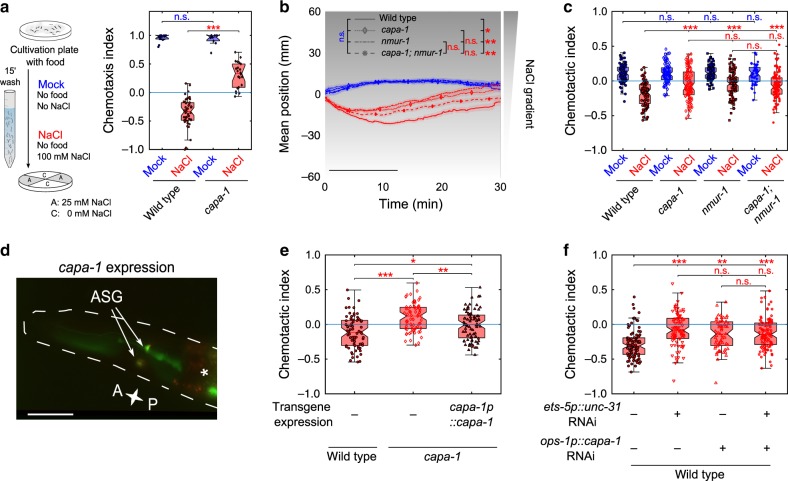
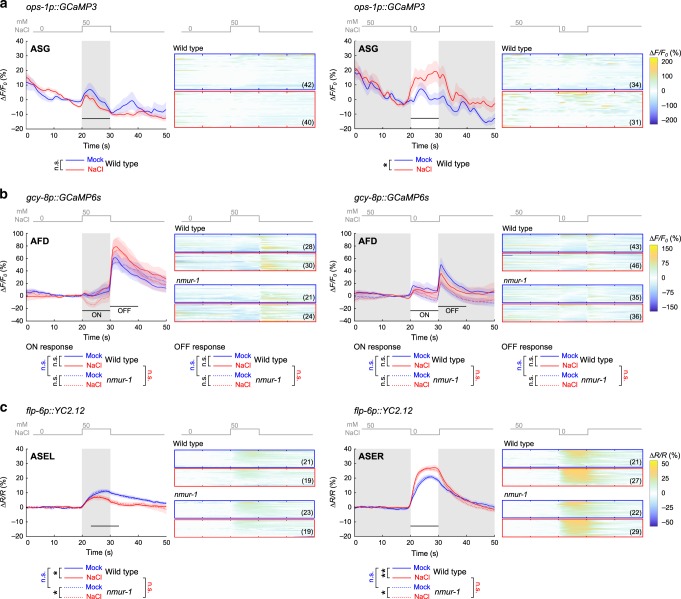
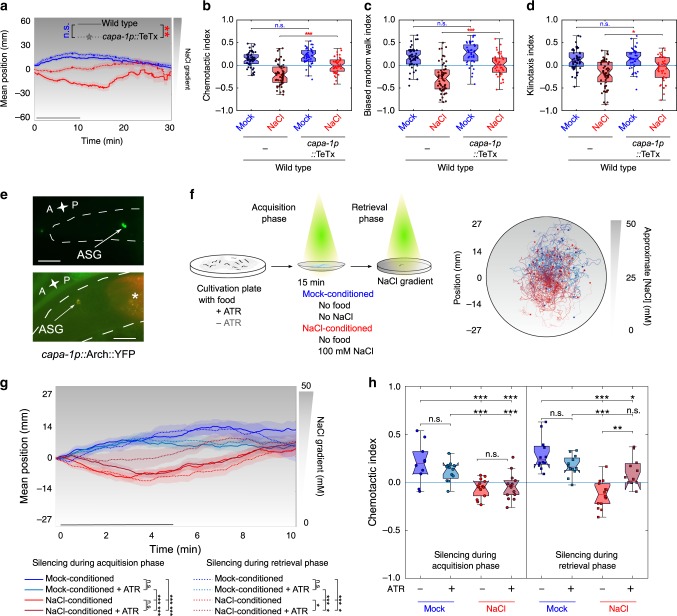
Learning and memory are regulated by neuromodulatory pathways, but the contribution and temporal requirement of most neuromodulators in a learning circuit are unknown. Here we identify the evolutionarily conserved neuromedin U (NMU) neuropeptide family as a regulator of C. elegans gustatory aversive learning. The NMU homolog CAPA-1 and its receptor NMUR-1 are required for the retrieval of learned salt avoidance. Gustatory aversive learning requires the release of CAPA-1 neuropeptides from sensory ASG neurons that respond to salt stimuli in an experience-dependent manner. Optogenetic silencing of CAPA-1 neurons blocks the expression, but not the acquisition, of learned salt avoidance. CAPA-1 signals through NMUR-1 in AFD sensory neurons to modulate two navigational strategies for salt chemotaxis. Aversive conditioning thus recruits NMU signaling to modulate locomotor programs for expressing learned avoidance behavior. Because NMU signaling is conserved across bilaterian animals, our findings incite further research into its function in other learning circuits.
学习和记忆受神经调质途径调控,但学习回路中大多数神经调质的贡献和时间要求尚不清楚。在这里,我们将进化保守的神经调节素 U(NMU)神经肽家族鉴定为秀丽隐杆线虫味觉厌恶学习的调节剂。NMU 同源物 CAPA-1及其受体 NMUR-1 是检索已习得的盐回避所必需的。味觉厌恶学习需要从对盐刺激以经验依赖性方式做出反应的感觉 ASG 神经元中释放 CAPA-1 神经肽。光遗传学沉默 CAPA-1 神经元会阻止习得的盐回避的表达,但不会阻止其获得。CAPA-1 通过 AFD 感觉神经元中的 NMUR-1 发出信号,以调节两种用于盐趋化性的导航策略。因此,厌恶条件作用会招募 NMU 信号来调节表达习得回避行为的运动程序。由于 NMU 信号在两侧对称动物中是保守的,我们的发现促使人们对其在其他学习回路中的功能进行进一步研究。