Department of Geriatrics, Tongji Hospital, Tongji Medical College, Huazhong University of Science and Technology, Wuhan, China.
Clinical Research Center for Prevention Treatment and Health Care Medicine of Geriatric Diseases in Hubei Province, Wuhan, China.
BMJ Open. 2019 Feb 19;9(2):e022993. doi: 10.1136/bmjopen-2018-022993.
The aims of this study were to assess malnutrition risk in Chinese geriatric inpatients using Nutritional Risk Screening 2002 (NRS2002) and Mini-Nutritional Assessment (MNA), and to identify the most appropriate nutritional screening tool for these patients.
Cross-sectional study.
Eight medical centres in Hubei Province, China.
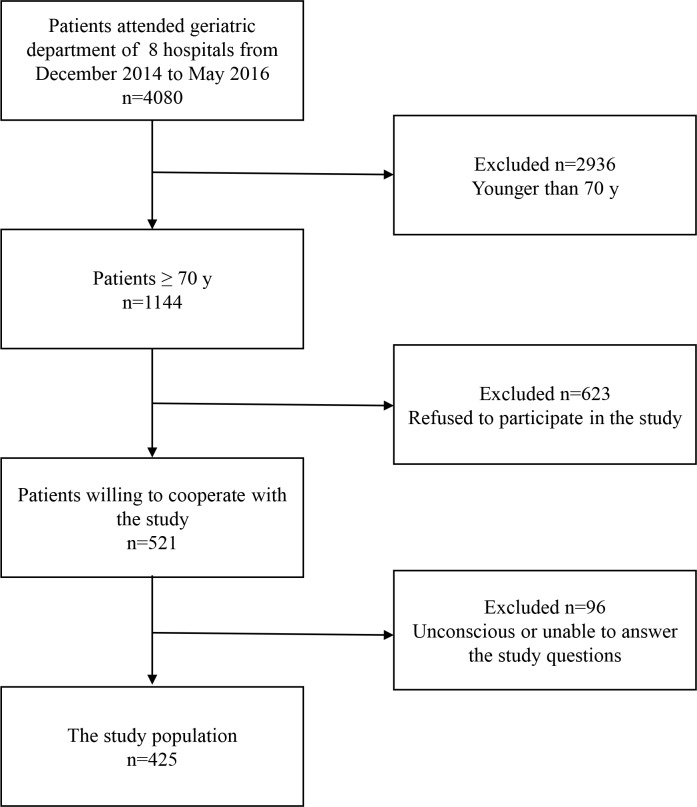
A total of 425 inpatients aged ≥70 years were consecutively recruited between December 2014 and May 2016.
Nutritional risk was assessed using NRS2002, MNA, anthropometric measurements and biochemical parameters within 24 hours of admission. Comorbidities and length of hospitalisation were recorded. Nutritional parameters, body mass index (BMI) and length of hospital stay (LOS) were employed to compare MNA and NRS2002. Kappa analysis was used to evaluate the consistency of the two tools.
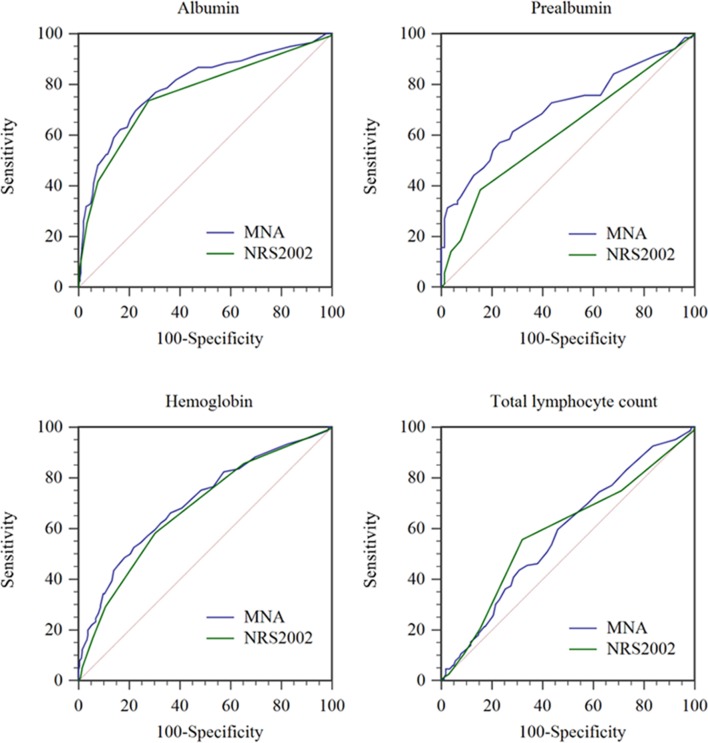
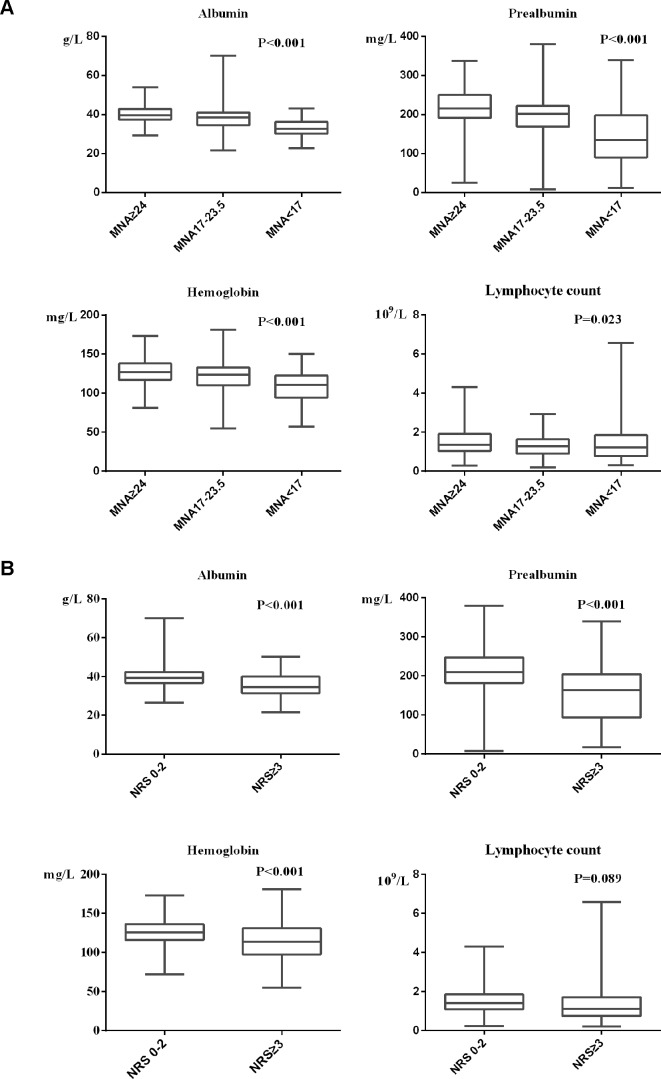
The average age was 81.2±5.9 years (range, 70-98). The prevalence of undernutrition classified by NRS2002 and MNA was 40.9% and 58.6%, respectively. Patients undergoing malnutrition had lower BMI, haemoglobin, albumin and prealbumin (p<0.05), and longer LOS (p<0.05). The NRS2002 showed moderate agreement (κ=0.521, p<0.001) with MNA. Both tools presented significant correlation with age, BMI and laboratory parameters (p<0.001). In addition, a significant association between both tools and LOS was found (p<0.05). In addition, the NRS2002 was not different from MNA in predicting nutritional risk in terms of the area under the receiver operating characteristic curve (p>0.05).
The results show a relatively high prevalence of malnutrition risk in our sample cohort. We found that NRS2002 and MNA were both suitable in screening malnutrition risk among Chinese geriatric inpatients.
本研究旨在使用营养风险筛查 2002(NRS2002)和微型营养评估(MNA)评估中国老年住院患者的营养风险,并确定最适合这些患者的营养筛查工具。
横断面研究。
中国湖北省的 8 家医疗中心。
2014 年 12 月至 2016 年 5 月期间连续招募了 425 名年龄≥70 岁的住院患者。
在入院后 24 小时内,使用 NRS2002、MNA、人体测量学测量和生化参数评估营养风险。记录合并症和住院时间。使用营养参数、体重指数(BMI)和住院时间(LOS)比较 MNA 和 NRS2002。Kappa 分析用于评估两种工具的一致性。
平均年龄为 81.2±5.9 岁(范围,70-98)。根据 NRS2002 和 MNA 分类,营养不良的患病率分别为 40.9%和 58.6%。营养不良患者的 BMI、血红蛋白、白蛋白和前白蛋白较低(p<0.05),住院时间较长(p<0.05)。NRS2002 与 MNA 具有中等一致性(κ=0.521,p<0.001)。两种工具均与年龄、BMI 和实验室参数呈显著相关(p<0.001)。此外,两种工具与 LOS 之间也存在显著关联(p<0.05)。此外,NRS2002 在预测营养风险方面与 MNA 无差异,受试者工作特征曲线下面积(p>0.05)。
结果表明,我们的样本队列中存在较高的营养不良风险患病率。我们发现 NRS2002 和 MNA 均适合筛查中国老年住院患者的营养风险。