Department of Orthopaedic Surgery, The First Affiliated Hospital of Soochow University, Soochow, Jiangsu, China.
Department of Orthopaedic Surgery, The People's Hospital of Bozhou, Bozhou, Anhui, China.
Biosci Rep. 2019 Mar 19;39(3). doi: 10.1042/BSR20182312. Print 2019 Mar 29.
Allogeneic disc cell is the main cellular resource in tissue engineering (TE)-based strategy to retard disc degeneration. However, the accessible disc cells often exhibit senescent phenotype when they are subcultured Hence, alleviating senescence of human disc cells during cell subculture is important for TE-based strategy to regenerate degenerative disc tissue.
The present study was aimed to investigate whether bone morphogenetic protein-7 (BMP-7) can alleviate subculture-induced senescence of human nucleus pulposus (NP) cells Methods: NP cells from human disc tissue were subcultured for six passages. Exogenous BMP-7 was added along with the culture medium to investigate its effects on senescence of NP cells. The inhibitor LY294002 was used to investigate the role of the PI3K/Akt pathway.
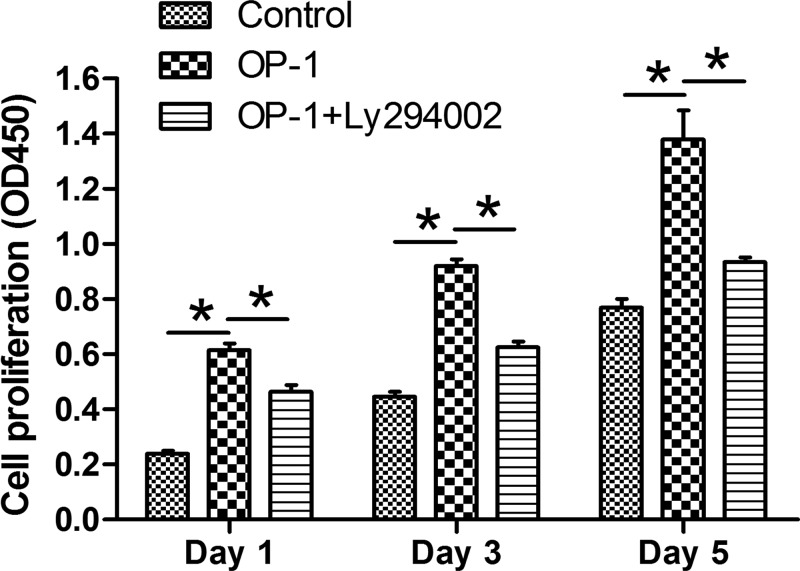
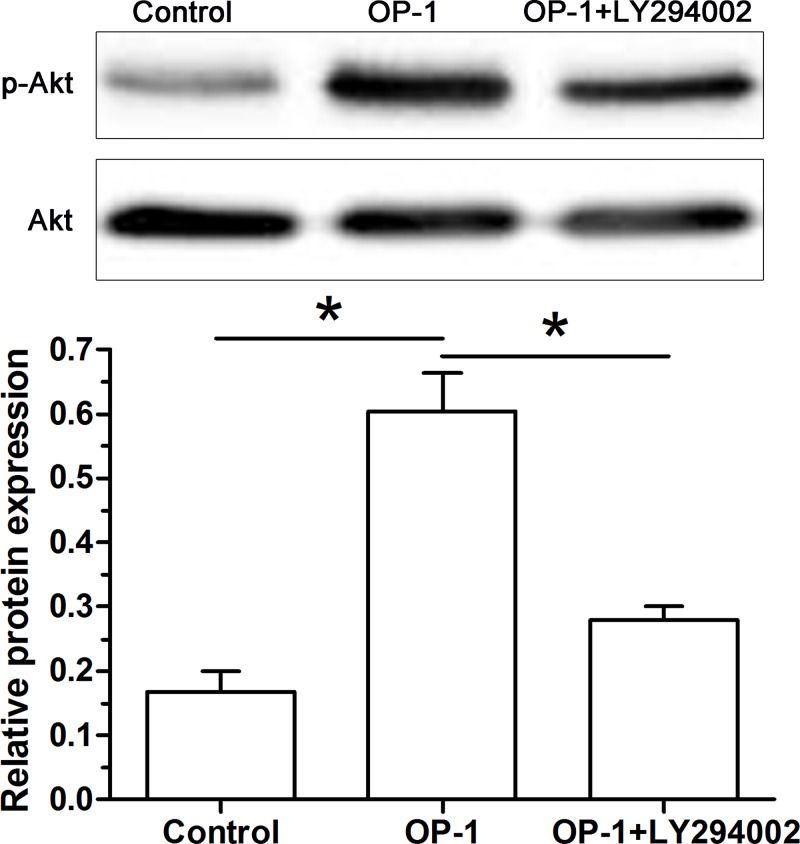
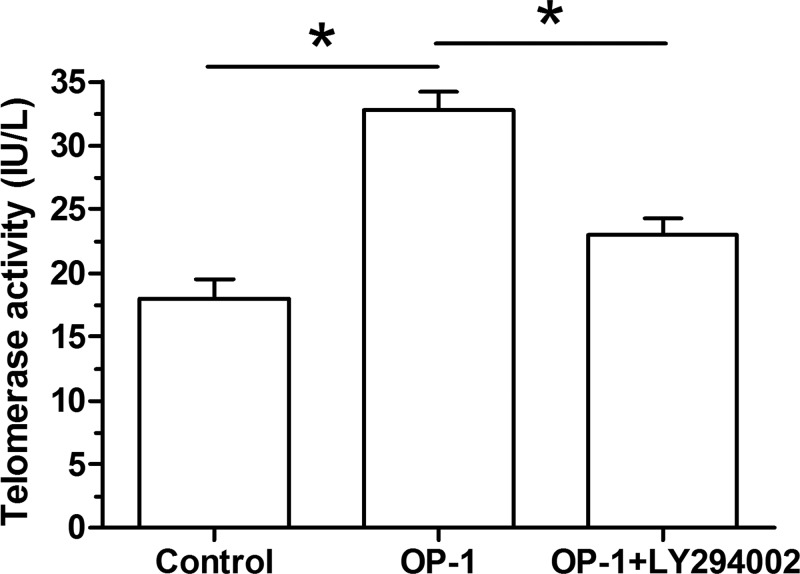
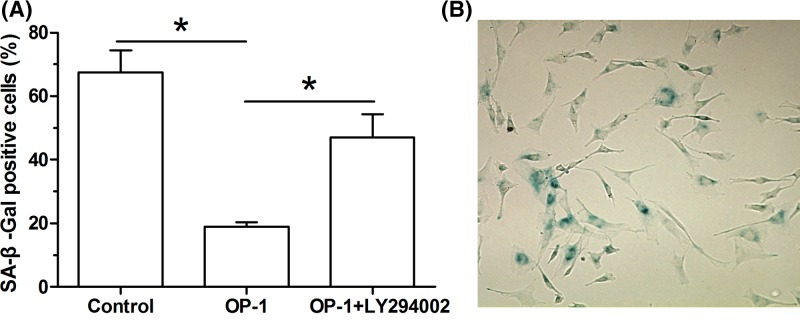
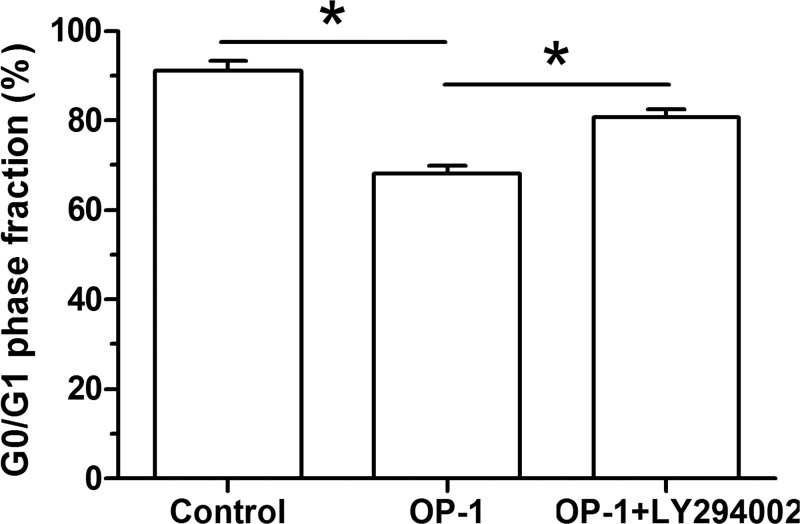
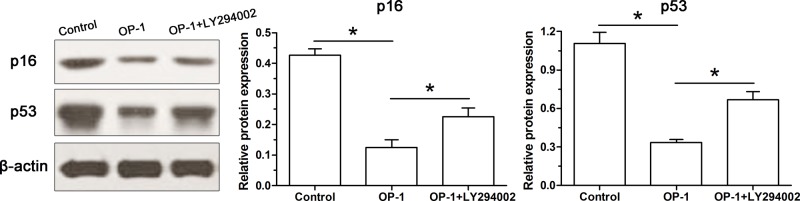
Compared with the human disc NP cells cultured in the baseline culture medium, addition of BMP-7 increased cell proliferation potency and telomerase activity, decreased senescence-associated β-galactosidase (SA-β-Gal) activity and G/G phase fraction, and down-regulated the expression of p16 and p53. Moreover, these positive effects of BMP-7 against senescence of human disc NP cells coincided with activation of the PI3K/Akt pathway. Further analysis showed that inhibitor LY294002 partly inhibited these protective effects of BMP-7 against senescence of human disc NP cells.
BMP-7 alleviates subculture-induced senescence of human disc NP cells through activating the PI3K/Akt pathway. The present study provides new knowledge on allogeneic disc NP cell-based TE strategy to regenerate degenerative human disc tissue.
同种异体椎间盘细胞是组织工程(TE)为基础的策略中延缓椎间盘退变的主要细胞资源。然而,当它们被传代培养时,可获得的椎间盘细胞往往表现出衰老表型。因此,减轻细胞传代培养过程中人椎间盘细胞的衰老对于 TE 为基础的策略来再生退变的椎间盘组织非常重要。
本研究旨在探讨骨形态发生蛋白-7(BMP-7)是否可以减轻人椎间盘核(NP)细胞的传代诱导衰老。
从人椎间盘组织中分离 NP 细胞进行传代培养 6 代。在培养物中添加外源性 BMP-7,以研究其对 NP 细胞衰老的影响。使用 PI3K/Akt 通路抑制剂 LY294002 来研究该通路的作用。
与在基础培养物中培养的人椎间盘 NP 细胞相比,添加 BMP-7 增加了细胞增殖能力和端粒酶活性,降低了衰老相关β-半乳糖苷酶(SA-β-Gal)活性和 G/G 期分数,并下调了 p16 和 p53 的表达。此外,BMP-7 对人椎间盘 NP 细胞衰老的这些积极作用与 PI3K/Akt 通路的激活一致。进一步分析表明,抑制剂 LY294002 部分抑制了 BMP-7 对人椎间盘 NP 细胞衰老的这些保护作用。
BMP-7 通过激活 PI3K/Akt 通路减轻人椎间盘 NP 细胞的传代诱导衰老。本研究为同种异体椎间盘 NP 细胞为基础的 TE 策略来再生退变的人椎间盘组织提供了新的知识。