Janarthanan Gopinathan, Kim In Gul, Chung Eun-Jae, Noh Insup
Department of Chemical and Biomolecular Engineering, Seoul, 01811 Republic of Korea.
2Convergence Institute of Biomedical Engineering and Biomaterials, Seoul National University of Science and Technology, Seoul, 01811 Republic of Korea.
Biomater Res. 2019 Jan 3;23:1. doi: 10.1186/s40824-018-0153-7. eCollection 2019.
Hybrid scaffolds combining biodegradable polymers and ceramic particles for control of cell adhesion and proliferation are interesting materials for tissue engineering applications. Combinations of biodegradable polymers and ceramics are to provide higher beneficial functionalities to tissue engineering scaffolds with addition of different cell specific bio-factors. Many such hybrid combinations have been reported by several researchers around the world by using various methods and solvents as well as bioactive matrix polymers to fabricate such biomaterials. However, thin hybrid scaffolds with high porosity, cell adhesion factors and biodegradability, as well as the ability to support stem cells often require tedious processes like electrospinning, freeze drying, etc. A simple method to develop porous biodegradable hybrid scaffolds with proper cell adhesion factors is still the need of the hour in tissue engineering and regenerative medicine.
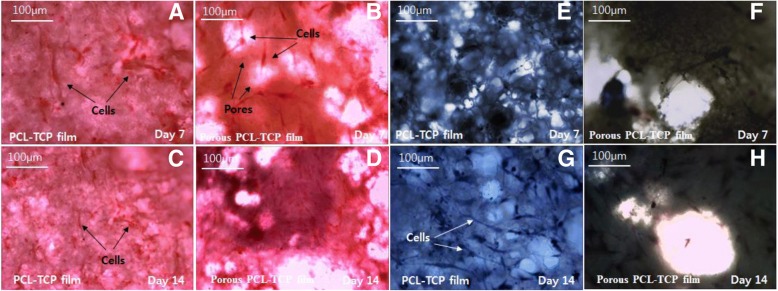
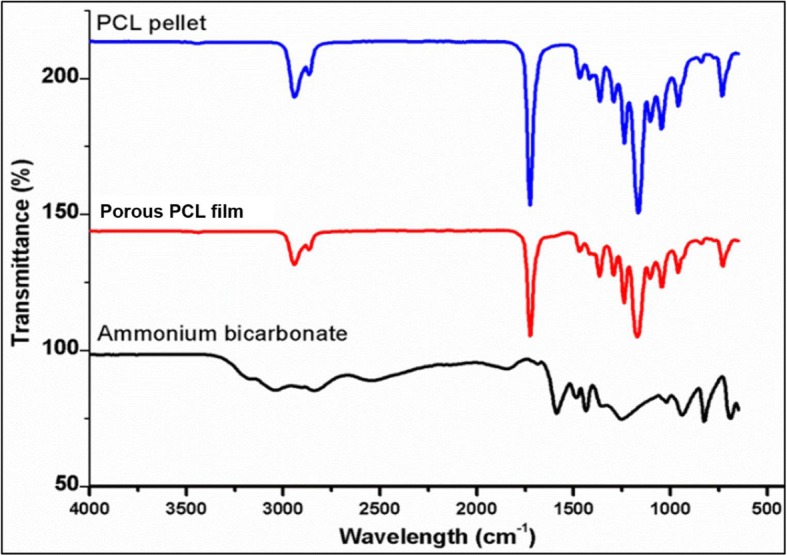
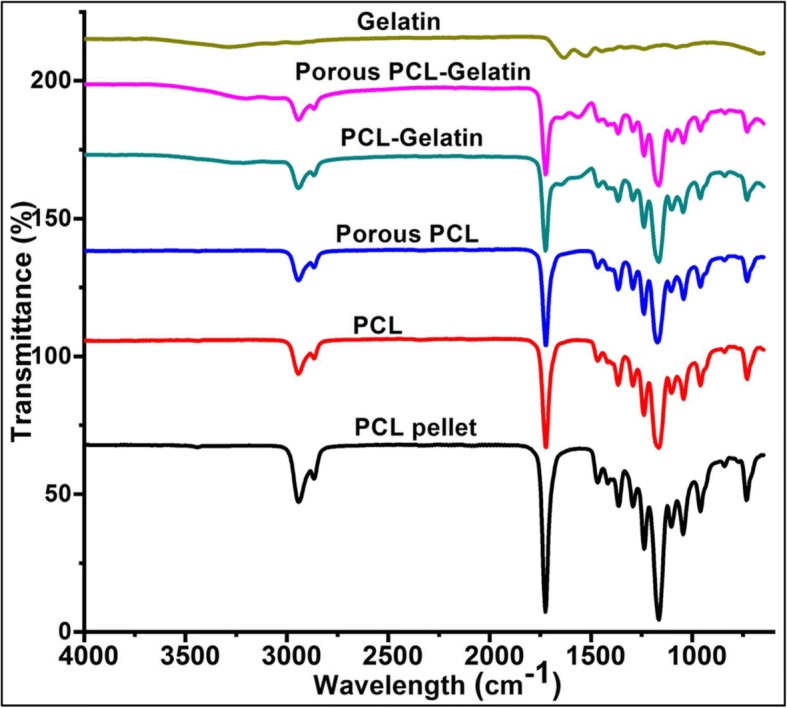
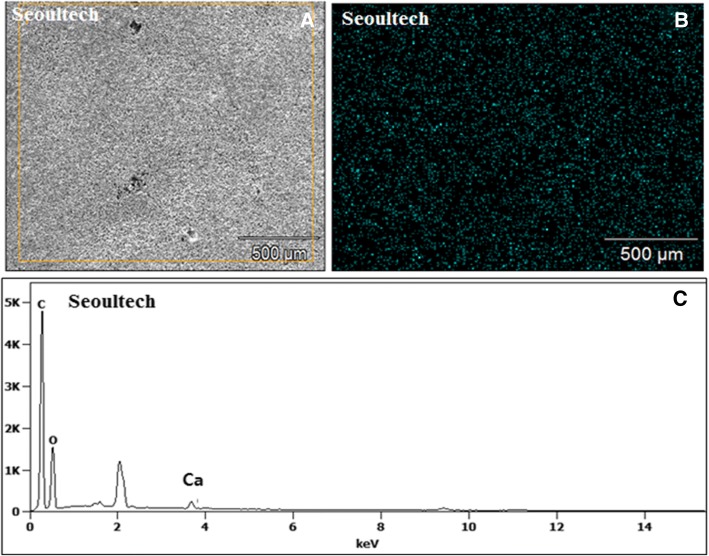
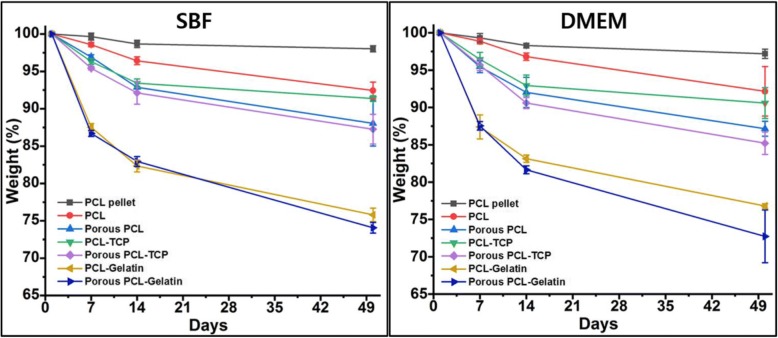
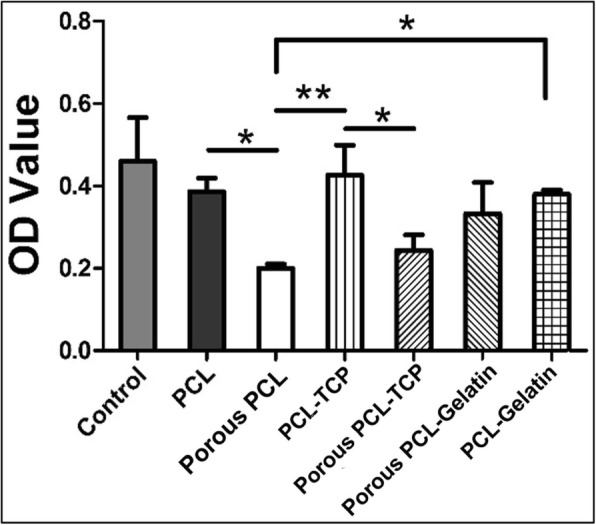
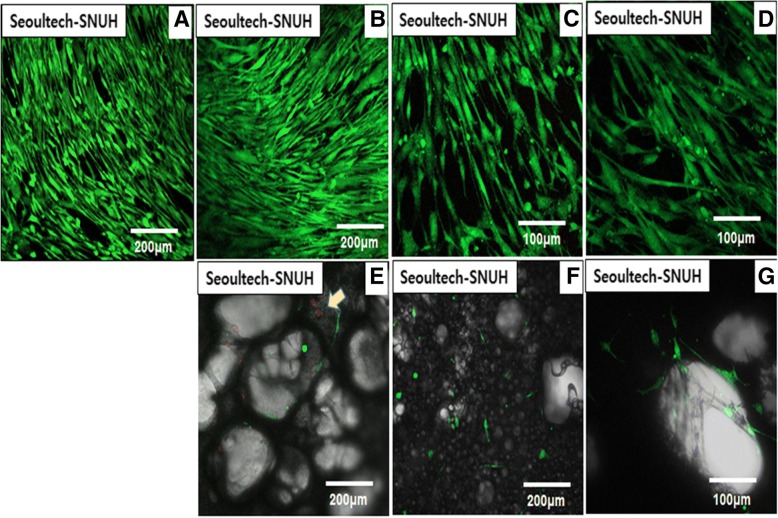
Thin biodegradable poly(ε-caprolactone) (PCL) based hybrid scaffolds were developed in combination with α-tricalcium phosphate (TCP) particles, gelatin and fibronectin separately and the fabricated scaffolds were evaluated systematically using human mesenchymal stem cells (hMSCs) for tissue engineering applications. A simple modified solvent casting method combined with gas foaming process was used to develop porous thin hybrid structures and compared their properties with those of corresponding non-porous hybrid scaffolds. The TCP particles distribution, morphology, biodegradability and functional groups of the different hybrid scaffolds were analyzed using energy-dispersive X-ray spectroscopy (EDX), light microscopy/scanning electron microscopy (SEM), buffer solutions and Fourier-transform infrared spectroscopy (FTIR), respectively The cellular and tissue regeneration behaviors such as in vitro cell attachment (live/dead assay), cell proliferation (CCK-8 assay) and histological studies were performed using hMSCs.
Thin PCL-based hybrid scaffolds were fabricated using modified solvent casting method. Homogeneous distribution of TCP particles in the scaffolds were confirmed by EDX. Cellular interactions of the hybrid scaffolds demonstrated overall higher cell adhesion, proliferation and tissue regeneration on the non-porous thin films of PCL-TCP, PCL-TCP-gelatin and PCL-TCP-fibronectin. Coating of fibronectin was remarkable in induction of cell adhesion and proliferation.
The experimental results revealed that diversely designed PCL-TCP thin hybrid films showed high cell interaction and proliferation with hMSCs. From the results of the cell viability, attachment, proliferation and histological analyses as well as their biodegradation and coating effects, we conclude that these thin PCL-TCP hybrid films are suitable for tissue engineering applications.

将可生物降解聚合物与陶瓷颗粒相结合以控制细胞黏附和增殖的混合支架,是组织工程应用中颇具吸引力的材料。可生物降解聚合物与陶瓷的组合旨在通过添加不同的细胞特异性生物因子,为组织工程支架提供更高的有益功能。世界各地的多位研究人员已通过使用各种方法、溶剂以及生物活性基质聚合物来制备此类生物材料,报道了许多这样的混合组合。然而,具有高孔隙率、细胞黏附因子和生物降解性,以及支持干细胞能力的薄混合支架,通常需要诸如静电纺丝、冷冻干燥等繁琐的工艺。在组织工程和再生医学领域,开发一种具有适当细胞黏附因子的多孔可生物降解混合支架的简单方法,仍然是当务之急。
分别将基于聚(ε-己内酯)(PCL)的薄可生物降解混合支架与α-磷酸三钙(TCP)颗粒、明胶和纤连蛋白相结合进行制备,并使用人间充质干细胞(hMSCs)对制备的支架进行系统评估,以用于组织工程应用。采用一种简单的改良溶剂浇铸法结合气体发泡工艺来制备多孔薄混合结构,并将其性能与相应的无孔混合支架进行比较。分别使用能量色散X射线光谱(EDX)、光学显微镜/扫描电子显微镜(SEM)、缓冲溶液和傅里叶变换红外光谱(FTIR)分析不同混合支架的TCP颗粒分布、形态、生物降解性和官能团。使用hMSCs进行细胞和组织再生行为研究,如体外细胞黏附(活/死检测)、细胞增殖(CCK-8检测)和组织学研究。
采用改良溶剂浇铸法制备了基于PCL的薄混合支架。EDX证实了TCP颗粒在支架中的均匀分布。混合支架的细胞相互作用表明,在PCL-TCP、PCL-TCP-明胶和PCL-TCP-纤连蛋白的无孔薄膜上,总体上具有更高的细胞黏附、增殖和组织再生能力。纤连蛋白涂层在诱导细胞黏附和增殖方面效果显著。
实验结果表明,不同设计的PCL-TCP薄混合膜与hMSCs表现出高细胞相互作用和增殖能力。从细胞活力、黏附、增殖和组织学分析结果,以及它们的生物降解和涂层效果来看,我们得出结论,这些PCL-TCP薄混合膜适用于组织工程应用。